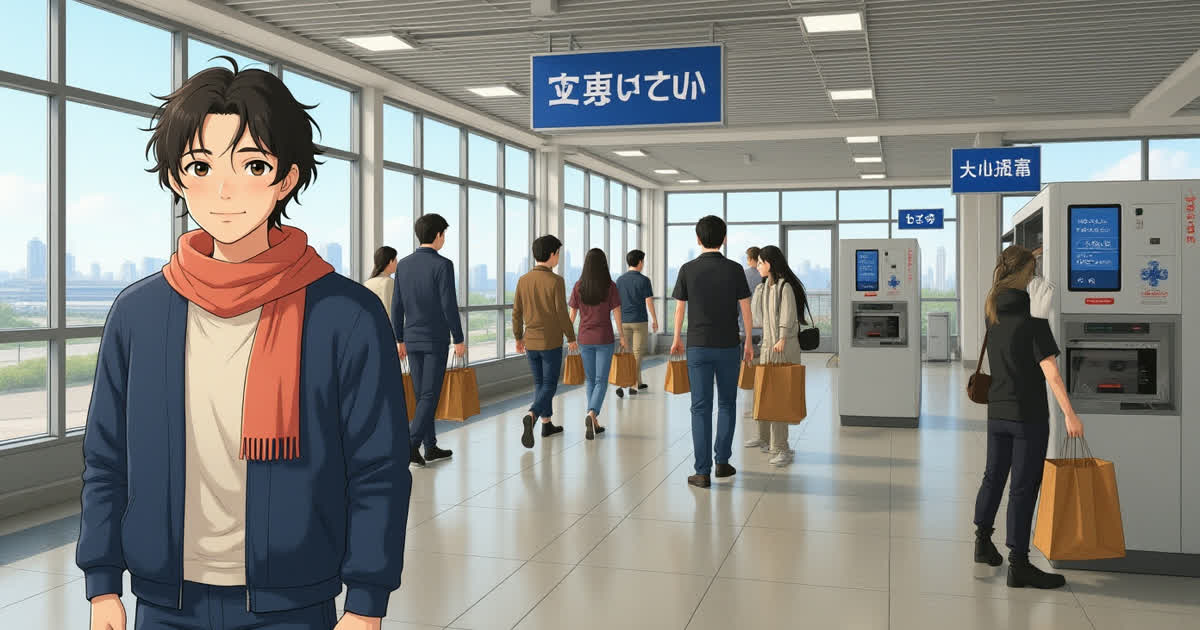
From 1 November 2026 the 10% no longer comes off at a Japanese till. You pay the full 税込 (zeikomi) price, keep the goods, and finish the paperwork at the airport. The reel above is the one sentence that finds the new counter: 免税の手続きはどこですか? (menzei no tetsuzuki wa doko desu ka?), "where is the tax-free procedure?" This page is where that procedure actually happens, what to keep, and how it differs from the old till discount.
Where do you complete Japan's tax-free procedure after November 1, 2026?
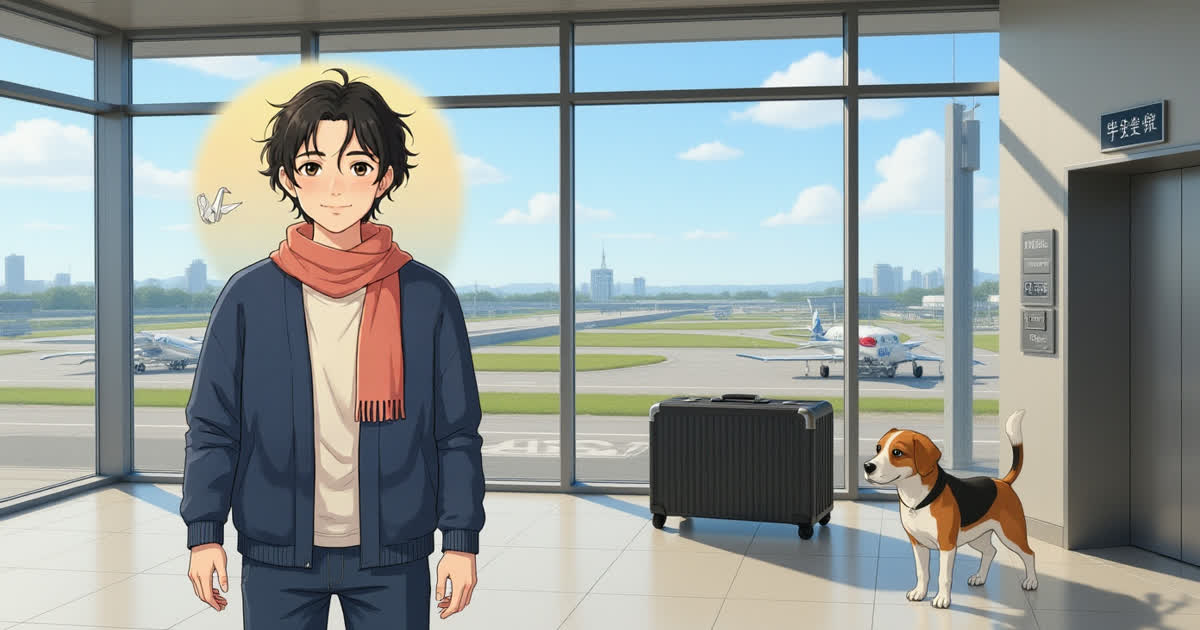
At the airport or seaport you leave Japan from, in the international departure lobby, before baggage check-in. Look for the tax-free procedure terminals — self-service kiosks — and the customs inspection area next to them. Scan your passport there. This is not the shop till, not the airline desk, and not a counter after security. You cannot pull a suitcase back off the belt to finish the paperwork, so pack the tax-free bags where you can reach them. At Narita, Haneda, Kansai, Chubu, Fukuoka, New Chitose, and Naha you can also start the same step on Visit Japan Web in the dedicated Wi-Fi zones in that lobby, up to the security checkpoint. If you fly a domestic leg first and then connect to an international flight, do it at the airport you actually depart Japan from, not the domestic one.
What do you say in Japanese to find the tax-free procedure?
Ask 免税の手続きはどこですか? (menzei no tetsuzuki wa doko desu ka?). 免税 (menzei) is tax-free; 手続き (tetsuzuki) is the procedure. That is the whole ask. Add すみません (sumimasen) in front if staff are busy: すみません、免税の手続きはどこですか?. They will point at the kiosk row or the 税関 (zeikan, customs) inspection area in the same hall. Sumimasen is the opener for almost every ask in Japan; this is the one that points you at a machine instead of a till. If you already know the essential tourist words, you only need this extra sentence on departure day.
Do you still show your passport at the shop?
Yes. The register no longer subtracts the tax, but the shop still has to record the purchase against the physical passport you entered on, or against your Visit Japan Web code. Pay the 税込 price — the number with tax in — and keep the receipt. A phone photo of the passport will be refused, the same way a hotel front desk refuses one; Japanese hotels need the real booklet too. If the clerk has not started the tax-free record, say 免税でお願いします (menzei de onegai shimasu), "tax-free, please," before they total you. Until 31 October 2026 the old till discount still works; that flow is in how to shop tax-free in Japan. From 1 November, the till takes the full amount and the airport finishes the job.
How is the new refund different from the old till discount?
Until 31 October 2026 a tax-free shop knocks 消費税 (shōhizei, consumption tax) off at the register. From 1 November you pay that tax, then claim the equivalent back after customs confirms the goods are leaving Japan. The Japan Tourism Agency calls this the refund method. Sealed bags for snacks, cosmetics, and drinks go away, so you may open them — but anything you use up in Japan is no longer eligible. The old ¥500,000 daily cap on consumables goes away. The floor stays: ¥5,000 or more, tax excluded, at one shop on one day. General goods and consumables now share that one rule. You must carry the goods out yourself; posting them home separately does not count. The tax-included price on the tag is what you pay in the shop; the refund is a later step, not a smaller number on the receipt.
What receipts and goods do you need at the airport?
Keep every tax-free receipt and have every item from that receipt with you when you scan your passport. Customs inspects per purchase, not per suitcase: if one item from a receipt is missing, none of the goods on that receipt go through. Do the kiosk before bag drop so the goods are still in your hands. If you already ate the KitKats or opened the sunscreen and used it, tell a customs officer at the counter and skip those purchases — do not try to clear an empty bag. Gold and platinum bullion are out, as are goods that never carried consumption tax. Quantity is limited to what you can personally carry out of Japan that day. The receipt is also the record the shop uses to pay you later, so photograph it as a backup and keep the paper until the refund lands.
What does a green or red result on the kiosk mean?
After you present your passport, the terminal shows a colour. Green means no further inspection: the customs check is finished and you can check bags. Red means take the tax-free goods to the designated customs inspection area in the same lobby and show them. Either colour, finish before boarding procedures. Build in extra time; if you abandon the inspection because the flight is boarding, the refund does not go through, and neither the airline nor customs will compensate you. On a red result, have the goods, the receipts, and the passport ready so the officer can match the record. Once the check is done, pack and go to the airline desk. The kiosk does not hand you cash.
When and how do you get the money back?
After customs confirmation, the tax-free shop or a refund agent the shop has hired pays the consumption-tax equivalent. The method is chosen at the shop, not at the kiosk: bank transfer, credit-card refund, app payment, or cash at the departure port, depending on the retailer. Ask at the till how that shop pays, and write it down. You must complete the airport step within 90 days of the purchase date; a November purchase does not wait until spring. Different shops can use different agents, so two department-store receipts may refund two different ways. The money is not a discount on the next basket and it is not a customs payout. It is the tax you already paid, coming back after Japan has seen the goods leave.
One sentence at the airport, not at the till. 免税の手続きはどこですか? is the ask; the kiosk in the departure lobby is the place. Watch the 30-second version before you shop, keep it next to how tax-free shopping worked at the till if you are still travelling in October, and carry the real passport every shopping day so the record exists when you get to the machine.