The appointment is over. The doctor did not hand you a box of pills. They handed you a slip of paper. That is normal. Most Japanese clinics prescribe and a different shop dispenses. The reel above is thirty seconds of that split. This page is what the slip is, where to walk it, the one sentence at the counter, and why you should not leave it in your bag overnight.
How do you get medicine after a Japanese clinic hands you a 処方箋 instead of pills?
You walk the paper to a pharmacy. 処方箋 (shohōsen) is a prescription slip: 処方 is "to prescribe," 箋 is the form. Japanese law splits prescribing from dispensing at most clinics, a split called 院外処方 (ingai shohō, out-of-hospital prescribing). The doctor writes the drugs, the dose, and the days. You leave with paper. The pills live at a 調剤薬局 (chōzai yakkyoku, dispensing pharmacy) a short walk away. Some large hospitals still fill in-house (院内処方, innai shohō). A neighborhood clinic almost never does. If reception already asked whether this is your first visit, you are on that path: the first question is not your name.
Where do you take a Japanese prescription to get it filled?
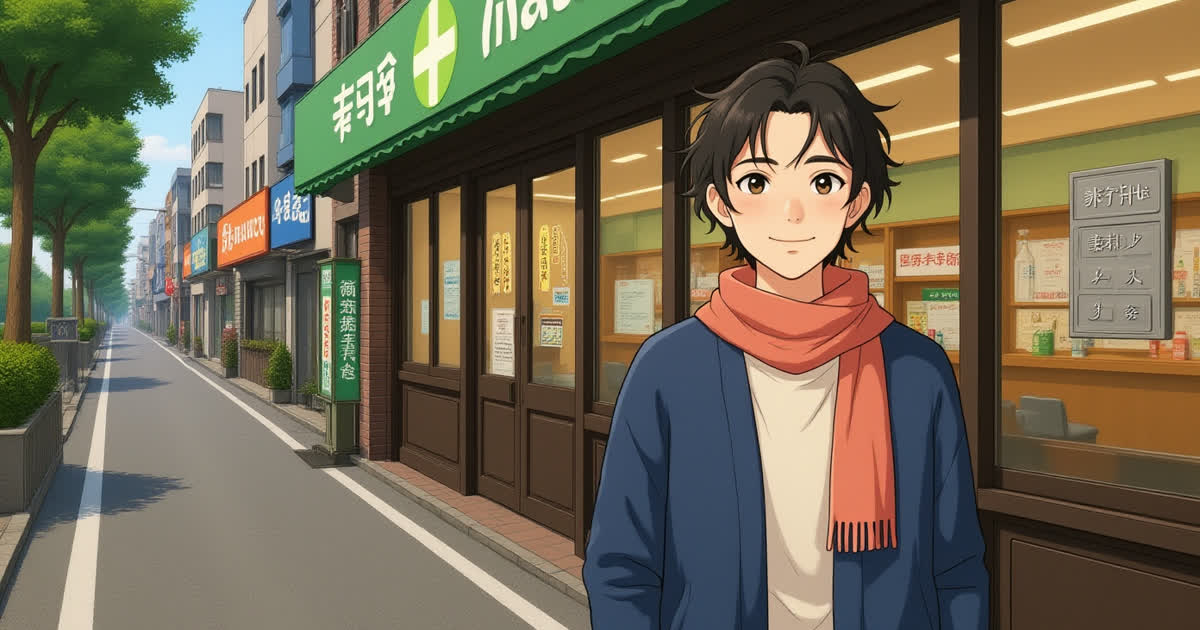
Take it to a dispensing pharmacy, not a cosmetics drugstore. Look for a green cross on the street, or the window text 処方箋受付 (shohōsen uketsuke, "prescriptions accepted"). Signs often write 箋 as kana: 処方せん受付. Either mark is the shop that can fill the slip. These shops cluster next to clinics, so the first one you see when you step outside is usually the right one. A ドラッグストア (doraggusutoa) like Matsumoto Kiyoshi sells cold medicine off the shelf. Some have a dispensing counter in the back; many do not. If the window has no green cross and no 処方箋受付, keep walking. Ask 薬局はどこですか? (yakkyoku wa doko desu ka), "where is the pharmacy?" The phrase that finds a pharmacy is the same one you want here.
How do you hand over a 処方箋 at the pharmacy in Japanese?
Walk to the counter, hold out the slip, and say 処方箋です。お願いします。 (shohōsen desu. onegai shimasu.), "here's my prescription, please." That is the whole order, and it is the line in the reel. Catch them with すみません (sumimasen) if they are turned away. They take the paper, you sit, and they call a number or your name when the bag is ready. Ten to twenty minutes is common. Do not leave. If you need over-the-counter stock as well as the prescription, that is a different counter and a different sentence: the phrase that gets you cold medicine at a drugstore.
How long is a Japanese prescription valid?
Four days, counting the day the clinic handed it to you. Japan's health ministry sets the 使用期間 (shiyō kikan, period of use) at four days including the issue date, and Saturday, Sunday, and public holidays count. A slip issued Friday is valid through Monday. A slip issued Wednesday is valid through Saturday. The four-day clock is on the paper, not on the pharmacy's opening hours. If the doctor wrote a later date in the use-period box, that written date wins. If you miss it, the pharmacy cannot fill it. You go back to the clinic for a new slip. Fill it on the way out of the appointment.
What does the pharmacist ask after you hand over the slip?
They ask whether you have a medicine notebook, then whether a generic is okay. お薬手帳はありますか? (okusuri techō wa arimasu ka?), "do you have a medicine notebook?" Say ありません (arimasen), "I don't have one." They will start a paper booklet or skip it. Then: ジェネリックでよろしいですか? (jenerikku de yoroshii desu ka?), "is a generic okay?" はい is the cheaper bottle. 先発でお願いします (senpatsu de onegai shimasu) is the brand-name drug if you have a reason. When the bag comes, they will tell you the dose out loud. If the packet is all kanji, how to read 1日3回 and 食後 on the box is the next page to open. On the way out you will hear お大事に, "take care of yourself," not goodbye.
How much does a Japanese prescription cost if you don't have insurance?
You pay the full price of the drugs. Visitors without a Japanese 保険証 (hokenshō, health insurance card) are billed at 100 percent at the clinic and again at the pharmacy. The clinic fee was the consultation. This second bill is the medicine. Bring cash; many pharmacies also take cards and IC. There is no separate "foreigner surcharge." The number is just the uninsured rate. Reception at the clinic already asked for the card you do not have: that conversation starts with 保険証. Travel insurance may reimburse you later. Keep both receipts.
What if the pharmacy is closed or the pharmacist is not there?
A dispensing pharmacy cannot fill a 処方箋 without a licensed 薬剤師 (yakuzaishi, pharmacist) on the premises. After hours you will see a plastic sheet: 薬剤師不在 (yakuzaishi fuzai, "pharmacist not present"). That shop is open for toothpaste. It cannot touch your slip. The reel about 薬剤師不在 is that sheet. Try the next green cross, or come back in the morning inside the four-day window. Same-day filling is the safe move. If you are too sick to wait, the emergency numbers are 110 for police and 119 for an ambulance. Heat is a different problem: what to do about heatstroke.
The clinic gave you a job, not a snub. Read 処方箋 as a ticket to a second shop. Walk to the green cross, say 処方箋です。お願いします。, and do it before the four-day clock runs out. Watch the thirty-second version of the slip once, then go. For the words around the clinic itself, keep the short list of tourist words on your phone.