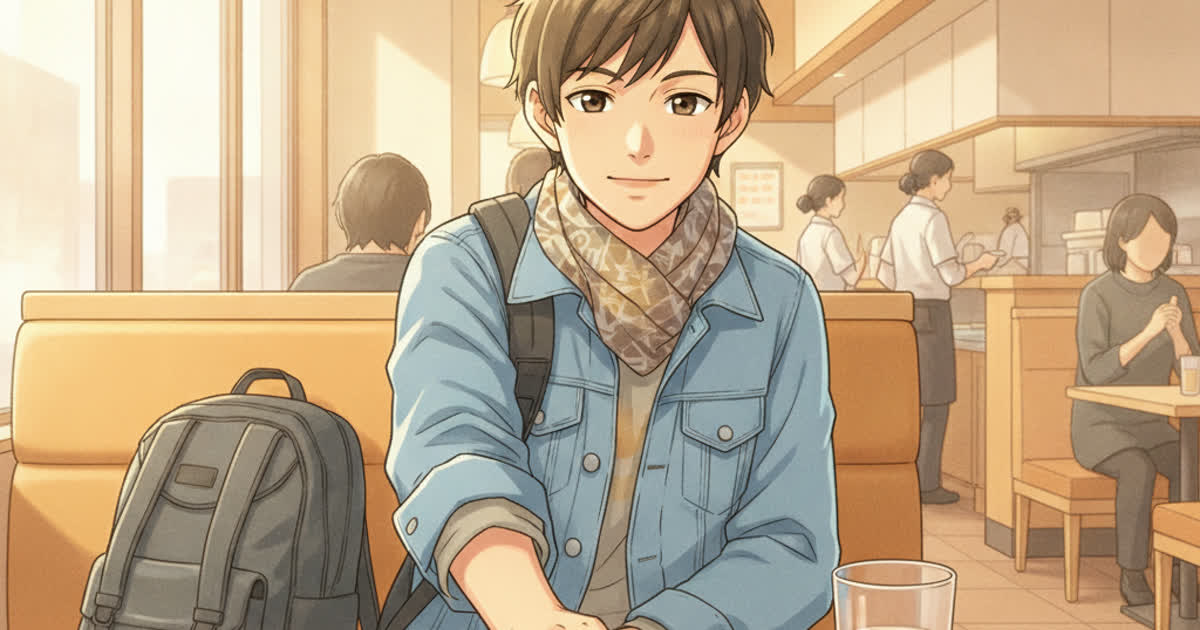
You have been sitting for eight minutes. Staff have walked past your table four times without slowing down, you have tried the polite half-smile that summons a server anywhere else on earth, and nothing has happened. Nobody is ignoring you. In Japan the restaurant simply waits to be called, and there is usually a button an inch from your elbow that does it.
How do you call a waiter in Japan?
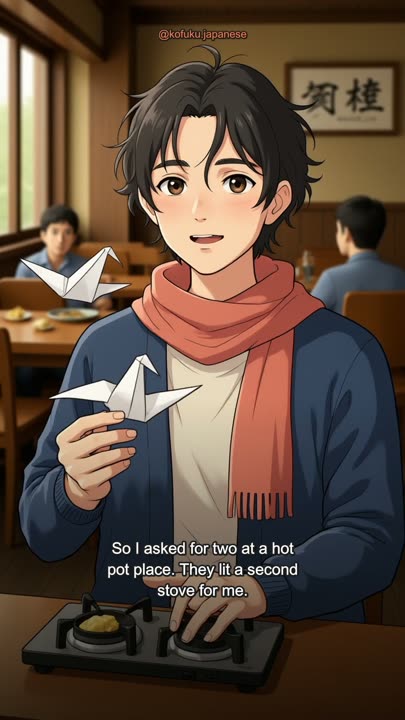
You call them — out loud or with a button. Japanese restaurant staff do not circle the room checking on tables the way American servers do; the working assumption is that you will summon them the second you want something, and that until then you would rather be left alone. That leaves two moves. If there is a 呼び出しボタン (yobidashi botan, call button) on the table edge, on the wall beside your seat, or on the touch-panel screen, press it once. If there isn't one, raise a hand and say すみません (sumimasen) at a volume that actually crosses the room. That is the entire system, and the reel above shows both halves of it in about twenty seconds.
What is the yobidashi botan, Japan's table call button?
It is a wireless doorbell for your table, and it is everywhere. The 呼び出しボタン is a small plastic button — often just labelled 呼出 (yobidashi) or marked with a bell icon — mounted on the table, screwed to the wall of your booth, or built into the corner of the ordering tablet. Press it and a chime sounds at the service station while your table number lights up on a display or a staff member's handset, so whoever is free comes straight to you rather than to whoever shouted loudest. Press it once. It has already registered, repeat presses just re-queue you, and the chime is audible to the entire dining room. If you cannot find a physical button, check the home screen of the touch panel for 店員呼出 (ten'in yobidashi, "call staff") — on most tablet systems that is where it lives.
What do you say to get a waiter's attention in Japan?
One word does all the work: すみません (sumimasen). It is the standard call across every casual restaurant in the country, and it needs no follow-up — say it, someone comes over, then tell them what you want. Pair it with what you actually need and you are fully equipped: メニューお願いします (menyū onegaishimasu, "menu please"), 注文お願いします (chūmon onegaishimasu, "I'd like to order"), or just a point and これお願いします (kore onegaishimasu, "this one please") — the reel on ordering by pointing covers the whole move. What does not exist is a Japanese word for "waiter" you can call across a room. 店員さん (ten'in-san) is how you refer to staff when talking about them, not how you summon them, and English "excuse me" gets a slower response than the word every server in Japan is trained to hear. For the full range of that one word, read what sumimasen actually means.
Is it rude to say sumimasen loudly in a Japanese restaurant?
No — and being too quiet is the real mistake visitors make. A clear, carrying すみません in an izakaya or a ramen shop is completely normal, expected, and heard by nobody as aggressive; the room is loud, the kitchen is louder, and a polite murmur aimed at your own tablecloth genuinely does not reach anyone. The magic word for getting attention has the pronunciation and the volume to aim for. What changes is the venue. At a sushi counter, a kaiseki restaurant, a hotel dining room or any place with white tablecloths, staff are already watching your table, so eye contact and a small raised hand is the whole signal and calling out would land badly. Read the room: if you can hear other customers calling, call. If the room is hushed, catch an eye instead.
Which restaurants in Japan have call buttons?
Assume a button in any chain, and assume none in any small owner-run shop. Family restaurants like Gusto, Saizeriya and Jonathan's, yakiniku and shabu-shabu places, big izakaya chains, karaoke rooms and most conveyor-belt sushi shops all run on call buttons or ordering tablets — at conveyor-belt sushi the button is on the touch panel next to the order screen. Independent ramen counters, tiny neighbourhood restaurants, cafés and kissaten usually have neither, because the owner can see every seat from the pass. A third category skips the question: ticket machines and QR-code モバイルオーダー (mobairu ōdā, mobile ordering) take your order before you ever need staff — see how a ramen ticket machine works. Sit down and spend five seconds scanning the table edge, the wall and the tablet home screen before you decide there is no button.
What happens after you press the call button?
Someone arrives within a minute or two and stands there waiting, so have your order ready. They will open with 失礼します (shitsurei shimasu, "excuse me") or ご注文はお決まりですか (go-chūmon wa o-kimari desu ka, "have you decided?"), and they will stay at the table until you are finished ordering rather than coming back later. Order everything you want in one pass, then close it with 以上です (ijō desu, "that's everything") — the reel on saying that's all — which is the cue they are waiting for. If you need something small mid-meal, the same button covers water, an extra plate, or an English menu. And when you want the bill, press once more and say お会計お願いします (o-kaikei onegaishimasu) — here's how that sounds — though at many restaurants the slip is already on your table and you carry it to the register yourself.
What should you never do to call a waiter in Japan?
Never snap your fingers, clap, whistle, or touch a passing staff member — all four read as genuinely rude, and finger-snapping in particular is the single gesture most likely to freeze a Japanese dining room. Skip the two-armed wave as well; one hand at shoulder height is plenty. Do not hammer the call button, do not call out in a quiet or upmarket restaurant, and do not use お姉さん (onēsan) or お兄さん (onīsan) to hail staff — it works between regulars at an old-school izakaya and sounds off coming from anyone else. Once they arrive, keep it simple and warm: no tip is involved at any point, as our guide to tipping in Japan explains, and ごちそうさまでした (gochisōsama deshita) on the way out does more goodwill than money would — here's why.
The whole thing comes down to one shift in expectation: nobody is going to check on you, so the moment you want something, ask for it. Find the button, or say the word. For the rest of the phrases that make eating in Japan effortless, read Japanese for foodies visiting Osaka or how to say food allergy in Japanese, and browse all our travel reels.