Coming from a country where you tip on every meal, ride, and haircut, Japan can feel disorienting: you go to add something extra and there's simply nowhere to put it. The short answer is that Japan doesn't tip, and pushing money on someone anyway tends to backfire in a small, awkward way. Here's why that's true, the two rare exceptions worth knowing, and the polite thing to do instead.
Do you tip in Japan?
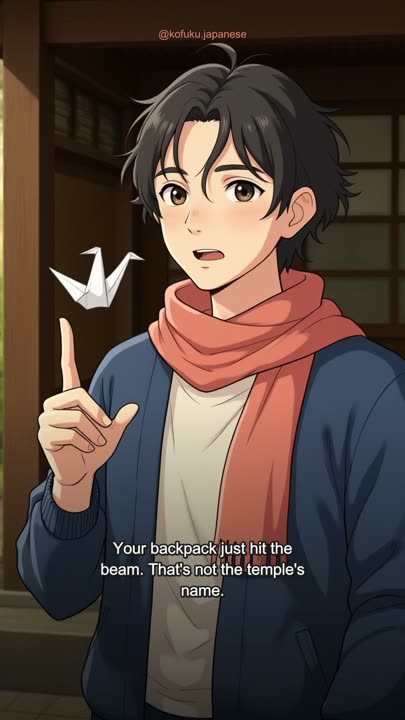
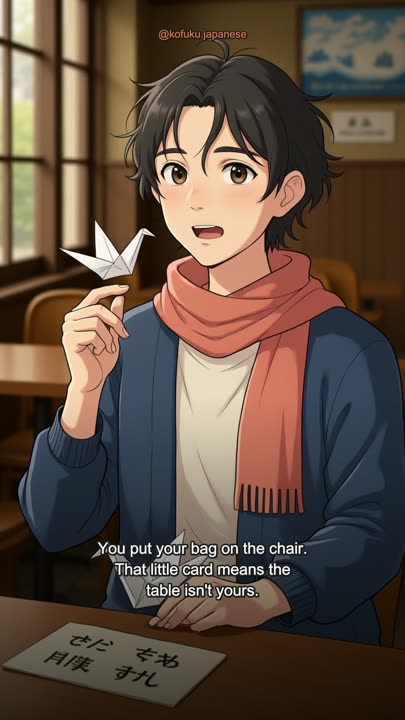
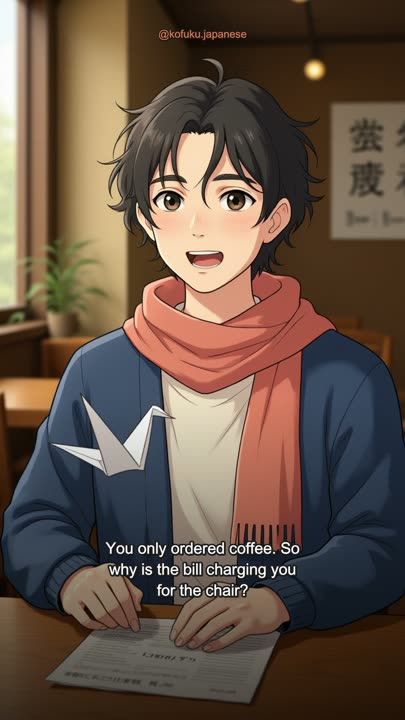
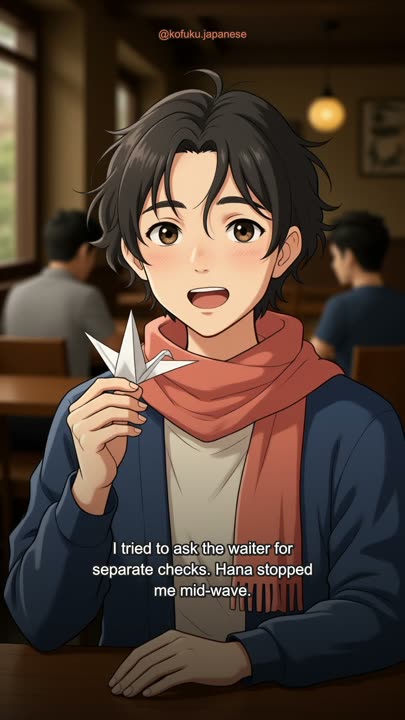
No — tipping is not part of Japanese culture, and restaurants, taxis, hotels, bars, and salons all expect the listed price and nothing more. Service is treated as part of the job, not an extra you top up, and good service is the everyday standard rather than a favor to be rewarded. Leaving extra cash confuses people far more than it flatters them, and a server or driver will usually try to return it. The kind, correct move is simply to pay the bill and offer a genuine thank-you. You can hear the exact phrase for waving off small change in the short reel above.
Why is tipping considered rude in Japan?
Because it can quietly imply the staff wouldn't have done a good job without a bonus — and that cuts against a culture where doing your work beautifully is a source of pride, not a transaction. Prices in Japan are set to be fair and complete, so adding money hints that the quoted price was somehow wrong, or that you're buying special treatment. It also creates an odd imbalance: the worker suddenly feels they owe you something in return. None of this is meant to sound harsh. Respect in Japan is shown through manners and attentiveness, and money on the table is simply the wrong language for it — a bit like handing a friend cash after they cook you dinner.
Are there any exceptions where tipping is okay in Japan?
A few, and they're narrow. A private tour guide or interpreter who spends a whole day with you may graciously accept a thank-you gift of cash, and at a traditional 旅館 (ryokan) inn some guests leave a small amount — called 心付け (kokorozuke) — for the 仲居 (nakai-san) who serves meals in their room. In both cases the money goes inside an envelope, never handed over bare, and is offered discreetly at the very start of the stay or tour, not the end. Even then it's entirely optional and increasingly uncommon. If you skip it, nothing is lost — no one is counting, and the same warmth and respect you'd show at an onsen or ryokan matters far more than the envelope.
What should you do instead of tipping in Japan?
Say thank you clearly and mean it — a warm ありがとうございます (arigatō gozaimasu) with a small nod carries more weight here than any coin. After a meal, the real local equivalent of a tip is ごちそうさまでした (gochisōsama deshita), "thank you for the meal," said to the staff on your way out; it genuinely delights people and costs you nothing. Beyond words, being tidy, patient, and appreciative is the currency that counts. If you learn only a handful of phrases before your trip, these two belong on the list — start with our guide to the three words every traveler should learn and you'll have the polite basics covered.
What happens if you try to leave a tip at a Japanese restaurant?
Usually a staff member will hurry after you, certain you forgot your change or dropped some money. What follows is a small, slightly flustered back-and-forth — they insist on returning it, you insist they keep it — which is the exact opposite of the smooth, generous gesture you had in mind. Many restaurants, especially hotels and higher-end places, already add a service charge (サービス料, sābisu-ryō) to the bill, so the "extra" is built in. The clean move is to pay the total you're shown and let your thanks do the tipping. It's also why paying in Japan is refreshingly simple: the number on the bill is the number you pay.
How do you say "keep the change" in Japanese?
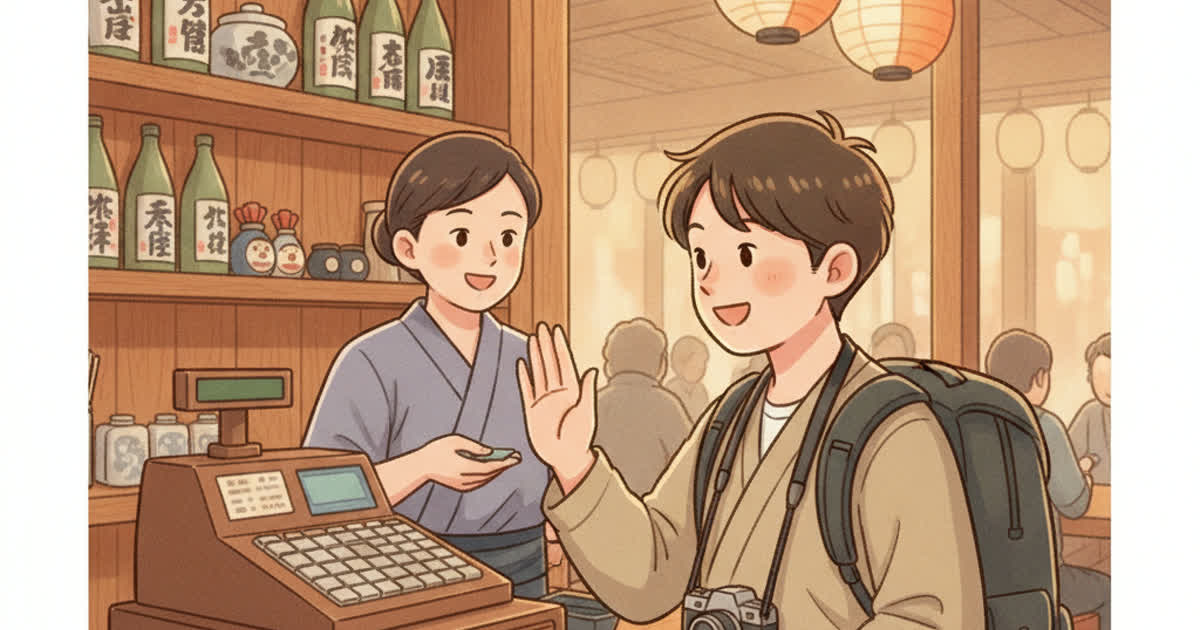
Say おつりはいいです (otsuri wa ii desu) — literally "the change is fine," meaning "you can keep it." It's most natural in a taxi when you'd rather not fumble with coins, or when rounding a small fare up is easier than waiting on the last few yen. Notice this isn't really a tip: it's waving off loose change, and it's the one gesture close to tipping that never reads as rude. A gentler version is だいじょうぶです (daijōbu desu), "it's okay," said with a small wave of the hand. Either way, it stays light and casual — no ceremony, no envelope.
So relax and leave the calculator in your pocket: in Japan, the price is the price, and a sincere thank-you is the best tip there is. For more small phrases that smooth over real travel moments, browse all our travel reels.