Japan has a reputation as a cash-loving country, and it's half true: cards work in far more places than they used to, but there are still moments where only yen will do. Knowing which is which — and carrying a little cash for the gaps — is all it takes to pay smoothly from your first konbini run to your last back-street ramen counter.
Can you pay by credit card in Japan?
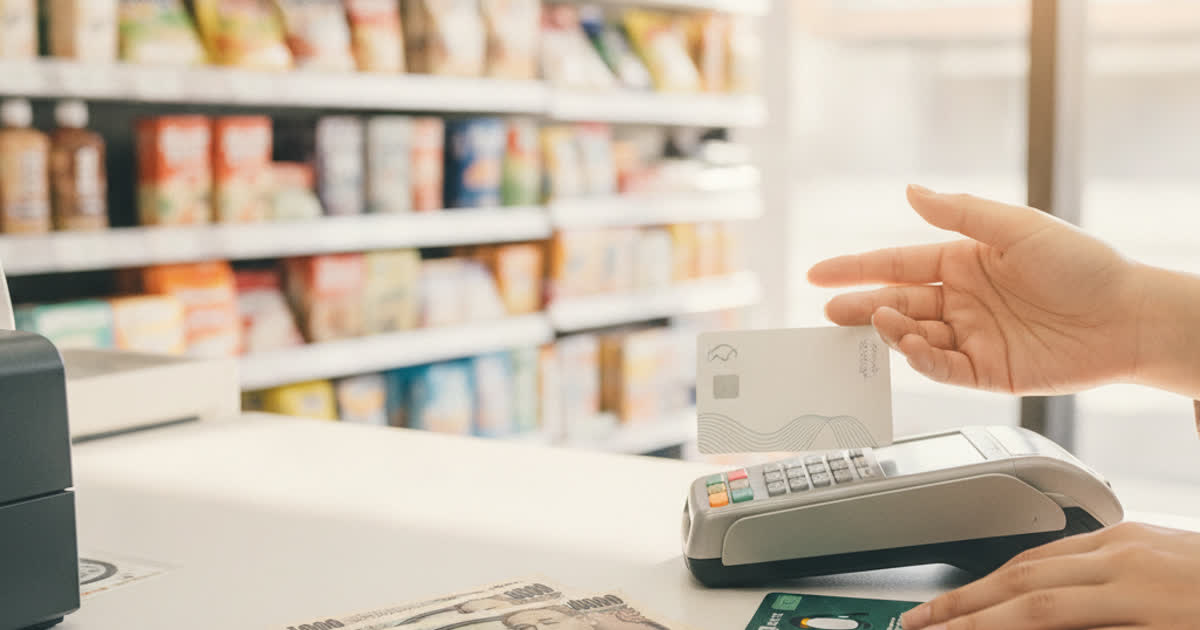
Yes, in most of the places a traveler spends money — but not everywhere, so never rely on cards alone. Department stores, hotels, chain restaurants, convenience stores, big shops, and train ticket machines almost all take Visa and Mastercard (and often contactless tap). Where cards fail is the small, local, and traditional: family-run restaurants, tiny izakaya, street-food stalls, some temples and shrines, small guesthouses, and rural shops. The safe rule is to treat cities and chains as card-friendly and everything small or old-fashioned as cash-first. You can hear the exact phrase to check in the short reel above.
Where do you still need cash in Japan?
Cash is still king at small, independent, and traditional spots. Expect to pay yen at mom-and-pop restaurants and izakaya, festival (matsuri) food stalls, local markets, older ryokan and guesthouses, small temples and shrines (for charms and entry), coin lockers, and many small clinics. A lot of these places have no card reader at all, and some post a small sign: 現金のみ (genkin nomi), "cash only." When you're unsure, assume cash — getting caught short at the register in a tiny shop is the one genuinely awkward payment moment in Japan, and it's easily avoided.
What is a Suica or Pasmo IC card, and where can you use it?
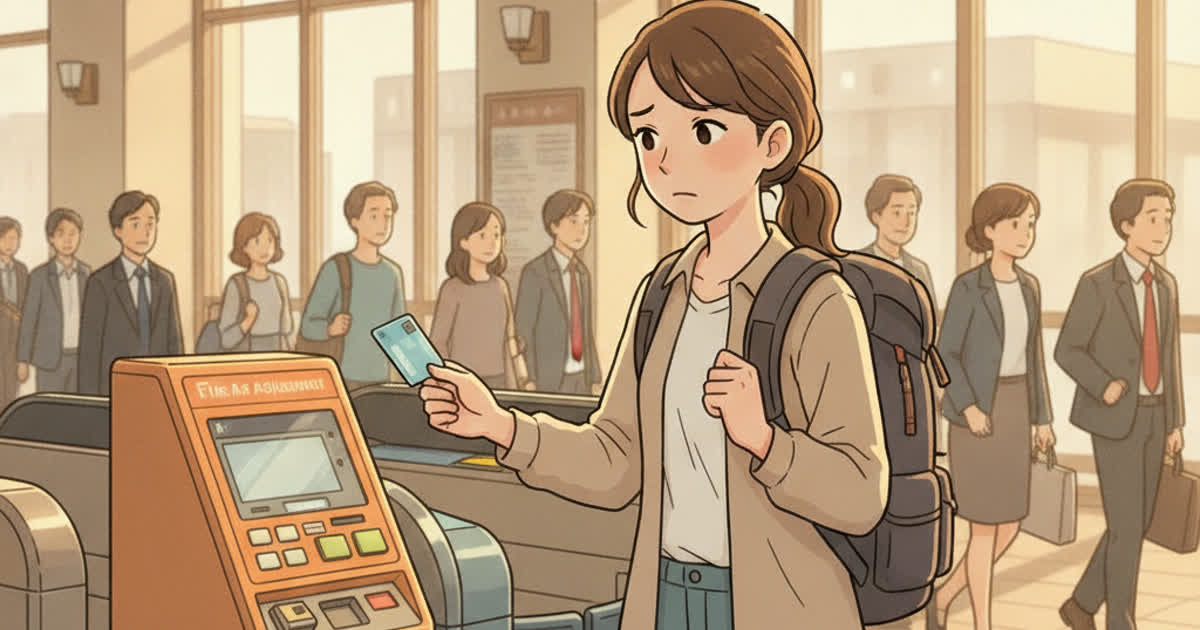
An IC card like Suica (スイカ) or Pasmo (パスモ) is a rechargeable tap-to-pay card that's the single most convenient way to spend small amounts in Japan. You load it with cash at any station machine, then tap it to ride trains and buses and to pay at convenience stores, vending machines, station shops, lockers, and a growing list of everyday stores. There's no PIN and no signature — just tap. The physical cards have had supply limits, so the easy route now is to add Suica or Pasmo to Apple Wallet (or Google Wallet) on your phone, or pick up a Welcome Suica for tourists at the airport. It won't cover a cash-only restaurant, but for transit and quick buys it's effortless.
How much cash should you carry in Japan?
Carry enough to cover a day or two of small, cash-only spending — for most travelers that's around ¥10,000 to ¥20,000 on hand, topped up as you go. Japan is very safe, so carrying cash isn't the worry it is elsewhere, and coins matter here too: the ¥500 and ¥100 coins add up fast and are handy for vending machines, lockers, and shrines. Think of your card as the default for anything mid-to-large and your cash as the backup for everything small, local, or unexpected. Withdraw a fresh chunk every few days rather than one giant sum, and you'll rarely be caught out.
How do you get cash from an ATM in Japan?
Use a convenience-store or post-office ATM — they're the ones that reliably take foreign cards. The 7-Bank (セブン銀行, Seven Bank) ATMs inside 7-Eleven stores are the traveler's go-to: they're everywhere, run 24 hours, switch to English, and accept most overseas Visa, Mastercard, and cards on the Cirrus/Plus networks. Japan Post Bank (ゆうちょ) ATMs and Lawson/FamilyMart machines work too. Have your card's four-digit PIN ready, choose "Withdrawal" and then a checking or savings account, and take your card and cash promptly. Many bank-branch ATMs, by contrast, reject foreign cards — so head for a konbini, not a bank. Our guide on why you still need cash and where to get it walks through the konbini routine in more detail.
How do you ask if a place takes cards in Japanese?
Ask before you order or pick something up: カードは使えますか? (kaado wa tsukaemasu ka?) — "Can I use a card?" It's polite, clear, and saves you the scramble of discovering a place is cash-only after the food's already made. If they say no, you'll usually hear 現金だけです (genkin dake desu), "cash only." To confirm the other way, you can ask 現金だけですか? (genkin dake desu ka?), "is it cash only?" Lead with sumimasen (excuse me) and a small nod, and this one question makes you look like a seasoned traveler.
Get this rhythm down — cards for the big and chain, cash for the small and local, an IC card for taps in between — and paying in Japan stops being a worry. For more quick phrases that smooth over real travel moments, browse all our travel reels.