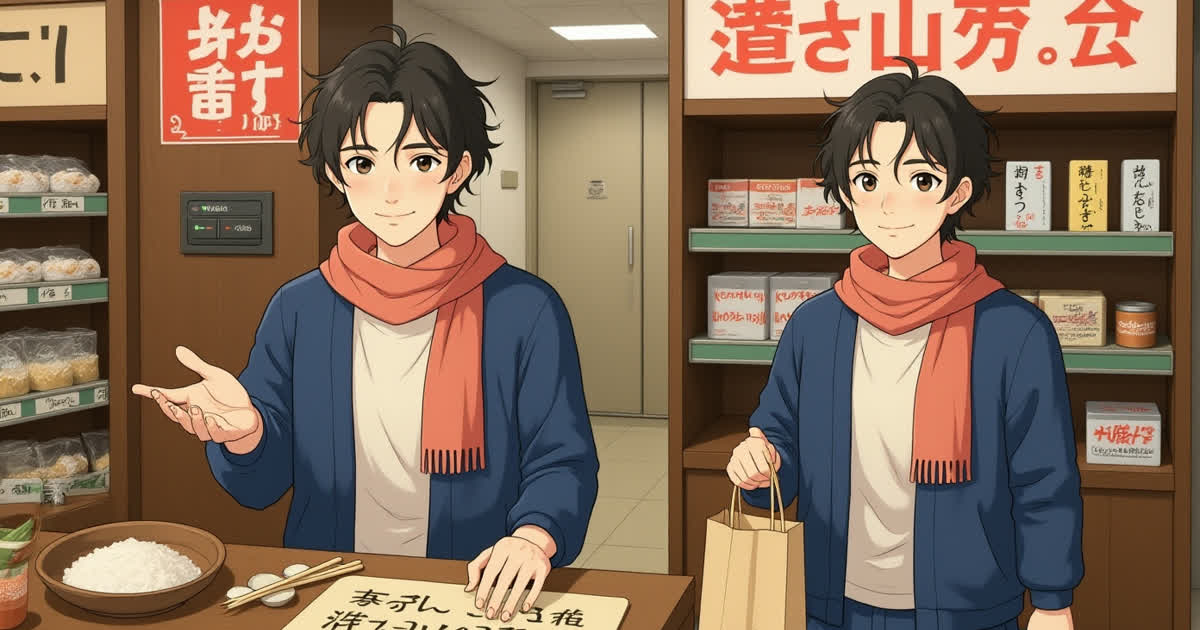
The Japanese convenience store, or konbini, is one of the easiest and most rewarding stops on any trip — but the quick exchange at the register can feel intimidating if you don't know the rhythm. The good news is that it follows a predictable script, and a handful of short phrases will carry you through every visit with a smile.
What do you say at a Japanese convenience store?
Honestly, you don't need much. A friendly arigatō gozaimasu (ah-ree-gah-toh goh-zah-ee-mahs), "thank you," covers the end of nearly every transaction. When the cashier offers you something, answer with hai, onegaishimasu (hai, oh-neh-gah-ee-shee-mahs), "yes please," or politely decline with daijōbu desu (dye-joh-boo dess), which works as a soft "I'm fine / no thanks." Those three phrases, plus a nod, are enough to handle the whole counter exchange like a regular. For more building blocks to carry around town, see our list of essential Japanese words for tourists.
How do you say "I don't need a bag" in Japanese?
Say fukuro wa irimasen (foo-ku-roh wah ee-ree-mah-sen), which literally means "I don't need a bag." Since Japan introduced a small charge for plastic bags, cashiers will almost always ask, so this is a genuinely useful line — especially if you're carrying a reusable bag or only buying one item. If you do want a bag, just answer hai, onegaishimasu, "yes please," and they'll add it on.
What does the konbini cashier ask you?
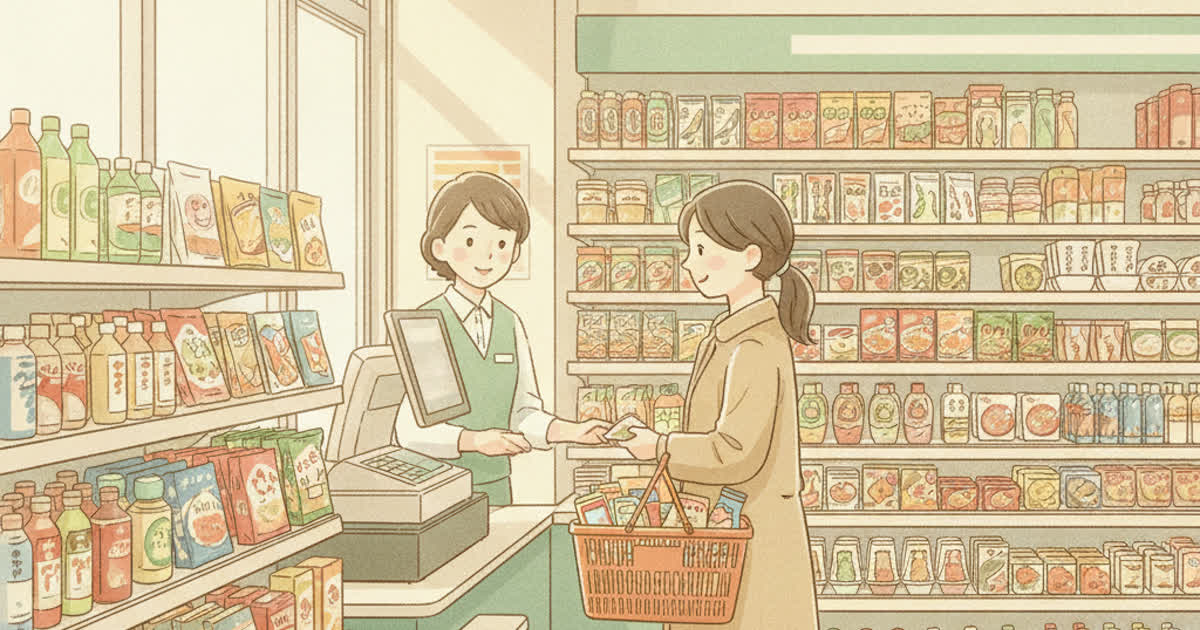
The cashier usually asks the same three quick questions, so listen for them. First, the bag: fukuro wa? (foo-ku-roh wah), "a bag?" Second, for hot foods like bentō or fried chicken, whether to heat it: atatamemasu ka? (ah-tah-tah-meh-mahs kah), "shall I warm this?" Third, when you buy something meant to be eaten with utensils, chopsticks or a spoon: o-hashi wa? (oh-hah-shee wah), "chopsticks?" A simple hai or daijōbu desu answers each one.
How do you pay at a konbini?
Paying is fast and increasingly touch-free. You can tap a credit card or an IC travel card such as Suica or Pasmo on the reader, or pay with cash. If you use cash, place the coins and bills in the small tray on the counter rather than handing them directly to the cashier — that little tray is the Japanese custom, and they'll return your change the same way. If you need yen first, the 7-Bank ATMs inside 7-Eleven stores reliably accept foreign cards, making them a traveler's best friend.
Do you need to speak Japanese at a konbini?
No — you can complete an entire konbini visit in total silence if you want to. Bring your items to the counter, watch the screen for the total, tap your card or place your cash in the tray, and you're done. The phrases above simply make the experience warmer and smoother, and a single arigatō gozaimasu on the way out goes a long way. If you'd like to hear these lines spoken at natural speed, browse all the travel reels.
What can you actually do at a Japanese konbini?
Far more than grab a snack. The big three chains — 7-Eleven, FamilyMart, and Lawson — function as mini service hubs. You can withdraw yen from the ATM, pay utility and shopping bills, buy concert and long-distance bus tickets at the in-store kiosk, print and copy documents, ship luggage to your next hotel, pick up genuinely good hot meals, and use a clean, free restroom. Treat the konbini as your trip's reliable home base, open around the clock when you need it most.