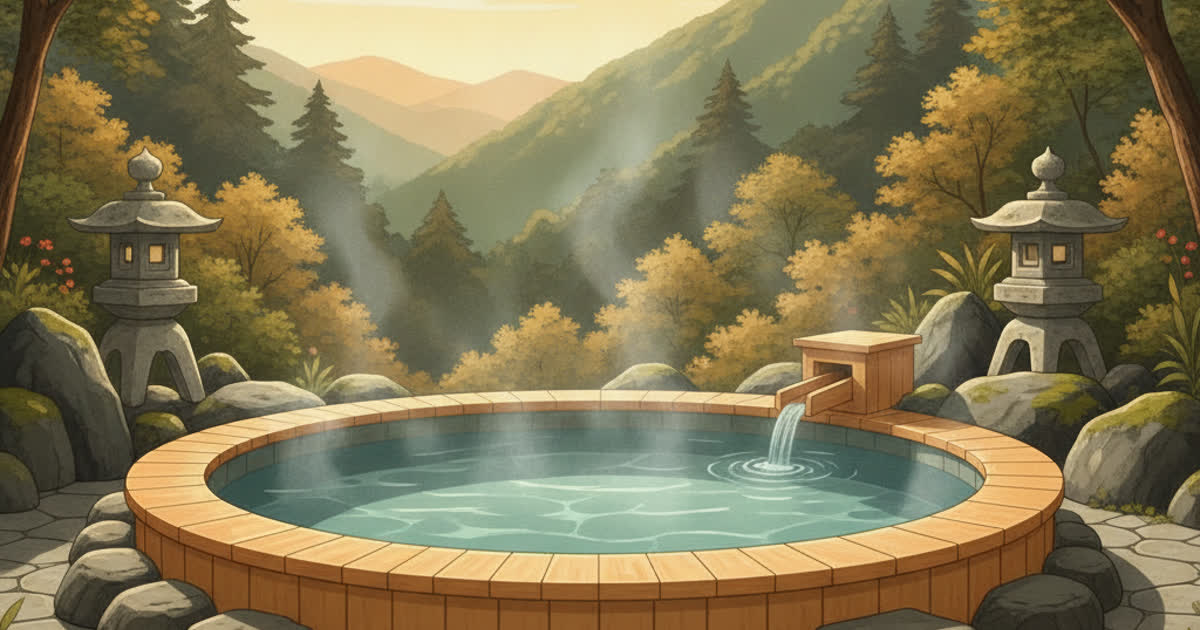
A Japanese onsen (温泉, hot spring) is one of the most relaxing things you can do in Japan — but the moment you walk in, there's a whole unwritten rulebook everyone else already knows. None of it is hard, and it all comes down to one idea: keep the shared water clean and calm for the next person. Here's exactly what to do, so your first soak feels easy instead of nerve-wracking.
What are the basic etiquette rules for a Japanese onsen?
Wash your body thoroughly at the seated shower stations before you enter, bathe fully naked, and rinse off with hot water — かけ湯 (kakeyu) — right before stepping into the tub. Keep your small towel out of the water, tie long hair up, don't take photos, and soak quietly without swimming or splashing. That's the entire routine, and every single rule traces back to the same principle: the water is shared and never drained between guests, so everyone keeps it clean. Get the wash-first step right and the rest falls into place naturally. You can hear the essentials said out loud in the short reel above.
Do you have to wash before getting in an onsen?
Yes — this is the one rule you must never skip. You wash your entire body at the seated shower stations (体を洗います, karada o araimasu) with soap, then rinse away every last bit of suds before you go anywhere near the tub. Because the bath water is shared and nobody empties it between guests, everyone is expected to enter already spotless. Sit on the little stool rather than standing, keep the spray aimed low so you don't splash the people beside you, and only head for the bath once you're completely rinsed. Right before you get in, do a quick かけ湯 (kakeyu) — ladle or pour hot water over yourself a few times to warm your body and give it one final rinse.
Can you wear a swimsuit in an onsen?
No — a traditional onsen is a naked bath, and swimsuits, underwear, and shorts are not allowed in the water. It feels strange to first-timers, but everyone is in exactly the same situation, no one is looking, and going bare is simply how it works. The baths are almost always separated by gender, so you're only ever undressed around people of your own. The rare exceptions are mixed-gender or resort-style baths (混浴, konyoku) that specifically provide bathing wear, and private baths you reserve just for yourself. If bathing naked with strangers isn't for you, a private bath solves it — the same fix we recommend in our guide on whether you can go to an onsen with tattoos.
What do you do with the small towel in an onsen?
Keep it out of the bath water. The small towel (タオル, taoru) is for washing and for covering yourself while you walk around, but it must never touch the water in the tub — most people fold it and rest it on their head, or set it on the stone edge of the bath. Dipping or wringing the towel in the water is the single most common tourist slip, because it carries soap residue and loose fibers into the bath everyone shares. In our reel we put it as plainly as it gets: タオルはお湯に入れないでね (taoru wa oyu ni irenaide ne) — "keep your towel out of the water."
What should you do with long hair in an onsen?
Tie it up so it never touches the water. Long hair trailing in the bath is considered unhygienic, so use a hair tie or clip to keep it above the surface — twist it into a bun or pin it up under your folded towel. Bring your own elastic if you have one, though many bathhouses keep a few by the mirrors at the washing stations. It's the exact same logic as the towel rule: only clean skin goes in the water, nothing else. A quick tie-up before you leave the shower area and you're set for the soak.
Can you take photos in an onsen?
No — never photograph the bathing area. Everyone around you is undressed, so phones and cameras are strictly off-limits in both the changing room and the baths, and most onsen simply ask you to leave your phone in the locker. If you want that dreamy, steaming hot-spring shot for your trip album, take it of the building's exterior, the garden, or a private bath you've booked to yourself with no one else around. Protecting other bathers' privacy is a core part of onsen manners, and it's taken seriously.
Do you rinse off after an onsen or not?
It's genuinely your choice. Many people towel off and leave the mineral-rich water on their skin, on the idea that the minerals are good for you — this is completely normal and common. Others prefer a light rinse at the shower afterward, especially when the water is high in sulfur and could irritate sensitive skin. Either way, wring out your small towel and pat yourself down before you step back into the changing room, so you're not dripping across the floor. Then dress, hydrate, and enjoy the warm, loose-limbed glow — that's the whole point.
Master these and you'll move through any onsen like you've done it a hundred times. For more small phrases that smooth over travel moments in Japan, browse all our travel reels.