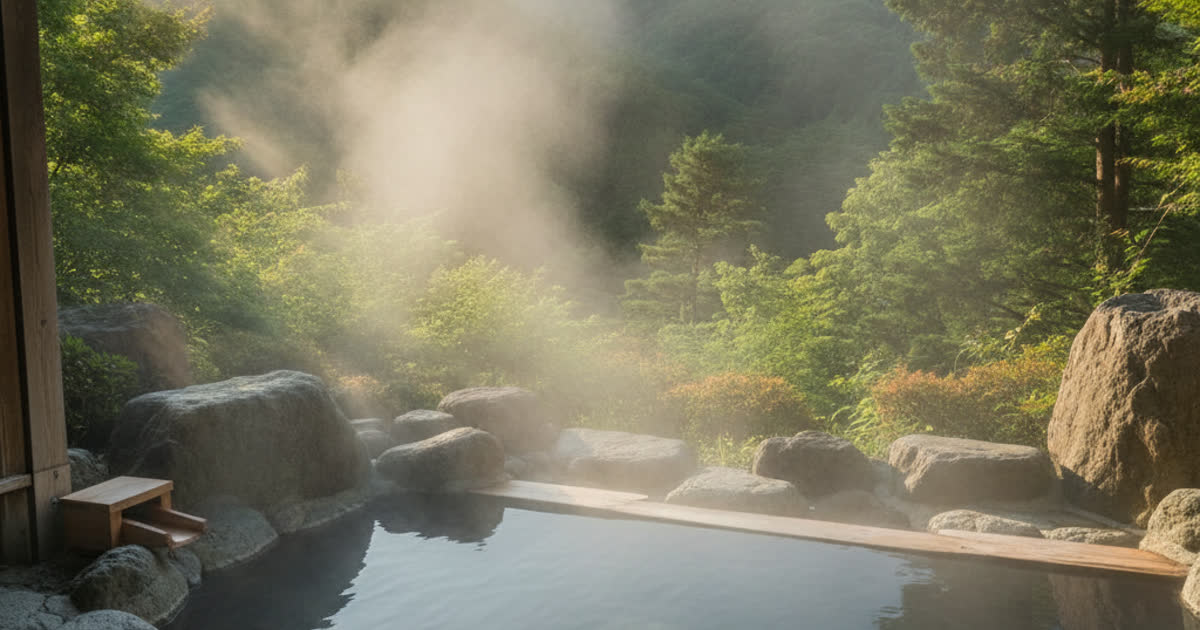
A soak in a Japanese onsen (hot spring) is one of the best things you can do in Japan — but if you have a tattoo, the door isn't always open. The rules vary bath to bath, and they're changing, so a little preparation and one polite phrase keep the whole experience relaxed instead of awkward.
Can you go to a Japanese onsen with tattoos?
Sometimes — it depends entirely on the specific bath, so there's no single yes-or-no answer. Many traditional onsen and sentō (public baths) still turn away visible tattoos, while a growing number of tattoo-friendly spots and private baths happily welcome inked guests. The safest move is to check the bath's policy before you go, or simply ask at the front desk before you pay and undress. Treat "no tattoos" as a house rule to confirm rather than a nationwide law, and you'll find far more places open to you than you'd expect.
Why do many onsen ban tattoos in Japan?
The ban comes down to history: in Japan, tattoos have long been associated with the yakuza (organized crime), so refusing them was a way for communal baths to keep that element out. Because everyone bathes together, naked, in the same water, baths lean cautious about anything that might make other guests uneasy. Most staff aren't judging you personally — it's an old blanket policy, not a comment on your ink. The good news is that awareness of foreign visitors getting tattoos for fashion or culture is growing fast, which is exactly why the rules are slowly relaxing across the country.
How do you find a tattoo-friendly onsen or private bath?
The easiest fix is to skip the shared bath entirely and book a private one. Search for "tattoo-friendly onsen" or "tattoo OK" plus your destination, or look for a kashikiri-buro (貸切風呂, private/reserved bath), a "family bath," or a guest room with its own rotenburo (open-air bath). Many ryokan (traditional inns) rent private baths by the hour, so no one else ever sees your tattoo. If you're set on a public bath, a quick online check or a message to the property ahead of time tells you the policy before you've traveled all the way there.
Can you cover a tattoo to enter an onsen?
Often, yes — for a small tattoo. Waterproof cover-up patches or skin-tone tape, sold at Japanese pharmacies and online, can hide a modest design, and some baths explicitly allow entry as long as it's fully covered. Bring a patch a little larger than the tattoo so nothing peeks out once you're in the water. Large pieces or multiple tattoos are genuinely hard to conceal, though, so in that case a private bath is the calmer, more reliable option than hoping tape holds. When you cover up, do it before you reach the changing room so you're never standing exposed at the counter.
How do you politely ask if you can enter an onsen with a tattoo?
Ask at the front desk before you pay, using the exact phrase from our reel: "tatū ga atte mo hairemasu ka?" (タトゥーがあっても入れますか?) — "Can I go in even with a tattoo?" Lead with "sumimasen" (excuse me) to open politely, the same all-purpose word we cover in our guide to the essential words every traveler should know. If the staff hesitate, offer a solution: "kakushimasu" (I'll cover it) while pointing to a patch. You can hear the phrase said naturally in the short reel above.
What happens if staff notice your tattoo inside the onsen?
If a bath's rule is no tattoos and staff spot yours after you've gone in, they'll usually ask you politely to cover it or to step out — it's rarely a dramatic scene, but it is uncomfortable, and you may not get your money back. Getting turned away mid-soak is the exact situation the question at the desk is designed to prevent. Asking first, or choosing a private or tattoo-friendly bath from the start, costs you thirty seconds and removes all the risk. For more phrases that smooth over these small travel moments, browse all our travel reels.