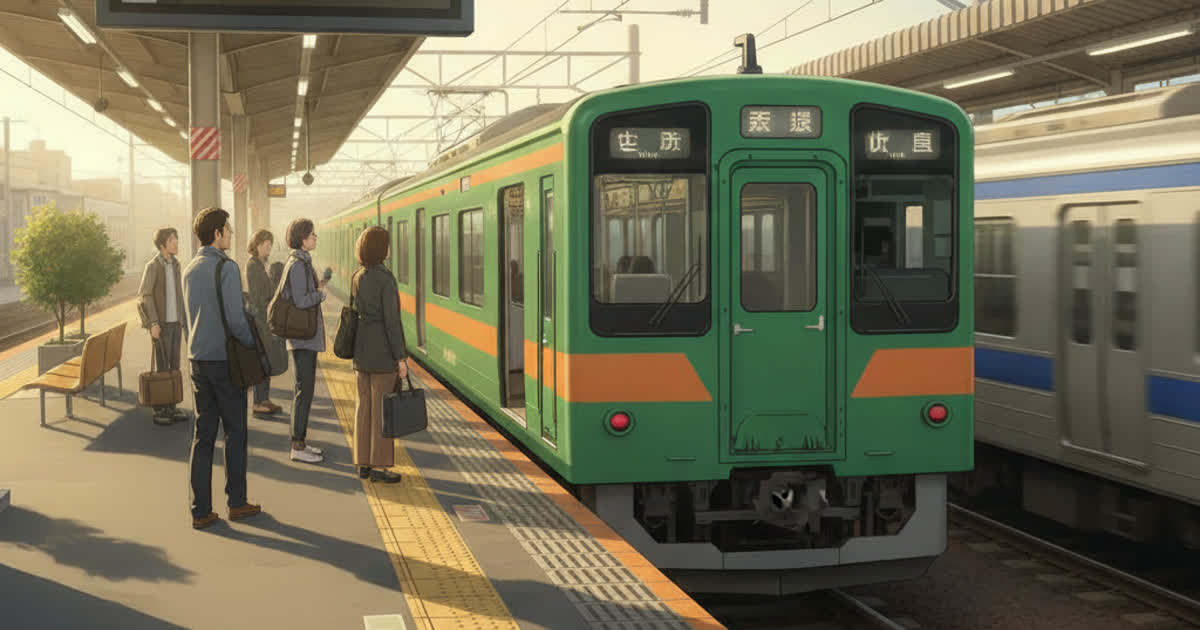
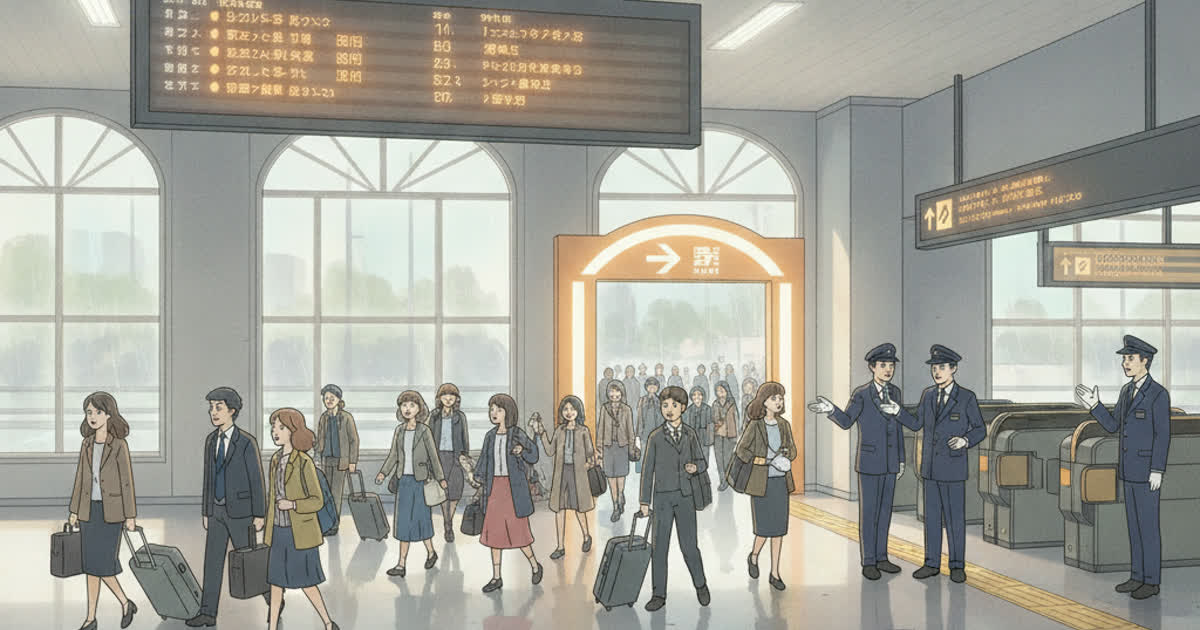
The tell is the crowd. A Japanese platform during a suspension does not mill about or grumble; it turns around as one and walks briskly back out through the gates, and if you are the only person still standing there reading the departure board, you have missed something everyone else grew up knowing. What they saw was four kanji: 振替輸送 (furikae yusō). It means a rival railway two blocks away has just agreed to carry them, free, and the only real question is whether it will carry you. That depends on a small piece of paper or plastic in your pocket, and this is how to find out in about five seconds.
What is furikae yusou, Japan's substitute transport?
振替輸送 (furikae yusō) is a standing agreement between railway companies to carry each other's passengers when a line goes down. The moment an operator declares 運転見合わせ (unten miawase, service suspended), it opens designated detour routes on nearby rival railways, and anyone holding a qualifying ticket for the blocked section rides them at no extra cost. The board and the announcements switch to 振替輸送実施中 (furikae yusō jisshichū), "substitute transport in operation." Nothing is refunded and nothing is rebooked — you simply walk to the other company's station and keep going. It is a genuinely remarkable piece of civic machinery, and it is invisible if you cannot read the board. The reel above walks through the same moment at the speed it actually happens.
Which tickets qualify for substitute transport in Japan?
Anything that names a fixed section, bought before the disruption started. That means a 乗車券 (jōshaken, ordinary paper ticket), a 定期券 (teikiken, commuter pass), a 回数券 (kaisūken, coupon ticket) and most おトクなきっぷ (otoku na kippu, discount passes) that cover the suspended stretch. A ticket bought after the suspension was announced does not count, and 途中下車 (tochū gesha), breaking the journey partway, is not allowed: it is one continuous ride to the destination printed on your ticket, valid that day only. A Japan Rail Pass sits in an awkward spot here, because the railway being asked to carry you is not JR — do not assume, hand it over at the gate and let the staff rule on it.
Can you use furikae yusou with a Suica or Pasmo?
Not on the stored balance, which is the trap almost every visitor falls into. JR East's own explanation is that when you tap in with charge, the fare is calculated only when you tap out, so at the moment of the suspension the system holds no record of where you were going and therefore no section to substitute. A Suica or Pasmo 定期券 used inside its registered commuter zone does qualify, because that zone is fixed in advance. Same physical card, opposite answer, depending on how you happened to be using it. Since an IC card is exactly what most tourists tap with — the same card that works for almost everything else — assume you are outside the scheme until someone tells you otherwise.
How do you use substitute transport at the station?
Do not touch the automatic ticket gate. Tapping or inserting your ticket can void the whole arrangement, because the system needs your journey left open. Go to the 有人改札 (yūjin kaisatsu), the staffed gate beside the machines, show your ticket or pass, and take the 振替乗車票 (furikae jōshahyō, substitute transport voucher) if that operator issues one. Ride only the detour route the staff name — the agreement covers that path and nothing else — and leave through the staffed gate at the far end too, handing the voucher over there. One ride, one day, no stopping off for lunch on the way. Staff will physically point you toward the right station exit if you look lost, which is the whole reason to be standing in front of a human rather than a machine.
How do you ask about substitute transport in Japanese?
The one sentence that settles it is 振替輸送、使えますか? (furikae yusō, tsukaemasu ka), "can I use the substitute transport?" Say it at the staffed gate while holding out your ticket and the answer comes back in about five seconds, usually with a pointed finger attached. Two more are worth having ready. 振替輸送、やってますか? (furikae yusō, yattemasu ka) asks whether it has been activated at all, which matters because a short delay does not trigger it. And 新宿まで行きたいんですが (Shinjuku made ikitai n desu ga), "I want to get to Shinjuku," makes staff name the route rather than answer yes or no. If the reply arrives faster than you can follow, the phrasing that slows a station conversation down works here too.
What if your IC card is not covered by furikae yusou?
You pay the other railway normally, but tidy up the tap you already made first. Tell the staff at the gate that you could not travel and they will cancel the entry record so no fare is deducted; if you got partway before the line stopped, they settle just the section you actually rode. Then buy a ticket on the rival line like any other passenger and get moving, because the detour line fills up fast. Ask for a 遅延証明書 (chien shōmeisho, delay certificate) if you need to explain a missed tour or check-in. When the alternative trains are already crushed, a city bus or asking someone to call you a taxi beats waiting for a restart that may be two hours away.
Does substitute transport work everywhere in Japan?
No, and that surprises people who learned the system in Tokyo. Furikae yusō exists only between operators holding a 連絡運輸 (renraku unyu, through-traffic) contract with each other, so it is dense where lines overlap — Tokyo, Osaka, Nagoya — and simply absent where one railway is the only railway. JR Kyushu has no substitute-transport agreements with other companies at all. Where there is no rival to hand passengers to, operators run 代行バス (daikō basu, replacement buses) along the closed section instead: slower, free, and boarded from outside the station. In the countryside the honest plan is a longer buffer in the itinerary rather than a clever workaround.
Suspensions cluster in the months you are most likely to be visiting — the same typhoon and downpour season that produces planned shutdowns of whole networks, where furikae yusō is no help at all because the rival lines are shut too. The version worth remembering is short. Read the board for 振替輸送実施中, do not tap the gate, walk to the staffed one, and ask. And keep an eye on the clock while you do it: a detour route eats twenty or thirty minutes, which is exactly the margin that decides whether you make the last train or spend the night in a Shinjuku café.