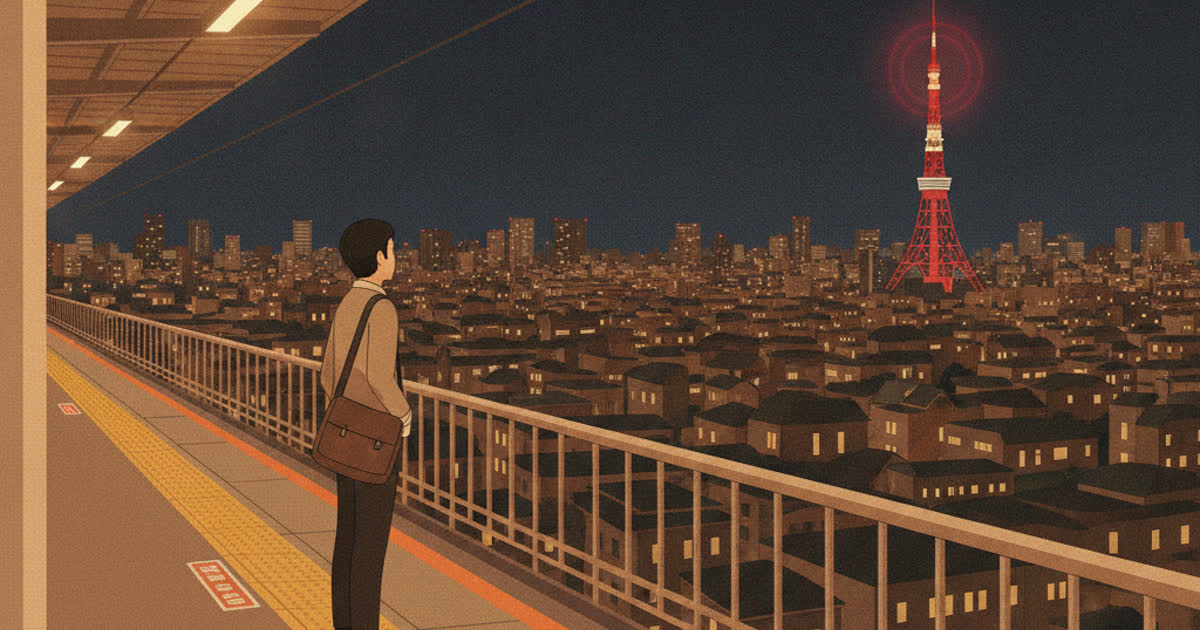
Japan runs the most reliable railway on earth for about nineteen hours a day, and then it simply stops. There is no night line, no reduced hourly service, no all-night route on a weekend. Around midnight the last train pulls out, the shutters come down over the ticket gates, and a city that moves millions of people an hour has no rail service at all until dawn. Tourists are caught by this constantly, usually on the one night they stayed for a second drink. The word to know is 終電 (shūden), literally "end train," and it is treated as a hard deadline by everyone in Japan — you will see whole tables in an izakaya stand up at the same moment and leave mid-conversation.
What time is the last train in Japan?
Between roughly 23:30 and 00:30 for most lines in most cities, with a small number of central Tokyo services running until about 01:00. That is the whole answer, and the important half of it is what follows: nothing runs after that. Japan has no 24-hour rail service anywhere, not in Tokyo, not on New Year's Eve outside a handful of special-timetable nights, and not on a Saturday. The network closes for four to five hours and reopens around 05:00. Tokyo also moved its last trains slightly earlier in a 2021 timetable revision, cutting up to about half an hour off the end of some lines to make room for overnight track maintenance, and those cuts were never reversed — so advice you read in an older guidebook is optimistic by design.
What time is the last train in Tokyo, Osaka and Kyoto?
Tokyo runs latest, Kyoto stops earliest, and Osaka sits in between. In Tokyo, most JR and Tokyo Metro lines make their final departures between 00:00 and 00:30, and trains keep moving on parts of the Yamanote loop until roughly 01:00. In Osaka, the Midosuji Line — the spine of the city — sends its last southbound train out of Umeda at about 23:55, and the outer ends of the line finish earlier still. In Kyoto, the last Karasuma Line subway leaves Shijō at around 23:44, and Kyoto's city buses, which is how most visitors actually get around there, stop far earlier than that, often by 22:30. If your evening is in Kyoto, treat 22:00 as the moment to check how you are getting back.
Why is the last train on your line not the last train in the city?
Because the final train of the night usually does not run the full route. Late services often terminate early at a major interchange — the board will say the train goes only as far as, say, Nakano or Shin-Osaka — so the last train that actually reaches your station can leave 30 to 45 minutes before the last train advertised for that line. Then add transfers. A connecting line's last train does not wait for yours, so a journey with one change is governed by whichever leg gives out first, and that is almost never the one you checked. This is also why the departure that looks safe can strand you halfway: it is worth confirming that the train stops where you need, because an express will blow straight past a small station and the next local may not exist.
How do you ask what time the last train is in Japanese?
One sentence does it: 終電は何時ですか? (shūden wa nanji desu ka) — "what time is the last train?" That is the phrase in the reel above, and it works at a ticket window, at a hotel front desk, or asked of the bartender who is about to pour you another. To tie it to your destination, put the place first: 新宿行きの終電は何時ですか? (Shinjuku-yuki no shūden wa nanji desu ka), "what time is the last train to Shinjuku?" Two more are worth carrying. 終電に間に合いますか? (shūden ni ma ni aimasu ka) asks "will I make the last train?" and gets you a yes or no fast. これが終電ですか? (kore ga shūden desu ka), "is this the last train?", settles it on the platform. If the reply comes back at full speed, the phrase that slows a Japanese conversation down is the one to have ready.
How do you know which train on the board is the last one?
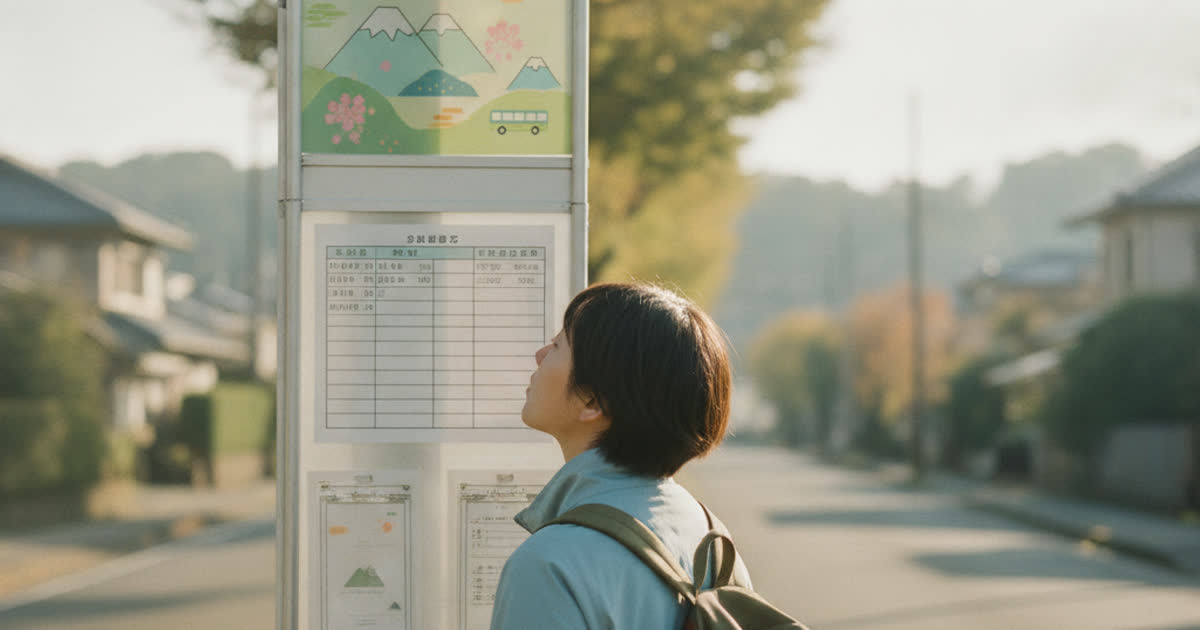
Look for 終 or 最終 (shū / saishū, "final") beside the departure. It is normally printed in red on the platform display and on the paper timetable posted by the stairs, and stations announce 本日の最終電車です (honjitsu no saishū densha desu), "this is today's final train," as it boards. The paper timetable is the one to trust, because it also shows the destination of that final service, which is the detail that decides whether it is any use to you. Photograph it when you arrive in the evening rather than squinting at it at midnight. Announcements on board are worth half an ear too, since one word in them means stand up now.
What happens if you miss the last train in Japan?
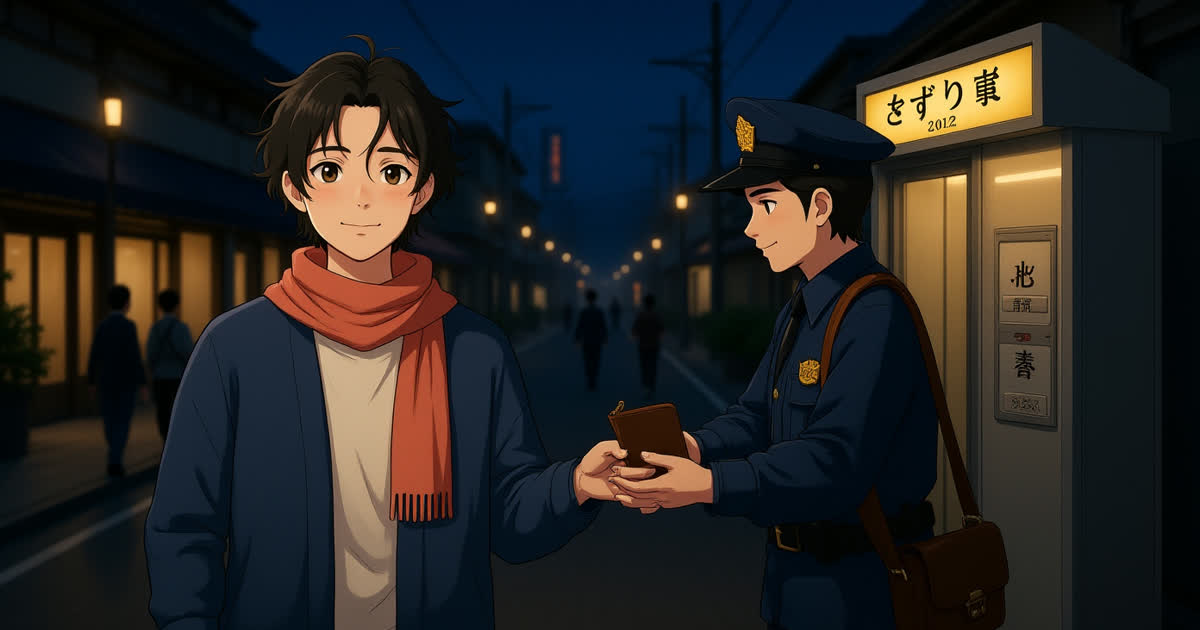
Nothing dramatic — you pick one of four options, and the sooner you pick, the cheaper it is. A taxi is instant and costly. A capsule hotel or a cheap business hotel near the station typically runs ¥3,000 to ¥7,000 and gets you a shower and a real few hours of sleep. A karaoke box sells a flat-rate overnight "free time" package, often ¥1,500 to ¥3,000 with drinks, running until about 05:00 — the fallback the entire country uses, and the desk will ask you one question before handing over a room. A manga café (漫画喫茶, manga kissa) is the same idea with a reclining chair and a door. Late-night city buses exist in Tokyo on a few routes but cover almost nothing, so do not plan around them. Rough sleeping is not done in Japan and station staff will move you along, so commit early: on a Friday the capsules near nightlife districts sell out before 01:00. Walking in to a hotel at that hour, the check-in sentence is all you need, and if you are genuinely lost rather than merely stranded, the little police box on the corner is staffed all night.
How much does a taxi cost after the last train?
More than you think, because a late-night surcharge of about 20 percent applies from 22:00 to 05:00. A few kilometres across central Tokyo comes to roughly ¥2,000 to ¥4,000; a real cross-city run from a nightlife district out to a suburban hotel can pass ¥10,000, which is why a capsule hotel is often the rational choice rather than the adventurous one. Cards and IC cards are accepted in nearly every taxi in the big cities, apps like GO and Uber will summon one, and staff will call one for you if you ask with the right phrase. One thing not to do is round up the fare: Japan does not tip, and the meter is simply the price.
What time does the first train start in Japan?
Around 05:00, with some lines beginning nearer 04:30 — the earliest Yamanote services start at about that time. The first train is 始発 (shihatsu), so 始発は何時ですか? (shihatsu wa nanji desu ka) asks when it leaves, and it is the natural follow-up question once you know you have missed the last one. That four-to-five-hour gap is exactly the industry that karaoke chains, capsule hotels and 24-hour cafés were built around, and the 05:00 train out of a major station on a Saturday morning is a quiet, slightly rumpled institution. Whatever hour you board, the usual train etiquette still applies — phones stay silent even at dawn.
The practical version fits on one line: assume midnight, check the real time for your own station and direction before you go out, and know which of the four fallbacks you would use. Do that and the last train stops being a risk and becomes what it is for people who live in Japan — a number you carry in your head all evening. Weather can move the deadline too, since trains are suspended in advance during a typhoon, and on a big travel weekend the late services fill early. Learn the one question, ask it before you need the answer, and the night stays yours.