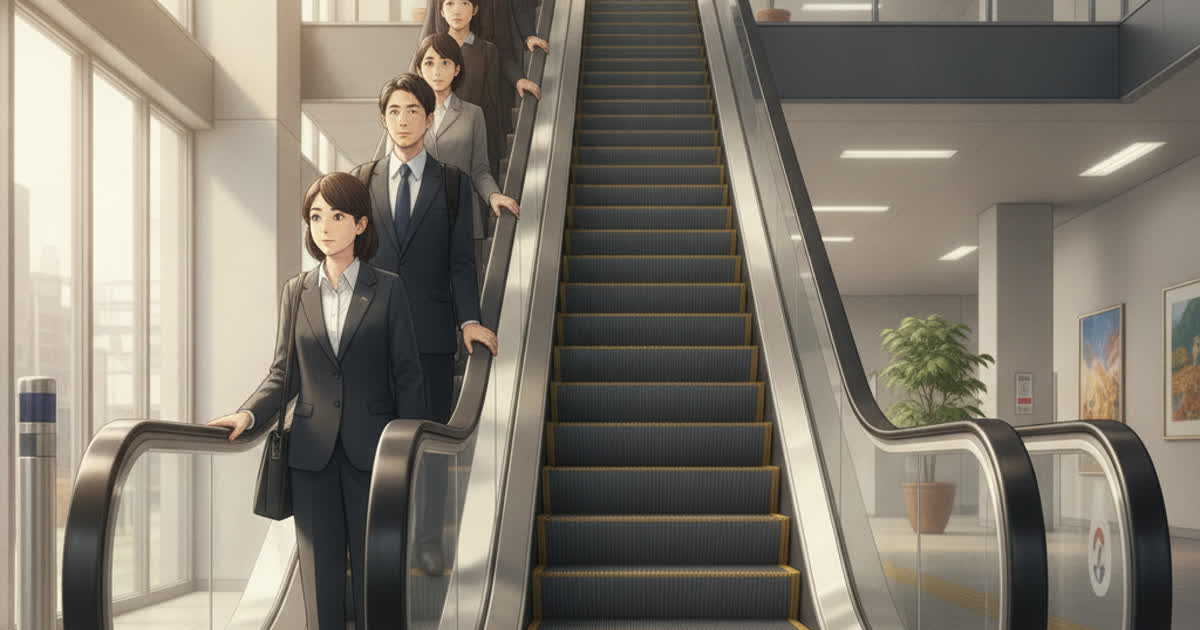
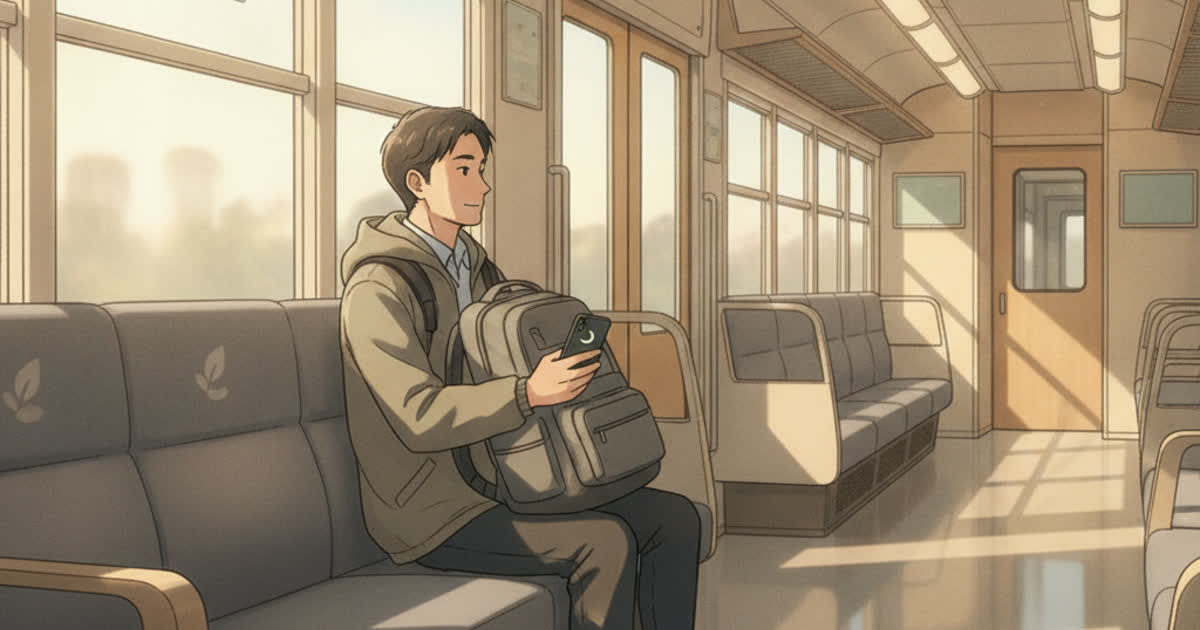
Trains are where you'll spend the most time up close with everyday Japan — and where the unwritten rules are strictest and quietest. Japanese carriages run on a shared calm: phones on silent, voices low, nobody crowding anyone. None of it is hard, and getting it right means you blend in instead of drawing the one look nobody wants. Here's exactly what to do on every kind of train.
What are the etiquette rules on Japanese trains?
Keep quiet and keep to yourself — that's the whole code. Set your phone to silent, マナーモード (manā mōdo, "manner mode"), and never take voice calls; keep any conversation low; wear a backpack on your front or set it on the rack so it doesn't knock people; give up the 優先席 (yūsenseki, priority seats) to anyone who needs them; skip eating on local commuter trains; and line up on the platform marks, letting passengers off before you board. Every rule traces back to a single idea: don't disturb the people packed in around you. You can hear the core one said out loud in the short reel above.
Can you talk on the phone on a Japanese train?
No — taking a phone call in the carriage is the single biggest tourist giveaway. Phones go on マナーモード (manā mōdo, silent mode) and you simply don't answer voice calls on board; text, browse, or watch with earphones instead. If a call is genuinely urgent, let it ring out and step off at the next stop or into the vestibule between cars to call back. Near the 優先席 (yūsenseki, priority seats) the rule is stricter still — signs ask you to switch your phone off entirely during crowded times. Even chatting with a travel companion should be kept to a murmur; a loud conversation carries a long way in a silent train.
Should you give up priority seats on Japanese trains?
Yes — the 優先席 (yūsenseki), the differently-colored seats near the doors, are reserved for elderly passengers, pregnant women, people with disabilities or injuries, and those carrying small children. You can sit there when the train is quiet, but stand and offer the seat the moment someone who needs it boards. A small gesture and どうぞ (dōzo, "please, go ahead") is all the language you need. Keep your phone put away near these seats too, and don't sprawl into the space — the priority area is treated as a little zone of extra courtesy.
What do you do with a backpack on a crowded Japanese train?
Take it off your back and hold it in front of you, or lift it onto the overhead rack. On a packed train a backpack becomes an invisible battering ram — you can't feel it shoving the people standing behind you. Locals swing them around to the front (前に, mae ni) or place them on the rack above the seats, and you'll see signs and announcements asking exactly this at rush hour. The same goes for shopping bags, suitcases, and umbrellas: keep them tucked in tight, off the seats, and clear of the aisle and doorway.
Can you eat or drink on a Japanese train?
On local commuter trains, no — eating is frowned upon, and strong-smelling food especially. A quick sip from a water bottle is fine, but hold off on snacks and meals on crowded city lines where you're pressed against strangers. The happy exception is long-distance and Shinkansen trains, where eating a 駅弁 (ekiben, station lunchbox) at your reserved seat is a beloved travel ritual — see our reel on the ekiben tradition. The rule of thumb: reserved-seat long-distance train, eat away; short urban hop, wait until you're off.
How do you queue for a train in Japan?
Line up behind the marks painted on the platform and let everyone off before you get on. Japanese platforms have neat lines or arrows showing where each door opens and which side to queue, so you form an orderly column and wait your turn rather than bunching around the doors. When the train pulls in, stand to the side of the opening and let arriving passengers step off first, then board in order. Pushing on before people are off is one of the rudest things you can do — and it jams the doorway for everyone.
What do you say if you need to get past someone on a Japanese train?
Say すみません (sumimasen, "excuse me") — that one word moves you through a crowd or up to the door. When your stop is coming and people stand between you and the exit, a quiet すみません、降ります (sumimasen, orimasu, "excuse me, I'm getting off") clears a path fast. If you accidentally bump someone, すみません again works as a light "sorry," paired with a small nod. It's the most useful word you can carry on a train — more on everything it does in our guide to what sumimasen really means.
Get these right and you'll ride like you've lived there for years — calm, considerate, and completely unremarkable, which on a Japanese train is exactly the goal. For more small phrases that smooth over travel moments in Japan, browse all our travel reels.