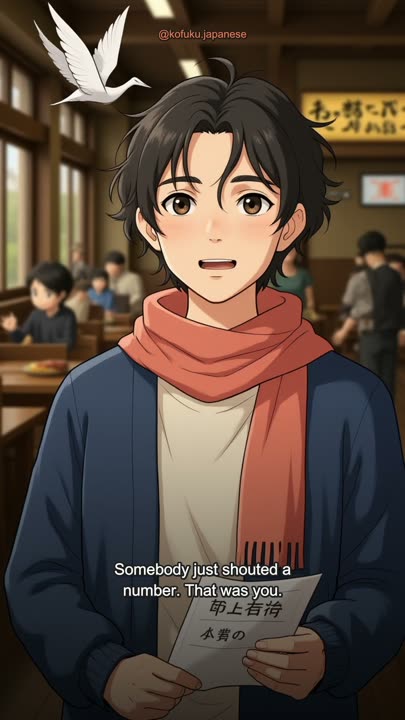
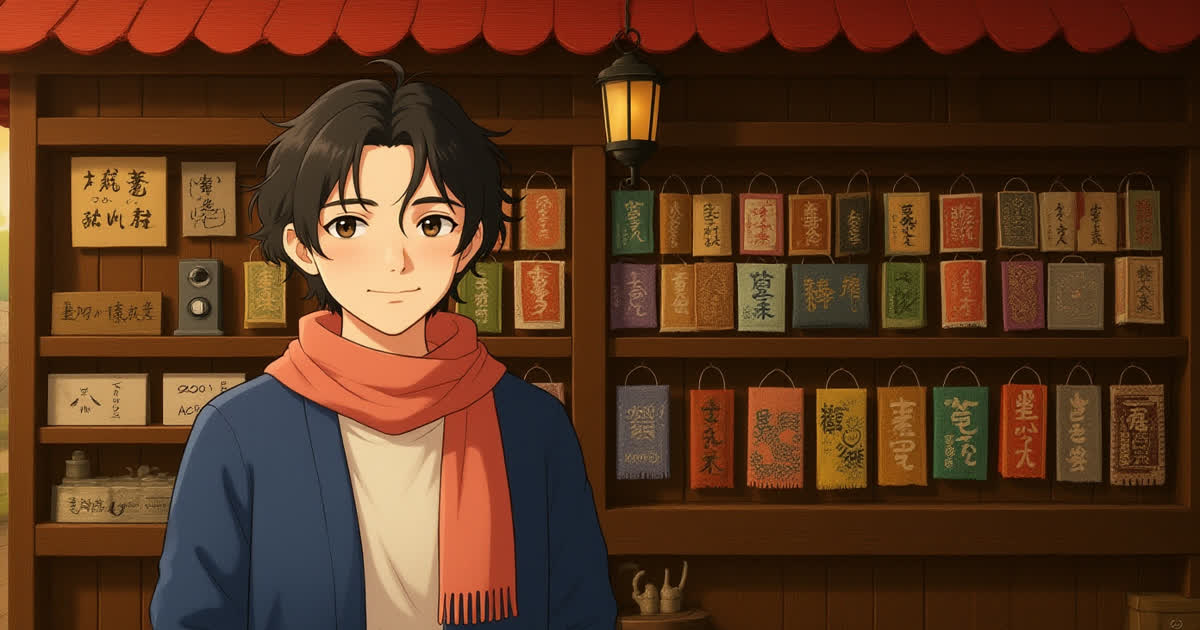
The shrine counter is a wall of tiny embroidered bags in every colour, each one a few hundred yen, each one looking like the perfect souvenir. You reach for the prettiest. That is how the traveller in the reel above ends up giving a boss the 安産 (anzan) charm, the one for a safe delivery. One sentence stops that: これは何のお守りですか? (kore wa nan no omamori desu ka?), "what is this charm for?" This page is that sentence, plus the types on the rack, the price, and how to carry and give one without guessing.
What is an omamori?
An お守り (omamori) is a small brocade bag with a written blessing or prayer sealed inside, sold at Japanese shrines and temples as a portable charm for one named purpose. The bag is wrapping; you do not open it. The word is the honorific お plus 守り ("protection"), and that is the whole idea: you carry a specific kind of protection, not a generic lucky trinket. Staff at the shrine office — 授与所 (juyojo) or 社務所 (shamusho) — hand it to you after you pay, usually ¥500 to ¥1,500. Both Shinto shrines and Buddhist temples sell them. Treat it as a blessing you keep on you, not as a decoration you pick by colour.
How do you ask what a Japanese omamori charm is for?
Say これは何のお守りですか? (kore wa nan no omamori desu ka?), "what is this charm for?", and point at the bag. That is the sentence in the reel above, and it is enough: the person at the window will name the purpose, often by reading the kanji on the front. If you already know the type you want, ask 交通安全のお守りはありますか? (kōtsū anzen no omamori wa arimasu ka?), "do you have a traffic-safety charm?" Swap the purpose word for what you need: 学業成就, 合格祈願, 健康祈願, 縁結び, 金運. To buy the one in your hand, これをお願いします (kore o onegai shimasu), "this one, please." Have a little cash ready; the window is often cash-first, like the rest of the grounds.
What kinds of omamori are sold at Japanese shrines?
The rack is sorted by purpose, not by looks. The labels you will see most are 交通安全 (kōtsū anzen, traffic safety), 学業成就 (gakugyō jōju, success in studies), 合格祈願 (gōkaku kigan, passing an exam), 健康祈願 (kenkō kigan, health), 安産 (anzan, a safe childbirth), 縁結び (enmusubi, finding a partner), 金運 (kin'un, money luck), 商売繁盛 (shōbai hanjō, a thriving business), 開運 (kaiun, general good fortune), and 厄除け (yakuyoke, warding off misfortune). Travellers most often want 交通安全 or 開運. Famous shrines add local specials, but the purpose is always written on the bag. If you cannot read it, ask rather than match colours. Once you have prayed, the same visit often has a goshuin window a few steps away.
Why shouldn't you pick an omamori by how pretty it is?
Because the embroidery is wrapping, not the meaning. Two bags on the same rack can look almost identical except for three kanji on the front; one is 交通安全, the other is 安産. The reel above is that mix-up: a traveller picks the prettiest charm as a gift for a boss, and it is the safe-delivery one. Colour is not a nationwide code. Pink is not always love, gold is not always money, and a "cute" bag is not safer to guess. The only reliable read is the kanji, or the person behind the counter. Ask これは何のお守りですか? before you pay, every time, even when the bag is obviously the one you want to photograph.
How much does an omamori cost and where do you buy one?
Most shrine and temple charms cost ¥500 to ¥1,500, with ¥800 to ¥1,000 common at well-known spots. You buy them at the 授与所 (juyojo) or 社務所 (shamusho), the office window on the grounds, usually after you pray. Cash is the safe default; some busy shrines now take cards, but a few coins keep the queue moving. Pray first, then buy: the charm is a record of the visit, not the reason for it. If you have not yet learned the bows, how to pray at a Japanese shrine is the two-bows, two-claps, one-bow sequence. The same window often sells blank 御朱印帳 (goshuinchō) books. Point at the bag you want and say これをお願いします.
What is the etiquette for carrying and returning an omamori?
Do not open the bag. The blessing is the sealed paper or wooden tablet inside, and opening it is treated as ending the charm. Carry it on a bag, in a wallet, or on a phone strap; keep it off the floor and out of the washing machine. An omamori is usually kept for about a year, then returned to a shrine for お焚き上げ (otakiage), a ritual burning of old charms and talismans, often around New Year. Returning it to the shrine you bought it from is ideal; another shrine of the same tradition will usually take it at the old-charm drop. You do not have to fly back to Japan with last year's bag: if you cannot return it, keep it respectfully until you can, rather than putting it in household trash. A new charm for a new year is the usual rhythm, not a stack of old ones in a drawer.
Can you give an omamori as a gift?
Yes, and Japanese families do it all the time, but only after you know what it is for. 交通安全 is a kind gift for anyone who drives, rides, or is about to travel. 合格祈願 fits a student before an exam. 健康祈願 is a safe, warm choice for almost anyone. 安産 is for a pregnant person, not a default present for a boss. 縁結び is for someone who wants a partner, which is a personal thing to assume. Ask これは何のお守りですか?, then buy. Saying what it is for when you hand it over is part of the gift: "this is for traffic safety" does more than "I got you a pretty charm from the shrine." That one question is the whole trip-saver.
An お守り is a sealed blessing for one job, not a souvenir you pick by colour. Ask これは何のお守りですか? (kore wa nan no omamori desu ka?) at the window, buy after you pray, leave the bag closed, and if it is a gift, name the purpose out loud. Watch the 30-second version at the counter before the next shrine stop, then get the hand-painted visit record at the same office if the queue is for both.