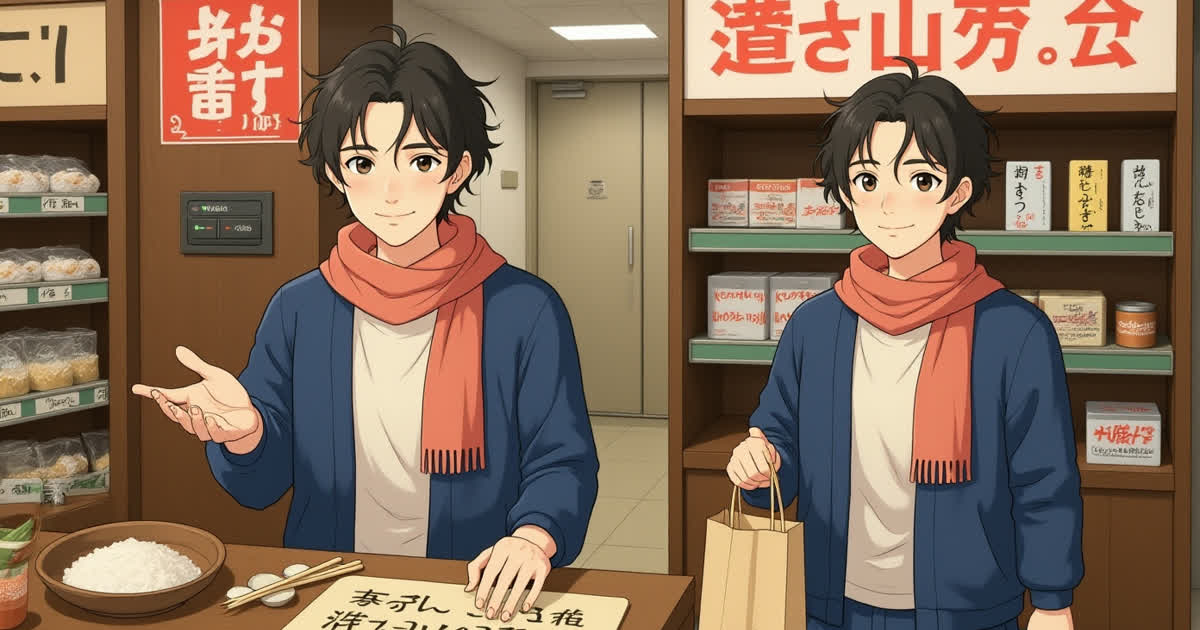
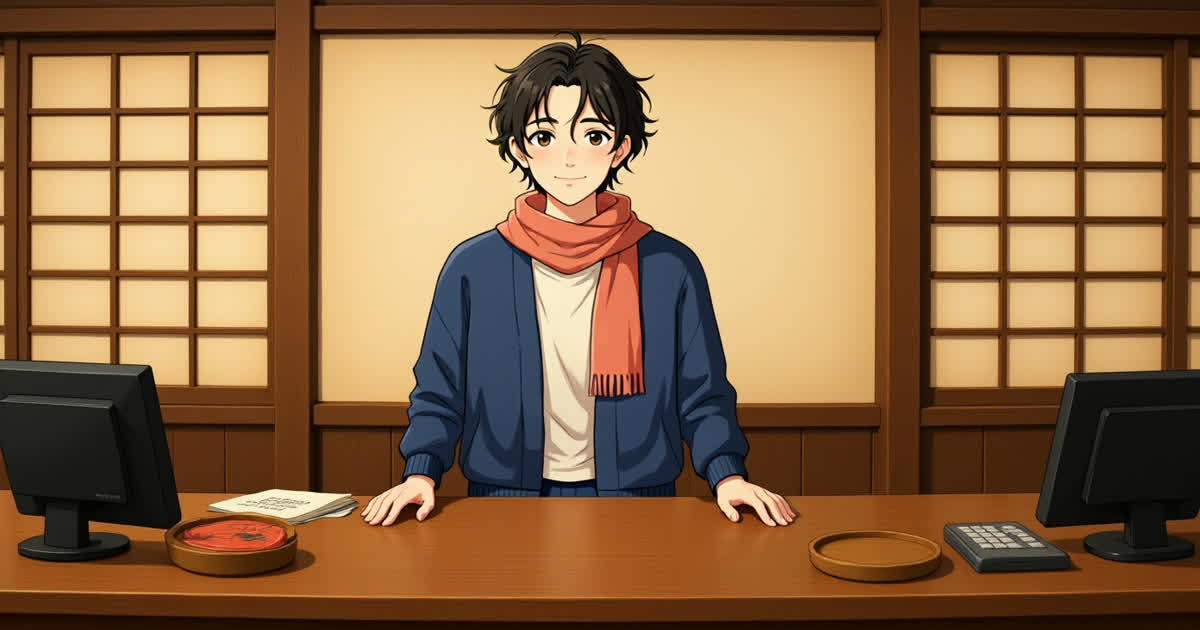
The cashier looked at both of you. The reel above, uploaded 25 September 2026, is that moment at the till. Hana asks ご一緒ですか (go issho desu ka). Kōfuku is there with a friend. The question is one bill or two. This page is what the line means, the two answers, and the lookalike lines that are not about the bill.
What does ご一緒ですか mean at a Japanese cashier?
ご一緒ですか means she is asking whether to put both of you on one bill. 一緒 (issho) is the word for one bundle. Shogakukan's Digital Daijisen, on Kotobank, checked 13 October 2026, gives sense 1 as gathering things into one. The entry's example is 人の分も一緒に扱う (hito no bun mo issho ni atsukau): treat the other person's share as part of the same bundle. Two plates on one tray is that. Two trays means two bills. Daijisen also says the word comes from 一所 (issho), one place. At the register the living sense is that one bundle, not a question about a location. The ご is the polite prefix she adds because she is asking you. You do not put it on your answer. A yes is one receipt. A no is two.
How do you pronounce ご一緒ですか?
Say go-issho desu ka. That is seven beats: ご, い, っ, しょ, で, す, か. The small っ is its own beat. It doubles the sh, so the word is issho, not isho. Do not stretch the o. Daijisen prints the reading いっしょ, and that o is short. です (desu) is two beats, で and す. か (ka) makes the line a question. There is no extra う and no ん. Keep the seven beats even. The cashier's line in the reel is those seven, and nothing after them.
How do you say one bill or split the bill?
Say 一緒で (issho de) for one bill. Say 別々で (betsubetsu de) to pay separately. Then add お願いします (onegaishimasu), please. The reel's full yes is 一緒でお願いします. 別々 (betsubetsu) is the opposite of 一緒. Daijisen, checked 13 October 2026, defines 別々 as each one different, and as not 一緒. The example is 支払いは別々にする (shiharai wa betsubetsu ni suru): settle the payment separately. 支払い (shiharai) is the payment. The same dictionary's entry for 別 (betsu) gives 会計を別にする (kaikei o betsu ni suru): make the bill separate. 会計 (kaikei) is the bill. Leave the ご off your answer. It was aimed at you. 一緒で does not mean you are treating. It means one receipt. The two of you can sort the cash out afterward. If the words will not come, point to both people for one bill, or point to yourself for your own bill. A nod does not tell her which.
Is ご一緒ですか asking if you are a couple?
No. She is not asking if you are dating, married, or friends. English "together" is the trap, which is why the reel says she is not asking about the relationship. Daijisen sense 2 is "the same, with no distinction." Sense 3 is doing the same thing together, and the example is 一緒に遊ぶ (issho ni asobu), to play together. Neither sense asks who you are to each other. She looked at both of you because she has to decide how many receipts to print. A couple can split. Two people who just shared a snack can pay as one. The answer is about the money on the counter.
How is ご一緒ですか different from 一緒に?
一緒に (issho ni) means doing one action together, or at the same time. The に points at the action. Daijisen sense 3 is that shared action. Sense 5 is happening at the same time, and the example is 一緒に買った物 (issho ni katta mono), things bought at the same time. The cashier's ご一緒ですか has no に. It is the noun, then です, then か. A kitchen line you may hear is お料理は一緒に (oryōri wa issho ni): the dishes coming out together. That is timing. It is not the till. Daijisen sense 4 is another lookalike. 御一緒する (go issho suru) means to accompany someone, with respect, as in そこまで御一緒させてください (soko made go issho sasete kudasai): let me come with you that far. That sentence has する. The cashier's line does not. Use 一緒で for the bill. Save 一緒に for doing something together.
Where else will you hear ご一緒ですか?
You hear it anywhere one person has to decide whether two people are one transaction. Two cups on a cafe mat. Two baskets at a konbini counter. Two hangers at a clothing register. Same seven beats. At a restaurant door, before you sit, the same words can mean one party for the table. That is still one bundle, and the place tells you the job. The door is about the table. The till is about the bill. The reel is the till, the meal finished, Hana at the register. After you answer, the number on the screen is the number you pay. You do not add a tip on top of the bundle you just chose. The tipping page is why that extra is not part of this question.
What do you say when she offers a bag or a receipt?
That next offer is a new question. It does not reopen the bill. いいです (ii desu) at a Japanese cashier is a polite no, and the いいです page is that refusal: no bag, no receipt, no chopsticks. If you want the bag, drop いいです and say お願いします. A nod does not answer this question either. One line per question. You already chose 一緒で or 別々で. The bag is only the bag.
ご一緒ですか is one bill or two. Say 一緒で to pay together. Say 別々で to split. She is not asking if you are a couple.