
At a Japanese Table Your Glass Is Never Empty. That Isn't Generosity. It's a Loop.
To say I'm still good, thanks. in Japanese, say まだ大丈夫です (mada daijōbu desu).
At an izakaya, somebody keeps topping up your glass. So you drain it to show you're done, and you just asked for more.
In this video
- まだ大丈夫です。 mada daijōbu desu. I'm still good, thanks.
- あ、まだ大丈夫です。ありがとうございます。 a, mada daijōbu desu. arigatō gozaimasu. Ah, I'm still good. Thank you.
Kanji in this phrase
- 大丈夫
- だいじょうぶ
Why this phrase
Kofuku plays the traveller at an izakaya table; Hana plays the Japanese friend doing お酌, topping up his glass from the shared bottle every time it dips. The hidden system: when a bottle or a tokkuri is shared, people pour for each other rather than for themselves, and a glass left empty reads as 'ready for more'. So draining it to mean 'I'm finished' does the exact opposite. The fix is one line: 「まだ大丈夫です」, said while there is still a mouthful left, hand resting lightly over the glass. ACCURACY GUARD from the Japanese verifier: scope this to the SHARED bottle. Nobody tops up an individually ordered nama beer, 手酌 (pouring your own) is only mildly avoided in formal company and is completely normal among friends, and a drained glass invites a refill from the bottle already on the table, NOT a new order. Do not say 'you don't pour your own drink' as a flat rule. TONE GUARD: Hana is being kind, not scheming. This is warm hospitality and a soft convention, never a trap and never a law. Land it as 'the signal you are sending is not the one you mean'.
Up next
 Survival
▶
Survival
▶
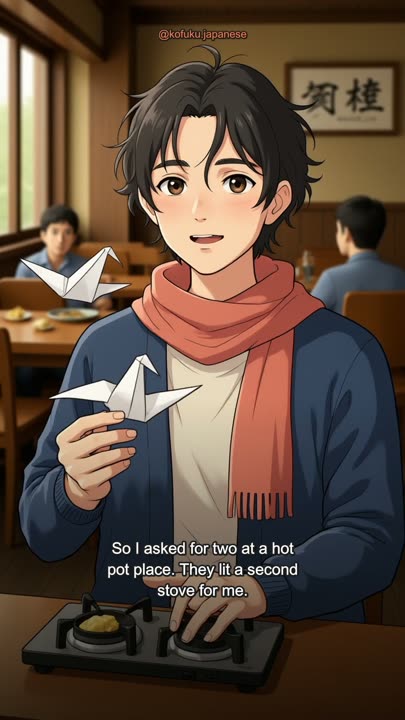
You Said Two and They Lit a Second Stove
nininmae de onegai shimasu · two servings, please
 Survival
▶
Survival
▶
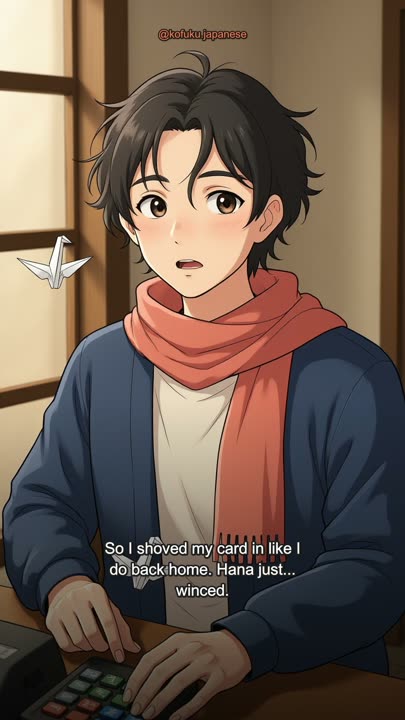
You Jammed the Chip In. She Wanted a Tap.
tatchi shite kudasai · Please tap (your card).
 Survival
▶
Survival
▶
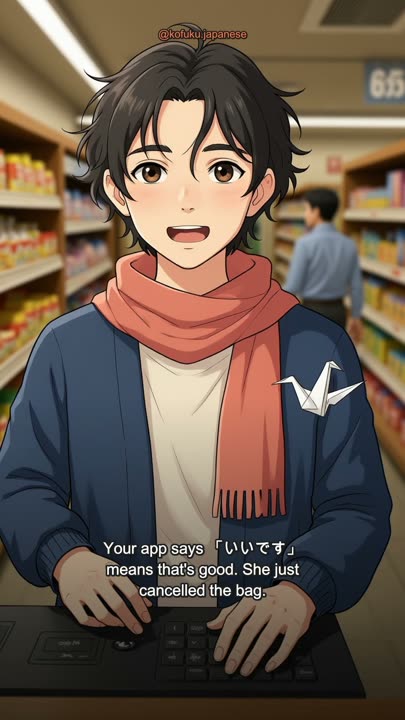
Your App Taught You This Means Yes. The Cashier Just Heard No.
ii desu · I'm good / no thanks
 Beginner
▶
Beginner
▶
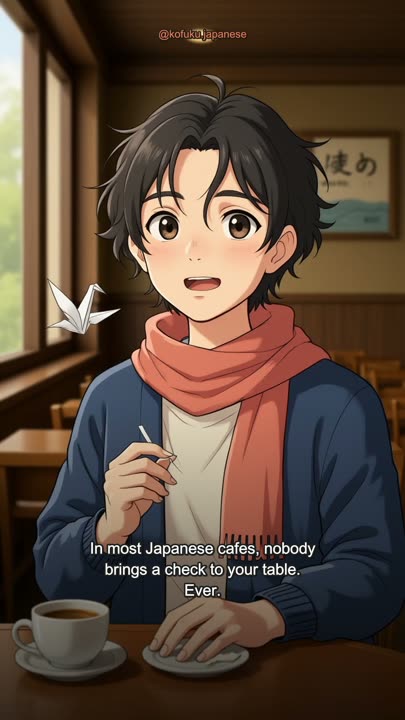
Stop Waiting for the Check. It's Already on Your Table.
denpyō o motte reji e okoshi kudasai · Please take your slip to the register.
More phrases like this
- You Introduced Yourself in Japanese and Accidentally Called Yourself Sir. · Jon desu
- Your App Taught You "I Want." Say That to Staff and You Sound Like a Four-Year-Old. · mōfu, onegai shimasu
- You Asked Them to Say It Again. They Said the Same Word Again, Just Slower. · dō iu imi desu ka?
- Kyoto Now Taxes You Per Night, Per Person. At the Top End That's Ten Thousand Yen Each. · shukuhakuzei
- Your App Taught You The Japanese Word For You. Nobody Says It To Your Face. · tanaka san
- Your App's Japanese for How Are You Is a Question You Only Ask After Months Apart. · o-hisashiburi desu
- You Stood Your Chopsticks Up in the Rice. In Japan You Just Set the Table for a Funeral. · hashioki, arimasu ka?
- Someone in Japan Calls You Over. The English Word Coming Sends You the Wrong Way. · ima ikimasu
- If a Japanese Staffer Says THIS Word, Freeze · dame desu
- I'm OK → The Most Useful Phrase in Japan · daijōbu desu
- You Ordered Kaki and They Brought the Oyster · kudamono no kaki o kudasai
- The Taxi Hasn't Moved. · hatsunori
Get the free phrasebook
15 essential phrases for your trip — romaji included, zero studying.
No spam. Unsubscribe anytime.