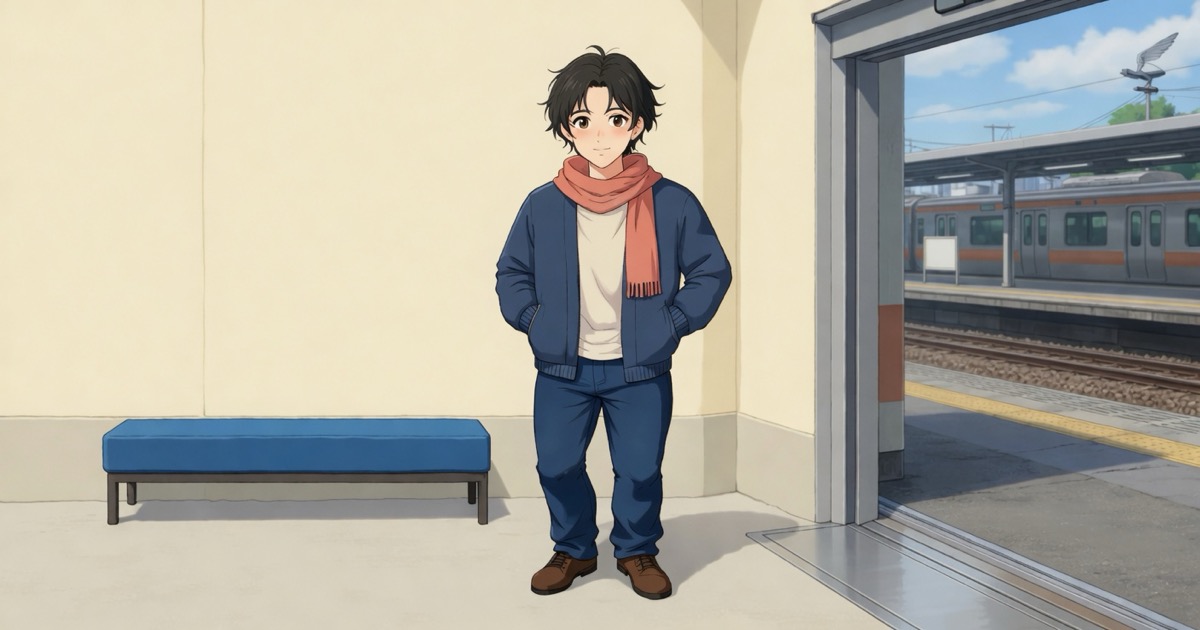
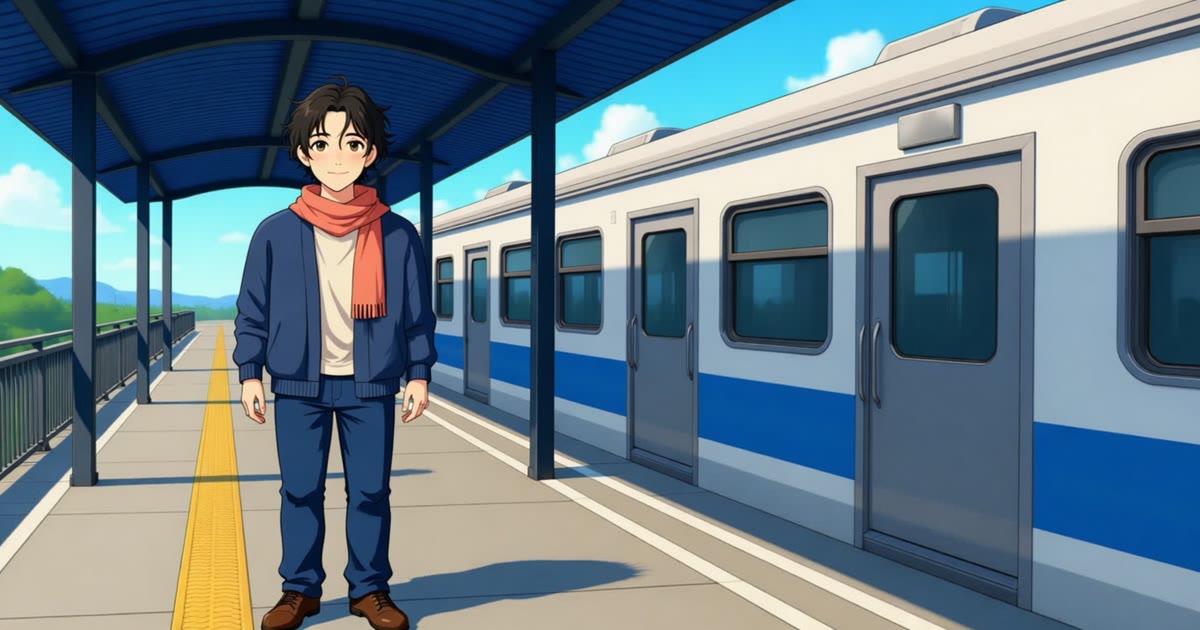
The reel above, published 5 October 2026, stops on a platform announcement. The station says the doors will open four cars from the front. Count that number from the back and you are standing at a different door.
What does 前から何両目ですか mean on a Japanese train?
前から何両目ですか? (mae kara nan-ryōme desu ka) means "Which car from the front?" 前 (mae) is the front, and から (kara) means from. 何 before this counter is nan, not nani. 両 (ryō) counts train cars. Shogakukan's Digital Daijisen, on Kotobank, checked 8 October 2026, lists it as the counter for cars, and the example it prints is 前の3両が脱線 (mae no san-ryō ga dassen), "the front three cars derailed." 目 (me) marks the place in that count, so 何両目 (nan-ryōme) is "which number car." Say it in twelve beats: ma, e, ka, ra, na, n, ryo, o, me, de, su, ka. The long o in りょう is two beats. The reel's line is 前から何両目ですか?
With no number in front, 両目 (ryōme) is a different word. The same dictionary glosses it as both eyes. Here a number sits in front of 両, and 目 is the place in line. The Progressive Japanese-English Dictionary, on Kotobank, checked the same day, prints the pattern: 食堂車は前から5両目です。 (shokudōsha wa mae kara go-ryōme desu), "The dining car is the fifth from the front." You write は and you say wa.
What does 前から四両目のドアが開きます mean?
前から四両目のドアが開きます。 (mae kara yon-ryōme no doa ga akimasu) means "The doors will open on the fourth car from the front." That is the announcement in the reel, and it is a statement, not the question. 四両目 is yon-ryōme: yo-n, ryo-o, me. 四 here is yon, not shi. の (no) ties that car to its doors. ドアが開きます means the doors will open, and the reel reads 開きます as akimasu. The car named in that sentence is the one that opens. A door the announcement did not name can stay shut. Four is the number in this reel. The next station can say a different car. Listen for 前から, then the number, then 両目.
Which end of the train do you count from?
Count from the end that pulls in first. That end is 前, the front of this train on this trip. It is not the end nearest the stairs, and it is not the end where you happen to be standing. The other end is 後ろ (ushiro), the back. 後ろから (ushiro kara) means from the back. When the train reverses at a terminal, the old front becomes the back, and 前から starts again from the new lead car. Stand where you can see that lead car enter, then count back from it. The first car is the one that arrived first. The fourth car is the fourth one behind it. The doors you want are on the car the number named.
Why do some doors stay shut on a short platform?
Some doors stay shut because the platform is shorter than the train. A door with no platform beside it would open onto the track, so the crew leaves it shut. Rail staff call that a door cut, ドアカット (doa katto). Most stations are long enough, and every door opens. Travel Watch's railway column of 28 August 2024, still on its site on 8 October 2026, describes two stations that are not.
On the Tokyu Oimachi Line, 九品仏 (Kuhonbutsu) fits four cars, and the locals are five. Level crossings at both ends block a longer platform. The column says the car at the 二子玉川 (Futako-Tamagawa) end does not open, and only at that station. That end is the front when the train heads toward Futako-Tamagawa. Toward 大井町 (Oimachi), it is the back, so 前から starts at the other end. The express does not stop there. On the JR East Yokosuka Line, 田浦 (Taura) sits between tunnels. An 11-car train meets a platform for 10. Toward 久里浜 (Kurihama), 1号車 stays shut. Toward 横浜 (Yokohama), 11号車 stays shut. Both times, the shut car is the one leading.
What happens if you count from the back?
Counting from the back puts you at the other end of the train. The reel's door is four cars from the front. Four cars from the back is a different door. You stand there, the train stops, and the doors in front of you stay shut while the named car opens farther along the platform. Walk then, and those doors are already closing. If you missed the number, ask before you pick a spot. The question is the one in the reel. The yellow strip on the platform edge is a different instruction. It tells you how far back from the edge to stand, and bags count. The yellow-line page is that line. 前から何両目 tells you which car, not where your feet are on the concrete.
How is 前から何両目 different from the car number?
A car number painted on the train, 号車 (gōsha), stays on that car when the train reverses. 前から starts over from whichever end is leading. At Taura the shut car is 1号車 toward Kurihama and 11号車 toward Yokohama. Both are the lead car. One fixed number, with no look at which end arrived first, puts you at the wrong door on the way back. "Fifth from the front" in the dictionary sentence moves the same way. The painted number does not.
半自動 (hanjidō) is a different door problem. You press a button, and a dark lamp means the crew has not set that door to open. The 半自動 page is the button. A door cut stays shut because the platform is not there, and pressing does not open it. 方面 (hōmen) names the direction of the track, a city past your stop. The 方面 page is that sign, not which car opens. Local, rapid, and limited express are which train stops at your station. The train-types page is that choice. 前から何両目 starts once you are already watching this train.
What do you say if you missed the announcement?
Say すみません、前から何両目ですか? (sumimasen, mae kara nan-ryōme desu ka), "excuse me, which car from the front?" Ask staff, or the person next to you, as soon as the number goes past. Point toward the end that arrived first. どのドアが開きますか? (dono doa ga akimasu ka) asks which doors open. Beside a door that stayed shut, say すみません、このドアは開きますか? (sumimasen, kono doa wa akimasu ka), "excuse me, will this door open?" You write は and you say wa. Then walk to the car they name.
The announcement is a count, and the count starts at the front. 前から何両目ですか? asks which car that is. 前から四両目のドアが開きます。 means the fourth car from that end is the one whose doors open. Count from the back and you are at a different door.