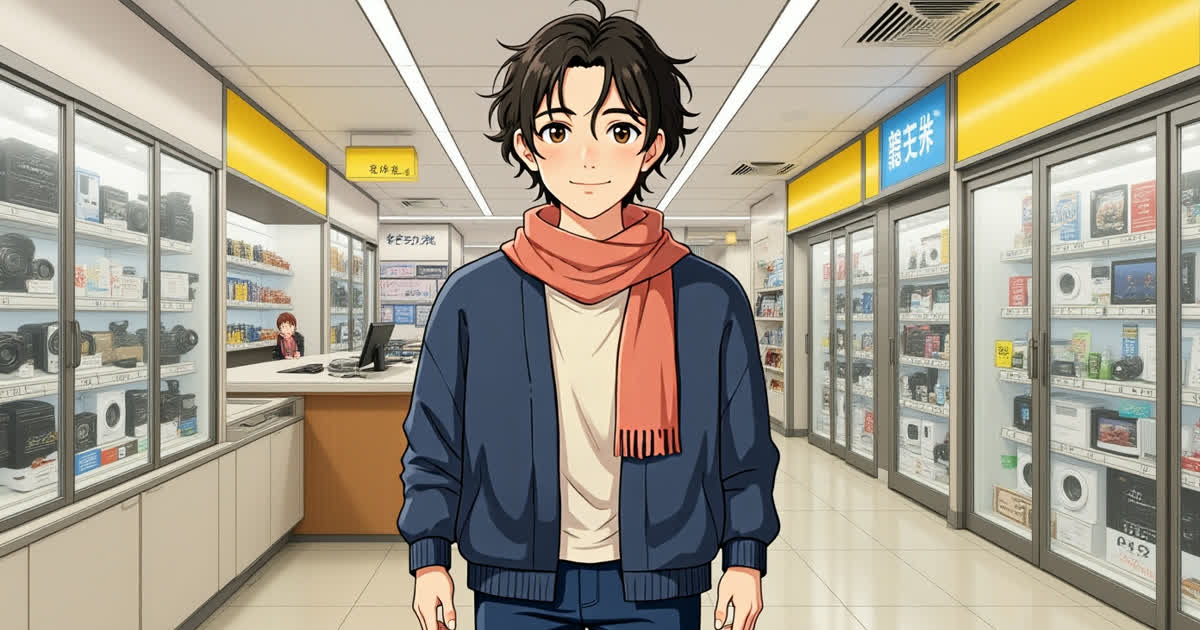
The clerk in the reel above, published 5 October 2026, is still talking after the camera is paid for. The line is 保証はいかがですか. A nod is a yes. This page is that question, the warranty it sells, and the short no.
What does 保証はいかがですか mean after you pay in a Japanese electronics shop?
保証はいかがですか (hoshō wa ikaga desu ka) means "Would you like the warranty?" 保証 (hoshō) is the thing she is offering. Shogakukan's Digital Daijisen, on Kotobank, checked 7 October 2026, glosses the first sense as recognizing that something is sound and taking responsibility for it. The example it prints is 品質を保証する (hinshitsu o hoshō suru), to guarantee the quality. A second sense is the legal one: if a debtor does not pay, the guarantor pays instead. The counter is using the first sense, a promise about the camera you just bought. は marks 保証 as the topic. You say that particle wa, not ha. いかが (ikaga) is the polite "how about." Digital Daijisen's third adverb sense of 如何 is inviting someone or recommending something, glossed どうですか, with the example お一つ如何 (o-hitotsu ikaga), "how about one?" The Nihon Kokugo Daijiten, on the same Kotobank page, checked 7 October 2026, has the same offer: lightly asking what the other person wants, or calling them toward it. ですか (desu ka) makes the polite question. The reel's line is 保証はいかがですか? She is offering an extra warranty. She is not asking whether the sale went through.
What happens if you nod at 保証はいかがですか?
A nod accepts the warranty. いかがですか is an offer, and the answer people give without deciding is a nod or はい (hai, yes). In the reel, that nod on the camera is eight thousand yen. The hook is one purchase in Akihabara, not a price every shop charges. Smiling and then going still does the same work as the nod. She is holding the question open, and a still face reads as agreement at a busy counter. If you want the extra, say はい、お願いします (hai, onegai shimasu). If you do not, the nod is the wrong answer. Say the no while the form is still in her hand. The sale of the camera is already done. This question is a second sale.
How do you say you do not want the warranty?
Say 保証はいりません (hoshō wa irimasen), "I don't need the warranty." いりません (irimasen) is the polite negative of 要る (iru, to need). Digital Daijisen, checked 7 October 2026, glosses 要る as money, goods, or time becoming necessary, and prints お世辞は要らない (oseji wa iranai), "I don't need the flattery." The same entry says 要る shares its origin with 入る (hairu, to enter), which is why the kanji get mixed. The reel writes いりません in hiragana. That spelling means "don't need." The kanji form is 要りません. 入りません is the enter-verb, and it reads hairimasen. Leave that kanji off this no. Shogakukan's Progressive Japanese-English Dictionary, fourth edition, on Kotobank, checked 7 October 2026, pairs the same two moves: 「コーヒーもう一杯いかがですか」「もう要りません」, "Would you like another cup of coffee?" "No, thank you." The warranty line is that pair with 保証 in front. Say it as one sentence: 保証はいりません。
How do you pronounce 保証?
Say hoshō, three beats, ho-sho-o, with a long o. Digital Daijisen writes the reading ほしょう. A short hosho cuts the word off. いかが is three short beats, i-ka-ga. ですか is de-su-ka. The whole question is hoshō wa ikaga desu ka, and the particle is wa. Another word shares the sound and is not this offer. 保障 (hoshō) is Digital Daijisen's word for protecting a condition so it is not harmed, and the example is 社会保障 (shakai hoshō, social security). The counter's kanji are 保証, the promise about the product. A pamphlet that says 延長保証 (enchō hoshō) is an extended warranty, the same offer in writing. メーカー保証 (mēkā hoshō) is the maker's own warranty, often already in the price. The spoken question is about the extra.
Where do shops ask 保証はいかがですか?
After you pay, at a counter that can add a warranty to the thing you bought. The reel is an electronics counter in Akihabara, a camera already paid for. The same line shows up on appliance floors and, in the reel, at some pharmacies. Bic Camera's long-term guarantee page, checked 7 October 2026, calls its 長期保証 (chōki hoshō) an extension of the maker's warranty from the second year, counting from the day the product ships, and says you join when you order an eligible product. That page lists three years for computers, peripherals, printers, portable audio, and game consoles, five years for other home appliances, and ten years for refrigerators and air conditioners of 100,000 yen or more, tax included. Some items are excluded. That is one chain's published plan, not the price of the nod in the reel. The sentence you hear is still 保証はいかがですか, and the no is still 保証はいりません.
How is a warranty different from a free extra at the register?
A warranty costs money. A bag, chopsticks, or a point card does not. On the cashier page, いいです (ii desu) declines the free extra, and 結構です (kekkō desu) and 大丈夫です (daijōbu desu) do the same. The konbini page uses 袋はいりません (fukuro wa irimasen) for the bag, the same いりません with a bag in front. None of those lines is this question. 保証はいかがですか comes after the sale and offers something you pay for. いいです can be heard as a no, and it can also be heard as "the camera is fine." Name the warranty: 保証はいりません. Tax-free paperwork is a different moment at the counter, and the tax-free page is the line for that. This page is only the warranty.
What if you already nodded?
Say すみません、保証はいりません (sumimasen, hoshō wa irimasen) while she still has the form in her hand, before you sign it or pay the extra. Point at the warranty line on the paper if the shop is loud. Once the extra is on the receipt, or you have signed, the sentence will not erase it. Ask her to take the warranty off before you leave the counter. If you wanted it, はい、お願いします keeps it. The cashier page is the free extras. This page is the paid one.
保証はいかがですか is a second sale, after the camera is already yours. A nod buys the warranty. 保証はいりません leaves it.