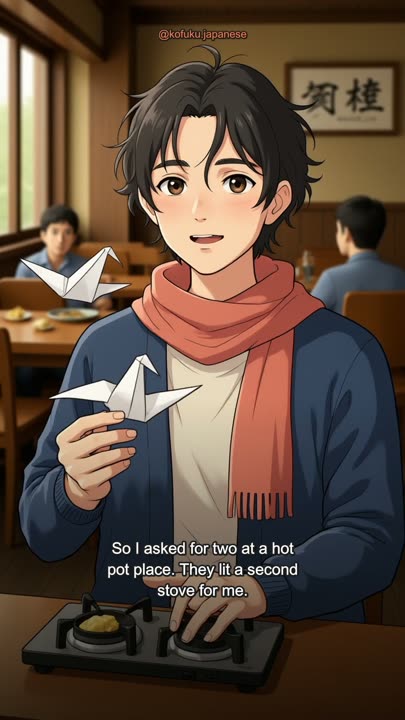
The clerk holds up a bag. You smile and say the word your app marked as "that's good." She puts the bag back. The chopsticks stay in the drawer. The receipt never prints. That word is いいです (ii desu). The reel above is forty seconds of that trap. This page is how to hear it as a no, how it differs from ください, and the one swap that actually means yes.
What does いいです mean at a Japanese cashier?
いいです (ii desu) at a Japanese cashier means "I'm good / no thanks." いい is "fine" or "good." です makes it polite. Together they sound like agreement, which is why every textbook and every translation app hands them to you as a yes. At the till they are a refusal. The clerk offered a bag, chopsticks, a point card, or a heated lunch. You answered "that's fine." She heard "skip it." Treat the two words as a cancel, not as a green light. The same counter that taught you 袋はいりません for the bag is the counter that will now hear いいです the same way: no extra, no bag, next customer.
Does いいです mean yes when a Japanese cashier offers you something?
No. The dictionary gloss is "it's good / it's fine," so the app marks it as agreement. Offered something, いいです is the soft no. Japanese often refuses by saying the current state is already enough: I am fine, so I do not need that. English "that's fine" can mean "yes, go ahead." Japanese いいです at the register means the opposite. The clerk will not argue. She will not ask twice. The bag goes back on the hook, the receipt stays in the printer, and your onigiri is not coming back unless you stop her. If you froze because the word felt like a yes, that is the trap in the reel, not a rude clerk. Pair the first beat of any counter talk with すみません if you need a second to think; do not fill the silence with いいです unless you mean no.
When does いいです decline a bag, a receipt, or the next item?
Whenever the clerk is offering, not asking you to choose a product. 袋はいいです (fukuro wa ii desu) cancels the bag. レシートはいいです (reshīto wa ii desu) cancels the receipt. A bare いいです after 温めますか? (atatamemasu ka?, "shall I heat this?") leaves the bentō cold. The same two words after お箸は? (ohashi wa?, "chopsticks?") leave you with nothing to eat it with. Point cards, extra sauce, a second pair of chopsticks: one いいです declines each. The longer, unambiguous bag line is still 袋はいりません (fukuro wa irimasen), unpacked in the konbini counter guide. Use that when you want a clean no. Use いいです only when you mean the same thing. If you already declined the bag and she is now holding tape, that is a different sentence — テープでよろしいですか — and it is a question, not your refusal.
How is いいです different from ください?
いいです turns the offer down. ください (kudasai) asks for the thing. 袋はいいです is "no bag." 袋をください (fukuro o kudasai) is "a bag, please." レシートください (reshīto kudasai) is how you get the slip they did not hand you — the reel for asking for the receipt is that one sentence. One word keeps it. The other sends it back. At a Japanese register the clerk often waits, holding the item, for which of those two you pick. Nodding while you say いいです does not convert it into a yes. The verb does. If you want the thing in her hand, name it and add ください. If you do not, いいです is already doing the job, and you can stop talking.
What do you say instead of いいです if you actually want it?
Say お願いします (onegai shimasu), "please," or これ、ください (kore, kudasai), "this, please." That is the swap in the reel: drop いい, keep です out of the yes. はい、お願いします (hai, onegai shimasu) is enough for a bag, chopsticks, or a heated bentō. Point at the item if the name will not come. Do not say いいです with a thumbs-up. Do not say はい、いいです — that still lands as "yes, I'm fine without it." The yes is お願いします or ください, period. Once you have the bag, paying is the usual tray-and-tap, the same flow as whether the shop takes a card. The hard part is the two seconds before the total, not the money.
How is いいです different from 結構です and 大丈夫です?
All three decline an offer at the counter. いいです is the short, everyday no — the one in the reel. 結構です (kekkō desu) is the more formal textbook refusal, the line in the konbini freeze reel that tourists hear as a maybe. It is also a no. 大丈夫です (daijōbu desu) is "I'm okay," and at a register that "okay" means you do not need the extra. None of them means "yes, give it to me." Pick one and use it on purpose. いいです is the shortest. 結構です is the most polite. 大丈夫です is the one you already know from other pages. Mixing them in one breath is unnecessary. Mixing any of them with a nod and hoping for a bag is how the onigiri leaves without one.
When does いいです actually mean yes?
When it is not answering an offer. いいですよ (ii desu yo) is "sure, go ahead" — the よ turns it into permission. それでいいです (sore de ii desu) accepts a suggestion: that one, that's fine. テープでいいですか (tēpu de ii desu ka) asks if tape is okay instead of a bag. Those are different sentences with extra pieces. Standalone いいです at the till is still a no. A cousin that looks like a tip but is the same grammar is おつりはいいです (otsuri wa ii desu), "keep the change," unpacked in the tipping guide: you are declining the coins, not agreeing to an extra. If you only remember one rule for the cashier, remember this: two words, no particle, no よ, answering a held-up bag or receipt — that is a refusal.
Carry three habits to a Japanese register. Hear いいです as "no thanks," not "yes please." Say お願いします or これ、ください when you want the thing in her hand. Save いいですよ and それでいいです for permission and suggestions, not for the bag. Do that and the counter stops being a coin-flip. Watch the forty-second version of the trap once, then listen for the offer. For the rest of the konbini — the bag charge, the receipt, the hot food — keep the convenience-store phrases, レシートください, and the short list of tourist words on your phone.