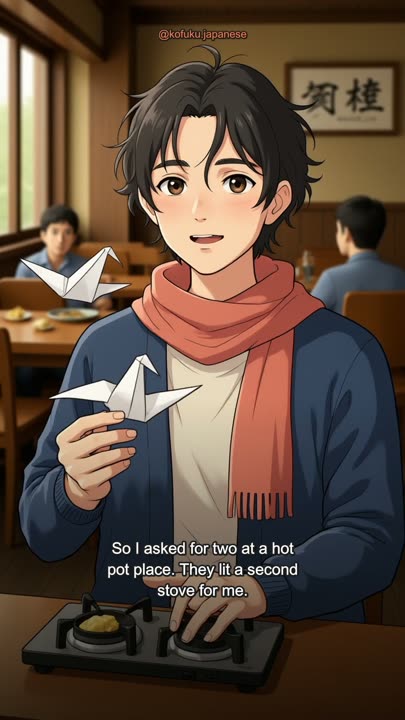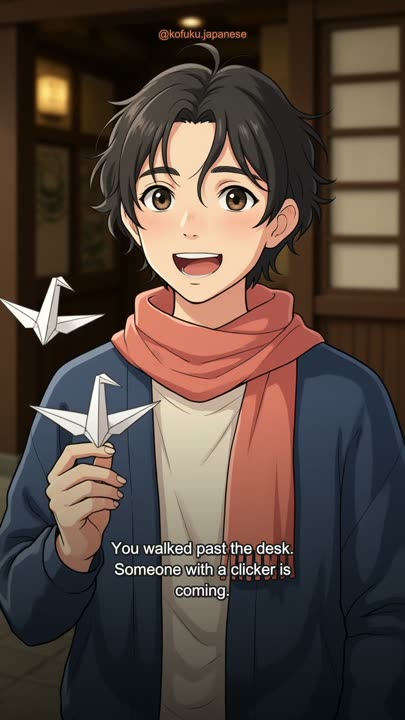
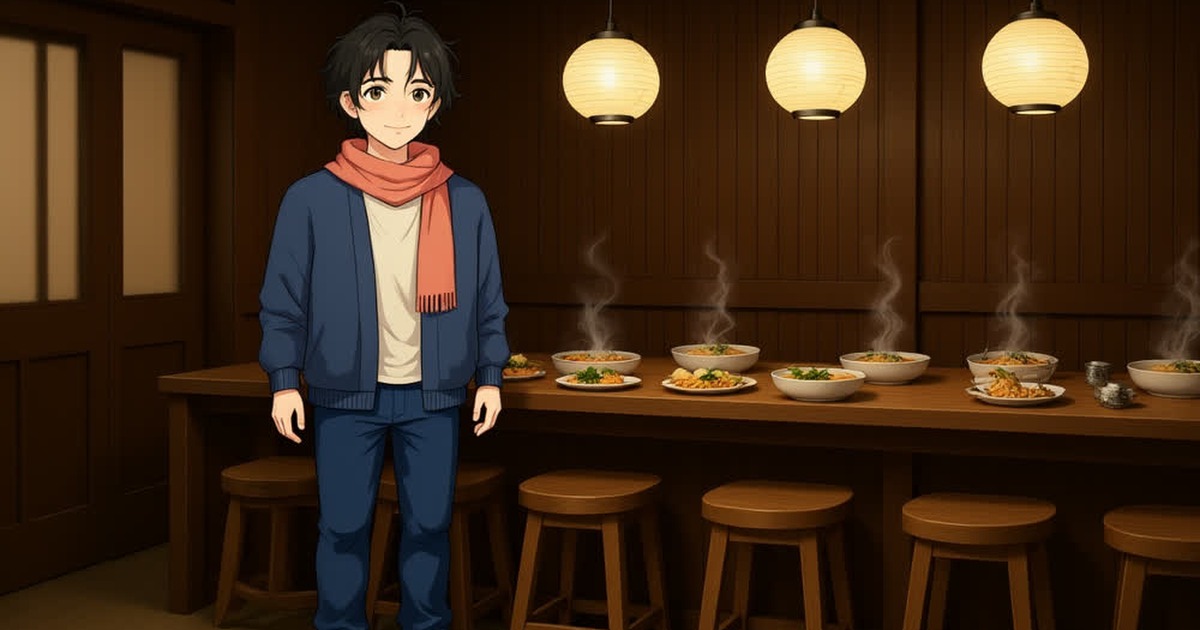
The cook in the reel above, published 3 October 2026, asks one size question and waits. The line that keeps the regular bowl is 並でお願いします. This page is that size, the nod that locks it in, and the large bowl you have to name out loud.
What does 並でお願いします mean at a Japanese ramen counter?
並でお願いします (nami de onegai shimasu) means "Regular size, please." 並 (nami) is the ordinary bowl. Shogakukan's Digital Daijisen, on Kotobank, checked 6 October 2026, glosses that sense as neither especially good nor bad: quite ordinary, middling, the usual. The examples it prints are 並みの品 (nami no shina, an ordinary item) and 並みの選手 (nami no senshu, an average player). The next sense is a grade of goods, the middle between high and low, and the example is にぎりの並み (nigiri no nami), the middle grade of nigiri. The dictionary writes the headword 並(み), so the full form can take the hiragana み. On a bowl you see the kanji alone. Say nami, two beats, na-mi. で (de) here comes from だ (da), the word for "is." You are telling him what this bowl is: the regular one. お願いします (onegai shimasu) means "please." The reel's line is 並でお願いします。
What happens if you nod at 並でよろしいですか?
A nod takes the regular bowl. The question in the reel is 並でよろしいですか? (nami de yoroshii desu ka), "Regular size, okay?" よろしい (yoroshii) is the polite form of よい (yoi, all right). ですか (desu ka) makes the question. Staff are offering the shop's ordinary size and asking you to accept it. The reel's title is the lesson: you nodded, and that was not large. はい (hai, yes) accepts the same offer. If you want that size, 並でお願いします says it in words. If you want the bigger bowl, the nod is the wrong answer. Say the large line before he turns back to the pot. A shop with a ticket machine often never asks. There, 大盛 is a button.
How do you ask for the large bowl?
Say 大盛りでお願いします。 (ōmori de onegai shimasu), "Large, please." 大盛り (ōmori) is the large helping. Digital Daijisen writes the headword 大盛(り) and reads it おおもり. The gloss is heaping food generously into a container, and that heaped serving. The Nihon Kokugo Daijiten, on the same Kotobank page, checked 6 October 2026, names soba, udon, and cooked rice in an amount larger than usual. Kodansha's food dictionary defines 大盛り as serving more than one ordinary portion, and, at a restaurant, the dish served that way. Say it ōmori, four beats, with a long o at the start: o-o-mo-ri. Tickets often drop the り and print 大盛. That is the same word. At a counter with no machine, the spoken line is the button.
How is 並 different from ふつう?
並 answers the size question. ふつう (futsū) does not. On the ticket-machine page, ふつう is the safe answer when staff ask how firm you want the noodles, and かため (katame) means firmer. The garlic page uses 普通 (futsū) for a different middle: the shop's usual amount of a topping, or, at a 家系 (iekei) counter, the middle of noodle firmness, soup strength, and oil. None of those names this bowl. The same で sits on both lines, which is why they look alike. If he has just asked 並でよろしいですか? and you answer ふつう, you have answered a question he has not asked. Answer the size first. 並でお願いします keeps the regular bowl. 大盛りでお願いします asks for the large one. Save ふつう for the noodle question, if it comes.
What does 並盛 mean on a ticket or a menu?
並盛 (namimori) is the regular serving written as two kanji. 盛 (mori) is the serving, from 盛る (moru, to heap food into a bowl). 並盛 is 並 plus that serving: the ordinary portion. Yoshinoya's 10 March 2026 release, still on its site on 6 October 2026, lists six beef-bowl sizes: 小盛 (komori), 並盛, アタマの大盛 (atama no ōmori), 大盛, 特盛 (tokumori), and 超特盛 (chō tokumori). That is a beef-bowl counter, and 並盛 is the regular name on the list. It is not two bowls. Digital Daijisen's first sense of 並 is things lined up, from the verb 並ぶ (narabu). The bowl uses the grade sense, the ordinary one. 波 (nami, a wave) is a different kanji with the same sound. The size word is 並. At the ramen counter the spoken form drops 盛 and says 並で.
How is 大盛り different from 替え玉?
大盛り is a bigger first bowl. 替え玉 (kaedama) is a second ball of noodles in the broth you still have. The ticket-machine page is where you buy that later ticket, while broth is still in the bowl. 大盛りでお願いします changes the first bowl, before it is cooked. 替え玉 does not. You can ask for 大盛り at a counter that never offers a second ball of noodles. Order the size when he asks. Order the refill, if the shop has one, after you have eaten.
What do you say if the bowl is the wrong size?
Say the size again while he is still on the question. If you nodded and you wanted the large bowl, say すみません、大盛りでお願いします。 (sumimasen, ōmori de onegai shimasu). If he heard large and you wanted regular, say すみません、並でお願いします。 Point at the bowl if the shop is loud. Once the noodles are in the soup, a new size can mean a new bowl. Ask while he is still holding the question. The garlic ladle is a different wait, and the garlic page is the line for that ladle. This page is only the size.
The question is the size. 並でお願いします keeps the regular bowl. A nod to 並でよろしいですか? does the same thing. 大盛りでお願いします is the large one, and you have to say it.