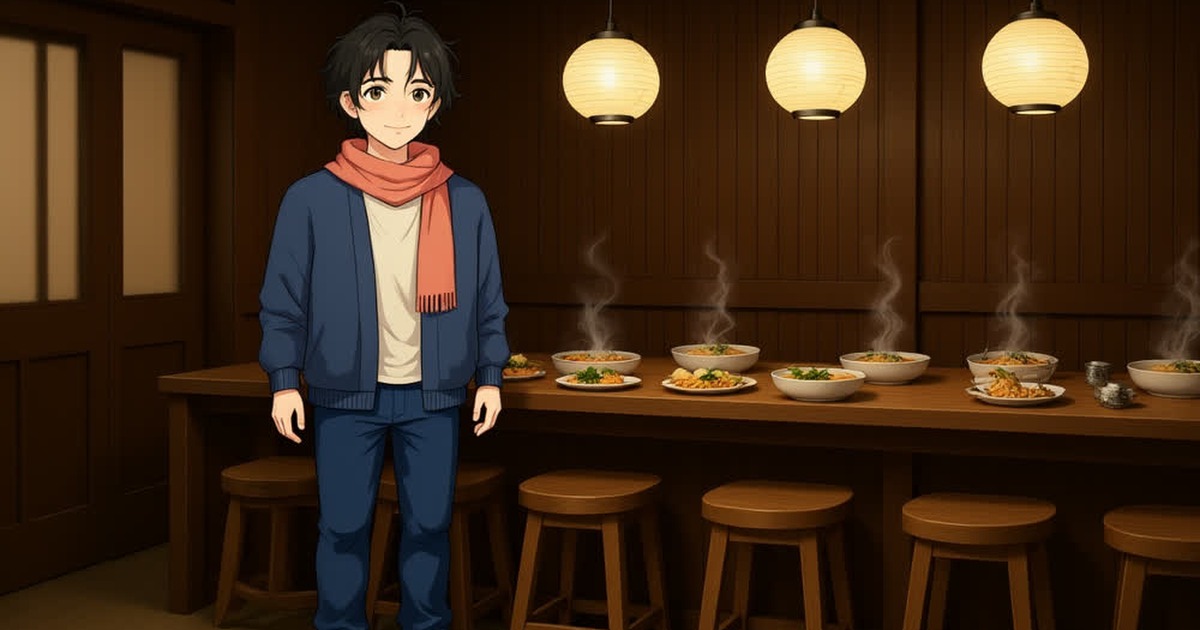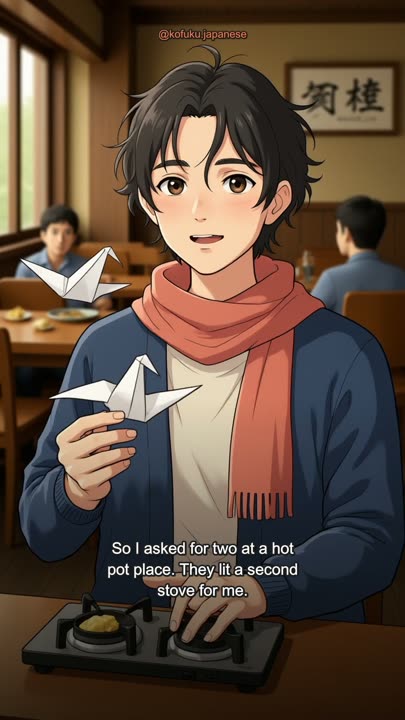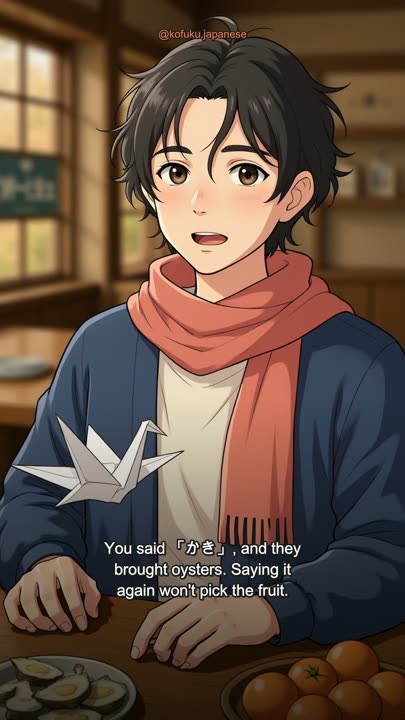
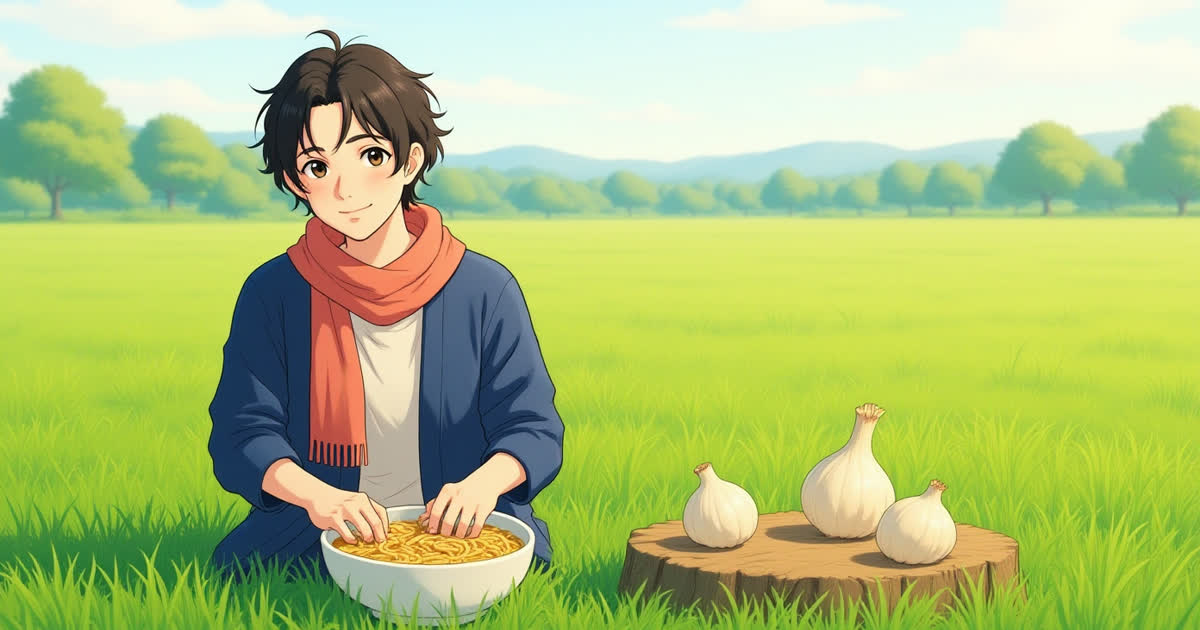
The cook in the reel above, published 26 September 2026, holds a ladle of garlic over the bowl and waits. The line that sends the ladle back is ニンニクなしで. This page is that line, the amount words that go with it, and the shops where you mark garlic on paper or leave it in a jar.
What does ニンニクなしで mean at a Japanese ramen counter?
ニンニクなしで (ninniku nashi de) means "without garlic." ニンニク (ninniku) is garlic. Dictionaries write it in hiragana, にんにく. The kanji 大蒜 is the same word, and a counter almost never writes it on a ladle. The call is katakana, in the same column as the other toppings. なし (nashi) means none. The kanji form is 無し, and tickets use both spellings. で (de) here comes from だ (da), the word for "is." You are telling him what the bowl is: a bowl with no garlic. The same ending sits on 少なめで (sukuname de, "on the light side") and on そのままで (sono mama de, "as it is"). This is not the で that marks a place, as in "at the shop." The first word is four beats, ni-n-ni-ku, so the romaji keeps both n's.
What do you say when the cook asks ニンニク入れますか?
Say ニンニクなしで. The question in the reel is ニンニク入れますか? (ninniku iremasu ka), "shall I put garlic in?" 入れる (ireru) means to put something in. 入れます is the polite form, and か makes it a question. The ladle is already over the bowl, and he is waiting for one short answer. A blank face is not an answer. The longer polite line is ニンニクなしでお願いします (ninniku nashi de onegai shimasu). お願いします (onegai shimasu) means "please." A little garlic is 少なめで (sukuname de). The shop's usual amount is 普通で (futsū de). Where a counter uses the words, a bigger pile is マシ (mashi, from 増し, "extra") and a heap is マシマシ (mashimashi). The short call drops で. ニンニクなし and ニンニク少なめ ask for the same bowls as the lines with で. In the reel, a nod takes the pile. Silence leaves the ladle in the air.
How is ニンニクなしで different from そのままで?
ニンニクなしで names garlic and sets it to none. そのままで (sono mama de) does not name a topping. It means "as it comes." そのまま (sono mama) is "that condition, unchanged," so the line accepts the bowl the shop was already going to make. With the ladle over the soup, name the garlic. そのままで can land as "go ahead with what you were doing," and what he was doing is the ladle. At a counter where garlic is only an add-on, the same そのままで leaves it out, because the planned bowl had none. The そのままで reel is that default for a shop's usual bowl, when no ladle is hanging over the soup. The other word for none is 抜き (nuki), from 抜く (nuku, "to leave something out"). ニンニク抜きで (ninniku nuki de) asks for the same bowl as ニンニクなしで. Tickets print both words.
What do ヤサイ、アブラ、and カラメ mean in the same question?
ヤサイ (yasai) is the vegetables, bean sprouts and cabbage. アブラ (abura) is pork back fat. カラメ (karame) is a stronger, saltier soup. In this call, カラメ means extra soy tare, the かえし (kaeshi). It is not a spoon of chili. At shops that took the call from ラーメン二郎 (Rāmen Jirō), the garlic question opens the rest of the order, and those three words ride along with ニンニク. The call is not one script. Toppings, amounts, and the question itself change from counter to counter. Tokyo Ramen of the Year, on 19 August 2026, described ラーメン二郎 三田本店: staff ask ニンニク入れますか, you name what you want added, and そのままで is enough when you want nothing added. Shops that take amounts hear a line like ヤサイ少なめ、ニンニクなし、アブラ普通、カラメなし (yasai sukuname, ninniku nashi, abura futsū, karame nashi). マシマシ on the garlic is a large pile of raw minced garlic, and some counters do not offer that word. On a first visit, 少なめ or なし still lets you taste the soup. かため (katame) belongs to a different question. It means firmer noodles, and it tells him nothing about the ladle.
Where do you mark garlic instead of saying it out loud?
You mark it on a paper sheet, or you leave the spoon in the jar on the table. Say ニンニクなしで when a person asks and the garlic is in his hand. At 一蘭 (Ichiran) you circle an order sheet after you sit. Ichiran's own guide lists seven items, and garlic is one of them. On the sheet published on Ichiran's site, as checked 30 September 2026, the garlic row reads なし (none), 少々 (shōshō, a drop), 基本 (kihon, the usual amount, printed as "medium"), 1/2片分 (half a clove), and 1片分 (one clove). That sheet says one clove is included, with no extra charge. English is printed on the row, and the shop also keeps Korean and Chinese copies. You hand the sheet in. The spoken line never comes up. At a 家系 (iekei) shop the usual spoken order is the noodles, the soup, and the oil: firmness is 硬め (katame), 普通 (futsū), or 柔らかめ (yawarakame); strength is 濃いめ (koime), 普通, or 薄め (usume); chicken oil is 鶏油 (chīyu), in 多め (ōme), 普通, or 少なめ. Grated garlic usually sits in a jar on the table. You use that spoon, or you leave it. A ticket machine sells the bowl before you sit. If a button already says ニンニク, the ticket is the answer. If the cook still looks up with a ladle, the line on this page is the one he wants.
What do you say if you cannot eat garlic at all?
Say すみません、ニンニクアレルギーがあります (sumimasen, ninniku arerugī ga arimasu), "excuse me, I have a garlic allergy." ニンニクなしで only stops the topping in his hand. It does not rebuild a soup that was cooked with garlic before you sat down. A preference and an allergy are two sentences, and he needs the second one when garlic makes you sick. To ask about the soup itself, say ニンニクは入っていますか? (ninniku wa haitte imasu ka), "does it have garlic in it?" 入っています (haitte imasu) means "it is in there." The food-allergy guide extends that sentence to peanuts, egg, and the rest of the list. Use the allergy line when you cannot eat garlic. Use ニンニクなしで when you do not want the ladle.
The ladle is the question. ニンニクなしで (ninniku nashi de) sends it back. 少なめで asks for a little. そのままで accepts the bowl the shop already planned, so name the garlic while the ladle is up. On a sheet, or from a jar on the table, you never say the line.