It is early afternoon and you are standing at a ticket machine buying your fourth subway ticket of the day, or tapping a card you have topped up twice since breakfast. Somewhere on that machine, one screen deeper than the fare map, there is a ticket that would have covered every ride you have taken today and every ride you will take tonight for about the price of two. Almost no visitor finds it, because Japanese ticket machines put the thing you need most exactly where you will not look.
Should you buy a one day subway pass in Japan or just pay per ride with an IC card?
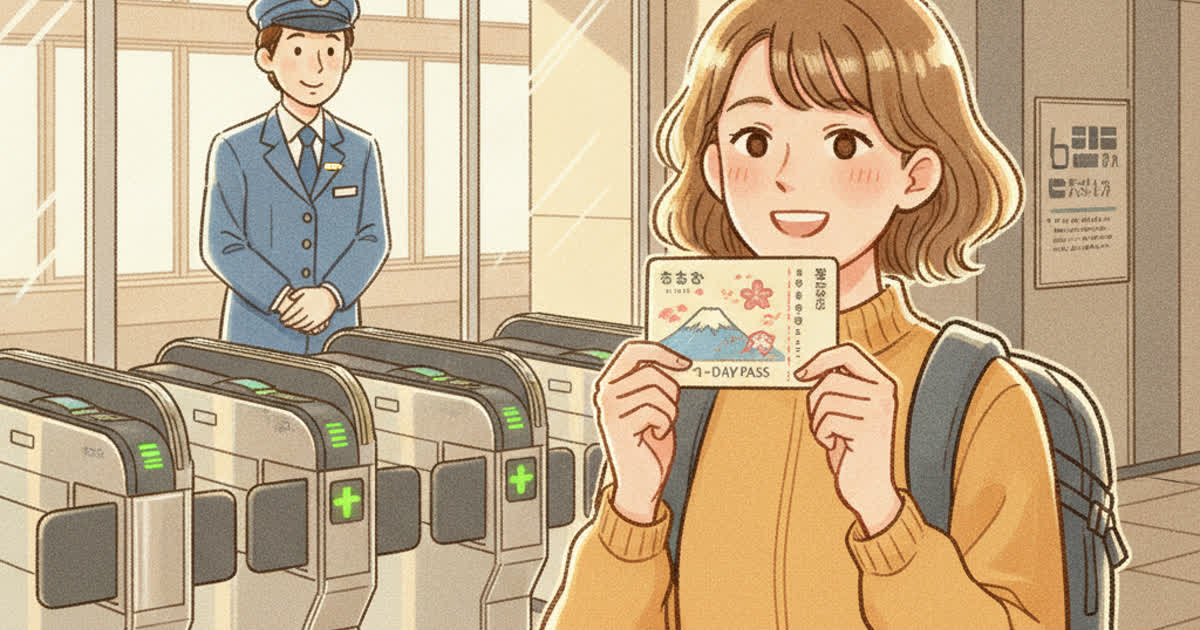
Buy the pass once you expect four or more subway rides in a day, and tap your IC card when you don't. A single city subway ride runs ¥180–¥300, a day pass runs ¥600–¥900, and the fourth ride is where the arithmetic flips — after that every trip is free, including the ones you would otherwise have talked yourself out of. A sightseeing day that touches three or four neighbourhoods clears four rides without trying; a day built around one museum and a long lunch does not. Most travellers end up carrying both, because Suica also pays for buses, lockers and konbini coffee while the pass covers nothing but trains. The reel above is the twenty-second version of this decision.
How many rides does a one day subway pass need to pay for itself?
Four, in nearly every Japanese city, and the maths is the same everywhere. The Tokyo Metro 24-hour ticket is ¥600 against a ¥180 minimum fare. Kyoto's subway one-day pass is ¥800 against ¥220. Osaka's Enjoy Eco Card is ¥820 on a weekday against ¥190. Divide the pass by the cheapest single fare and you get three-point-something every time, which rounds up to four rides. That is the pessimistic number, though: it assumes every ride is a short hop between neighbouring stations. Cross a city properly — Asakusa to Shibuya, say — and one ride can cost ¥250 or more, which drags break-even down to three. If your day already has a morning district, an afternoon district and dinner somewhere else, you are past the line before you have counted the ride home.
What does a one day subway pass in Tokyo actually cover?
Only the network printed on the ticket, and Tokyo runs three networks that look identical underground. The 東京メトロ24時間券 (Tōkyō Metoro nijūyo-jikan ken, ¥600) covers Tokyo Metro's nine lines and nothing else. The Toei One-Day Pass (¥700) covers Toei subway, Toei buses and the Toden Arakawa tram. The combined Tokyo Metro & Toei one-day ticket (¥900) covers both subway operators, which is what most visitors actually want, because the Ōedo and Asakusa lines are Toei while Ginza and Marunouchi are Metro.
None of them touch JR. The Yamanote line, the loop most visitors ride more than anything else, is JR East and will charge you separately at the gate. Private railways — Odakyu to Hakone, Keio to Takao, Tobu to Nikkō — are outside all of them too. If you hold a passport you can also buy the Tokyo Subway Ticket (¥800, ¥1,200 or ¥1,500 for 24, 48 or 72 hours), the visitor-only version of the same Metro-plus-Toei coverage at a much cheaper daily rate; three days of it costs less than two separate combined tickets. Working out which company a line belongs to is the same skill as reading which train actually stops where you are going, and it is worth ten minutes before you buy anything.
Is there a one day subway pass in Osaka and Kyoto?
Yes, and in both cities the pass is easier to justify than in Tokyo, because one operator covers most of what you came to see. Osaka's エンジョイエコカード (Enjoy Eco Card) is ¥820 on weekdays and ¥620 at weekends and on public holidays, and it covers the entire Osaka Metro subway network plus Osaka City buses, with small discounts at a list of attractions printed on the back. The weekend price means it breaks even on the third ride, which is most of a day in Osaka.
Kyoto sells two: a subway-only one-day pass at ¥800, and a subway-and-bus one-day pass at ¥1,100. Take the bus version. Kyoto has exactly two subway lines and almost everything you want — Kinkaku-ji, Gion, Arashiyama-bound connections — sits on a bus route instead, and Kyoto's flat-fare city buses are ¥230 a ride, so four bus rides alone clear the price. Kyoto buses are also boarded at the back and paid at the front, which works differently from the rest of the country; the mechanics are in our guide to paying on a Japanese bus.
Where do you buy a one day subway pass in Japan?
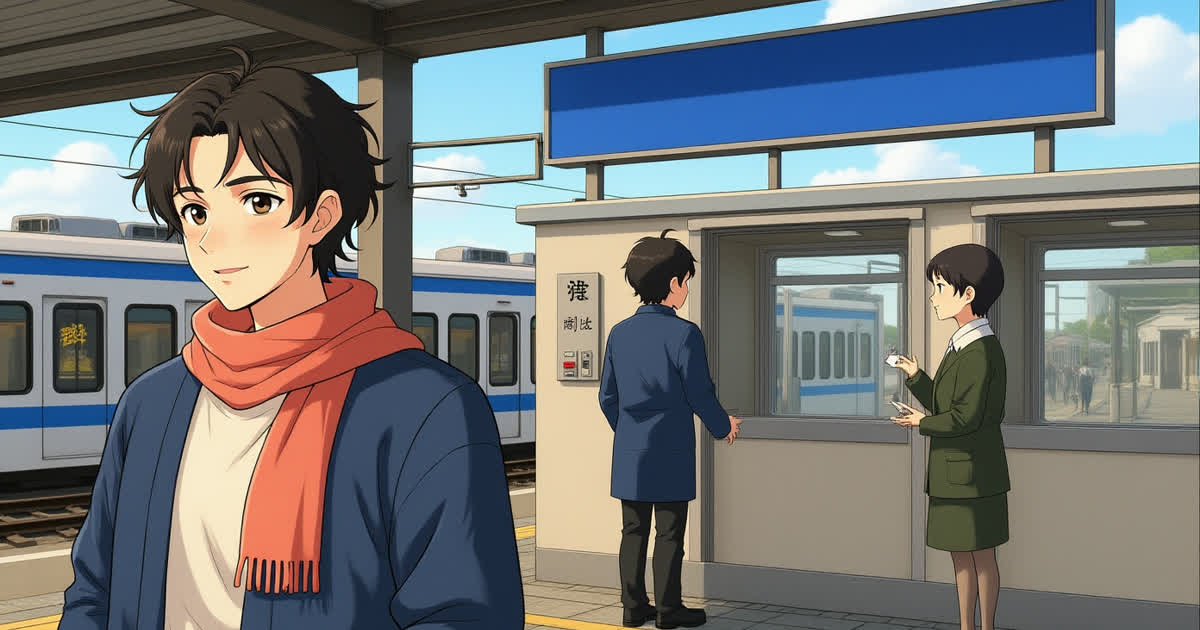
At the staffed window beside the ticket gates, which is the fastest route by a wide margin. The machines do sell day passes, but the button sits behind a second screen marked 一日乗車券 or おトクなきっぷ (o-toku na kippu, "value tickets"), not on the fare map you land on first — this is the single reason most visitors never buy one. If you want to try the machine anyway, asking where the ticket machine is gets you to it, then look for the English button in the top-right corner before you go hunting.
Bring cash. Many machines and most windows will take an IC card or notes, but a foreign credit card is unreliable at ticket machines specifically, and a ¥10,000 note is refused more often than you would expect — if you need to break one, the ATMs that take foreign cards are inside 7-Eleven and the post office. The visitor-only Tokyo Subway Ticket is the exception to all of this: it is not sold at ordinary station machines at all, but at Narita and Haneda airports, at Bic Camera and major electronics stores, and at tourist information centres, with your passport in hand.
How do you ask for a one day pass in Japanese?
One sentence does it: 一日乗車券をください (ichinichi jōshaken o kudasai, "a one-day pass, please"). 一日 is "one day", 乗車券 is "ride ticket", and 〜をください is the pattern you will reuse at every counter in Japan. Travelling as a pair, add the counter word for flat things: 一日乗車券を二枚ください (ichinichi jōshaken o nimai kudasai, "two one-day passes, please").
Two follow-ups earn their keep. これ、JRでも使えますか (kore, JR demo tsukaemasu ka, "can I use this on JR too?") gets the coverage question answered by a person instead of by a closed gate, and the answer is almost always いいえ (iie, no). 券売機で買えますか (kenbaiki de kaemasu ka, "can I buy it from the machine?") tells you whether to bother with the machine tomorrow. If the reply comes back too fast, the fix is the same one that works at every window in Japan — say you are new to this and the attendant will slow down and point.
When is an IC card the better choice in Japan?
On light days, on JR days, and on any day that leaves the city. Suica, Pasmo and ICOCA work on subways, JR, private railways, buses and most konbini registers across the whole country, while a day pass stops dead at the edge of one operator's map. A day on the Yamanote line, a trip out to Kamakura or Nara, or two short rides either side of a long museum visit all come out cheaper on the card. The card also needs no decision in advance, which matters when plans move: you tap, you pay what you used, and nothing is wasted. Its one failure mode is running short at the exit gate, and that is a two-minute fix at the fare adjustment machine.
The rule of thumb fits in a sentence: count the rides you expect before you leave the hotel, and buy the pass at the window if the answer is four or more. Get it wrong in either direction and you are out a few hundred yen, which is the cheapest mistake available in Japanese transport. Before your first morning underground, it is worth knowing what time the last train leaves, keeping the essential words for tourists within reach, and browsing all our travel reels.