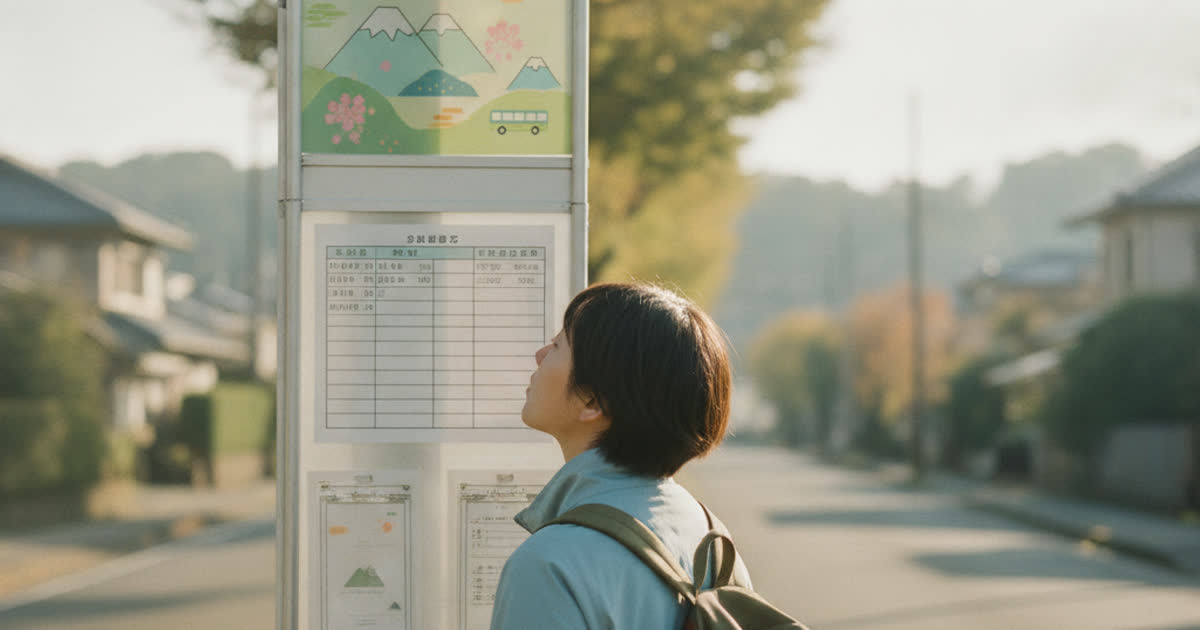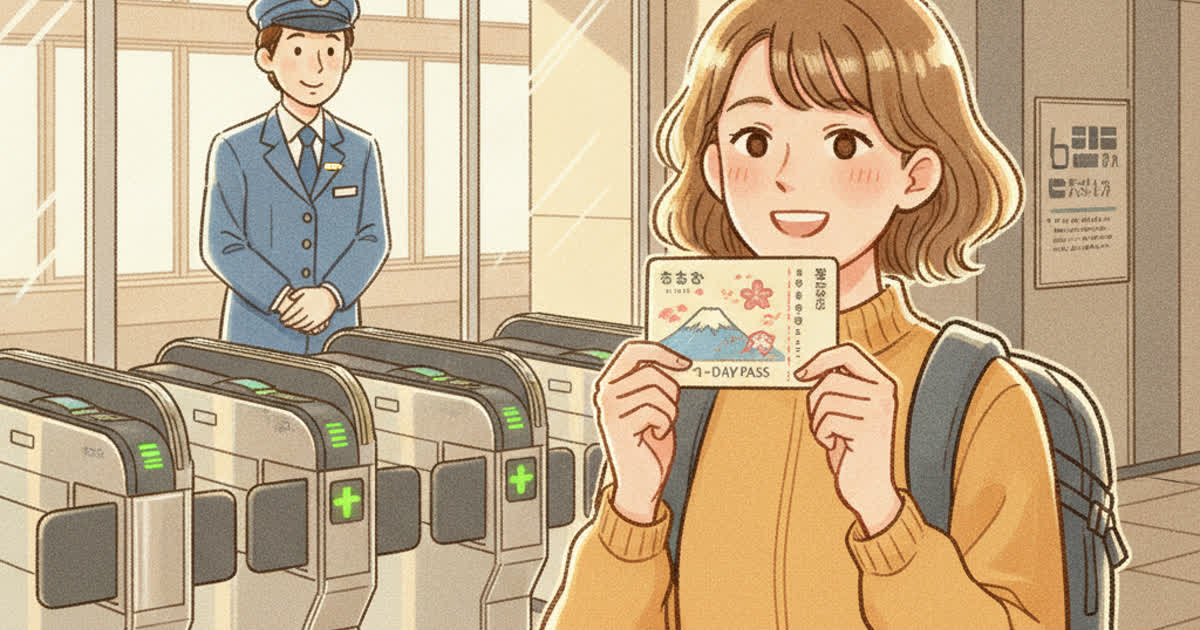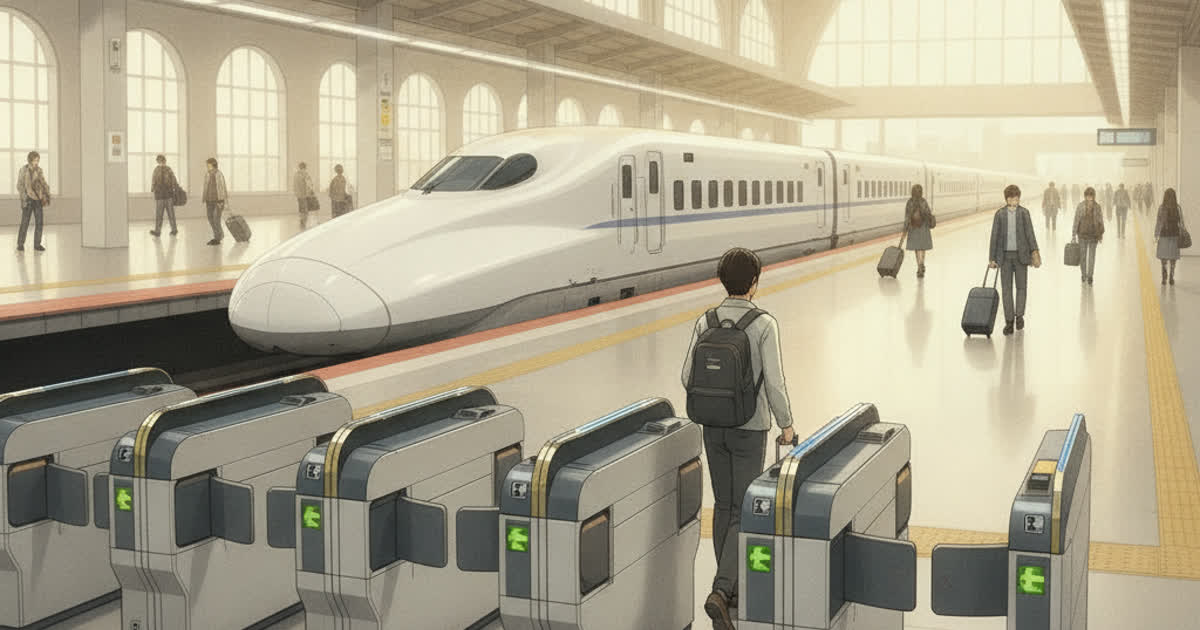
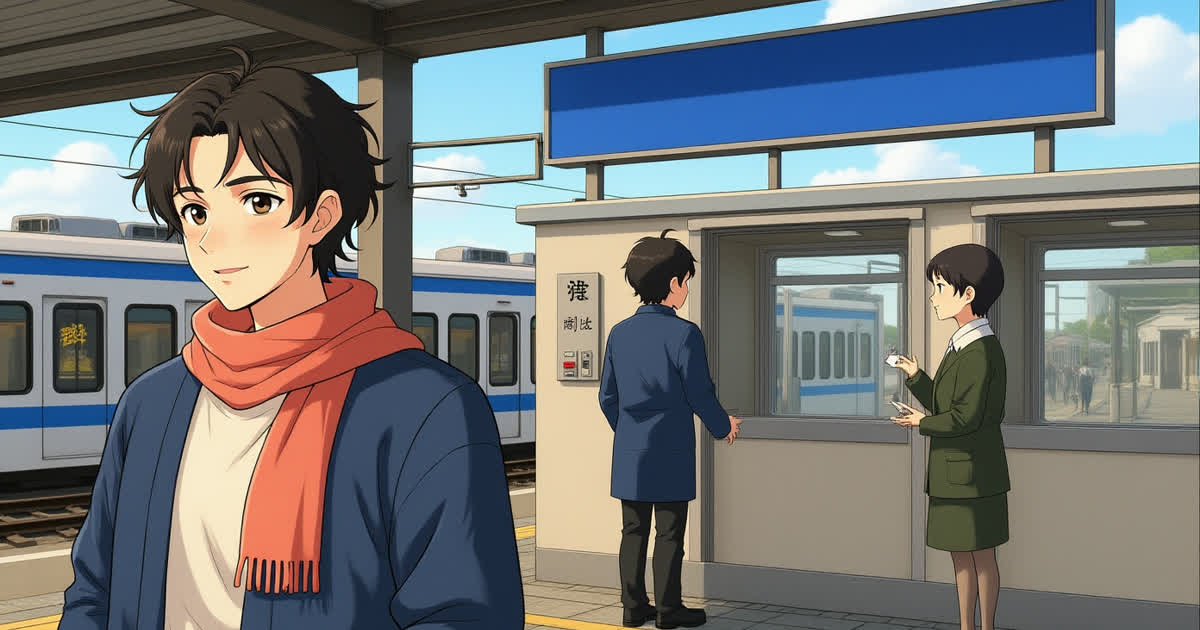
A Tokyo train is five minutes late and the platform does not shrug. People walk to the staffed gate and ask for a slip of paper. The reel above is that ask: 遅延証明書をお願いします (chien shōmeisho o onegai shimasu), "a delay certificate, please." This page is how to say it, what the slip is actually good for, how late is late, and why the subway may send you to a webpage instead of a printer.
How do you ask a Japanese station for a delay certificate after your train is late?
Walk to the 有人改札 (yūjin kaisatsu), the staffed gate beside the machines, hold out your ticket or IC card, and say 遅延証明書をお願いします. Add すみません (sumimasen) in front if the clerk is busy: すみません、遅延証明書をお願いします. That is the whole sentence. Staff will stamp a small form, hand you a printed slip, or point at a QR code. You can ask at the station you entered or the one you left. If the line is long, photograph the delay board first so you have the line name and the time band while you wait. Sumimasen is the opener for almost every ask in Japan; this is one of the times it earns you a piece of paper.
What is a 遅延証明書 and what is it used for?
A 遅延証明書 (chien shōmeisho) is a free operator record that a route ran late. Japanese offices, schools, hotels, and tour desks treat it as proof that the railway, not you, ate the time. It names the line, the date, a time band, and the longest delay in that band. It does not name you. Tourists use the same slip for a missed hotel check-in, a day-tour meeting point, or a domestic flight. Bring it to the desk and say the train was late — they have seen these before. Keep a screenshot even if you got paper; the slip is easy to lose in a pocket.
How late does a Japanese train have to be before you get a certificate?
About five minutes. JR East posts a certificate when an eligible conventional line is delayed by roughly five minutes or more. Tokyo Metro uses the same five-minute floor and rounds the printed delay up in five-minute steps. Under five minutes, most operators will not issue one, because Japanese railways treat that as ordinary slack, not an incident. Limited express trains and the Shinkansen are often left off the automatic web list, so ask at the window for those. The certificate shows the worst delay on that line in a time band — morning, midday, evening — not the exact minutes your own train lost.
Can you download a delay certificate online instead of asking at the station?
Yes, and on some lines that is now the only way. JR East publishes certificates at its delay-certificate page for the last 45 days, updated after 7:00, 10:00, 16:00, 21:00, and about 2:00 the next morning. Tokyo Metro stopped handing out paper slips on 1 April 2026; use the Metro site or the official app and save the page. Keio ended paper the same day. JR West, JR Central, and JR Kyushu also post web certificates, sometimes only for the morning rush. Screenshot or print the official page. Search the operator name plus 遅延証明書 and you will hit the right URL on the first try.
Does a delay certificate prove you were on the train or get you a refund?
No and no. JR East prints this on the certificate itself: it proves the line's longest delay in a time band, not that you boarded, and not that anyone owes you money. A local or rapid train that arrives late still keeps the fare. A JR limited express or Shinkansen that arrives two hours or more late can refund the 特急料金 (tokkyū ryōkin, limited-express surcharge), not the base 乗車券 (jōshaken). That is a different stamp, done at みどりの窓口 (midori no madoguchi) with the ticket in your hand. Do not throw the ticket away and then ask for money. The Shinkansen gate already wants two tickets; keep both if you might claim the surcharge.
How is a delay certificate different from a cancelled or suspended line?
A delay certificate is for a train that still ran, just late. If the board says 運転見合わせ (unten miawase, service suspended) or 運休 (unkyū, cancelled), you need a different tool: 振替輸送 (furikae yusō), substitute transport on a rival railway. That is the crowd walking out of the gates, not the crowd queueing for a slip. A delay of five or ten minutes almost never triggers substitute transport. How furikae yusou actually works is the sister page; the reel for that moment is the one where the platform empties. A typhoon that stops the network will not hand you a useful detour either. Get the certificate if you still arrived and need to explain the lateness. Switch plans if the line has actually died.
What if the station has no paper certificates?
Ask anyway, then go to the operator's site. Tokyo Metro will tell you to use the webpage; that is policy, not a brush-off. If the web page is still marked 準備中 (junbi-chū, not ready yet), wait for the next update window — JR East does not publish a morning delay at 9:05 if the 10:00 slot has not closed. For a limited express or Shinkansen left off the list, say 特急の遅延証明書をお願いします (tokkyū no chien shōmeisho o onegai shimasu) at the ticket office. If you already left the station, you can still download the last 30 to 45 days from most big operators. A screenshot of the official page is enough for a hotel or a tour desk.
One sentence, a five-minute rule, and a screenshot. 遅延証明書をお願いします is the ask; the web page is the backup. Watch the 30-second version at the gate before you need it, and keep it next to the essential tourist words for the rest of the station conversation.