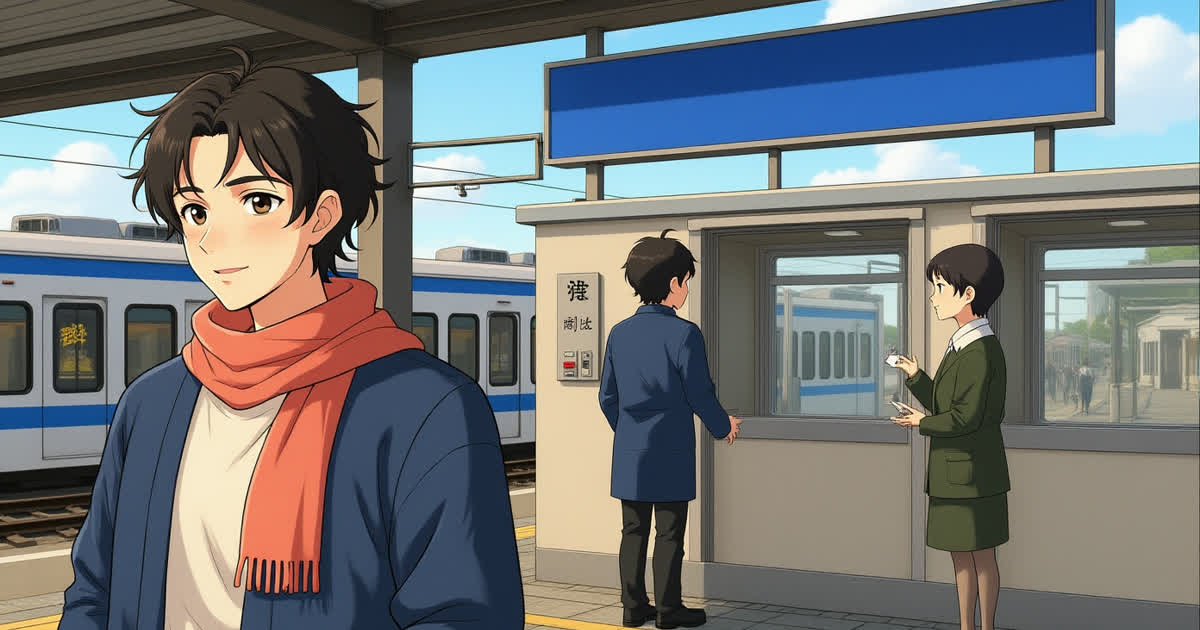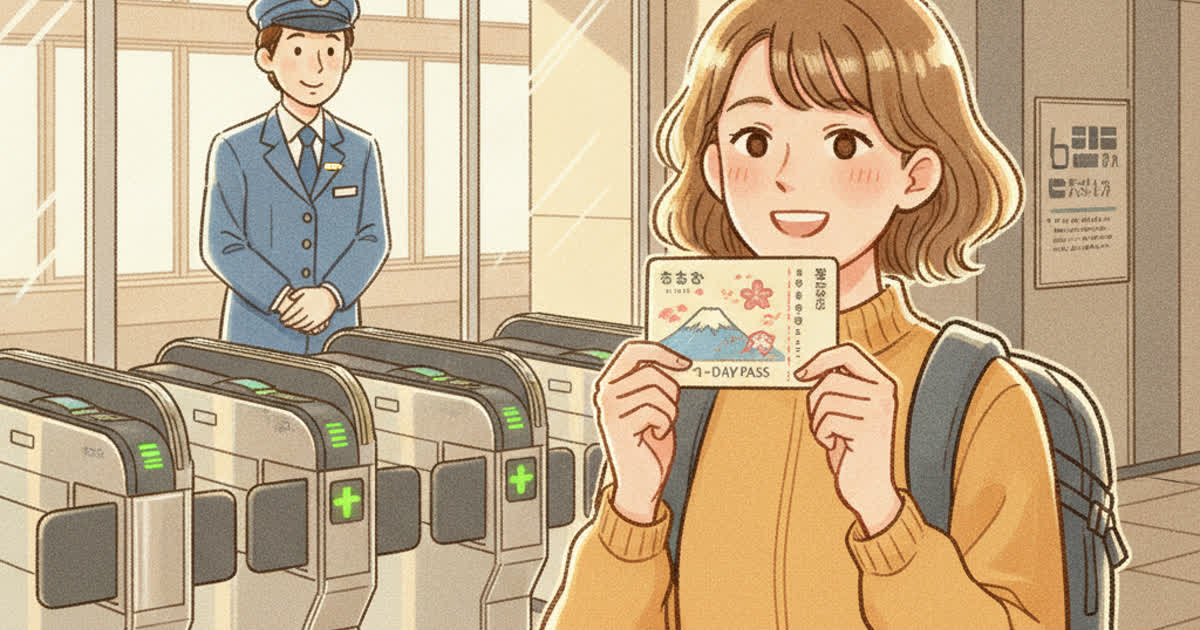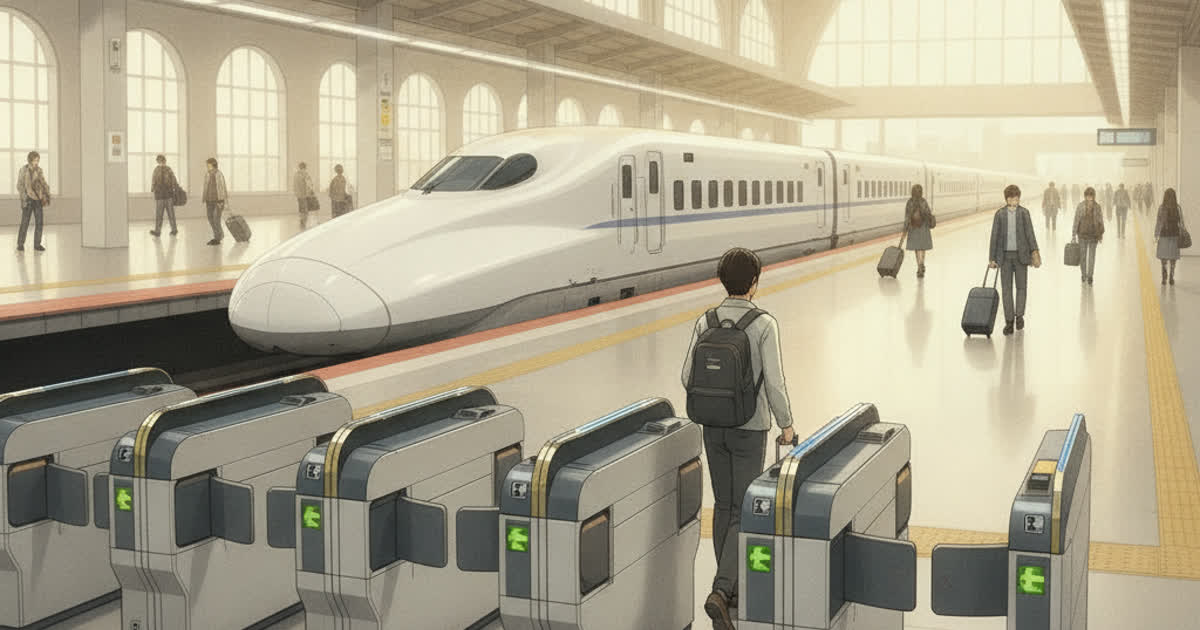

The departure board still shows your train. The time beside it has not flipped to cancelled. Then the platform speaker says a word most apps never drill, and the people who commute here stop walking toward the doors. That word is 見合わせ (miawase). The reel above is the ear-training for it. This page is how to hear 運転見合わせ (unten miawase), tell it from a delay and from a cancellation, and decide whether to stay on the platform.
What does 運転見合わせ mean on a Japanese train?
運転見合わせ (unten miawase) means the trains have paused and the operator is waiting. 運転 (unten) is "running the trains." 見合わせ (miawase) is "holding off": a postponement, not a deletion. The line is stopped until someone decides it is safe to move. The sentence on the speaker is 運転を見合わせております (unten o miawasete orimasu), "we have temporarily suspended operations." You do not say that line. You catch 見合わせ inside it. You may also hear 運転を見合わせています (unten o miawasete imasu), the same news in ordinary polite speech. A reason often comes first. 強風のため (kyōfū no tame) is "due to strong wind." A person on the tracks is 人身事故 (jinshin jiko). A signal check is the third usual cause. Japanese operators, JR included, use this word for the unplanned stop. It is the in-between word. Not late. Not cancelled. Paused.
Is 運転見合わせ the same as a delay?
No. 遅れ (okure) means the train is late and still coming. Boards and delay slips also print 遅延 (chien) for that same idea, which is the word on a delay certificate. A ten-minute 遅れ still ends with a train. 運転見合わせ means nothing on that section is moving until the check is finished. The speaker is not apologizing for a late arrival. The speaker is saying the line is stopped. If the only thing you caught was a number of minutes, you are in a delay, and the certificate desk is the useful next step once you have arrived. If you caught 見合わせ, the minutes still printed beside your train are not the news. Sit with the pause, or start a backup. Do not wait for a delay announcement that is not coming.
How is 運転見合わせ different from 運休?
運休 (unkyū) means that train is cancelled and will not run. 運転見合わせ means the service is paused and may still resume. A paused departure can later be marked 運休 once the operator drops that specific train, but the first word is not that decision. Keep the ticket. A 見合わせ is not a void stamp, and it is also not a promise that your exact train will be the one that leaves. The planned cousin is 計画運休 (keikaku unkyū), a shutdown posted the day before a storm. That one is a decision made in advance, and the typhoon page is where it lives. This word is the unplanned stop: wind, a person on the tracks, a signal. Hear 運休 and that departure is gone. Hear only 見合わせ and the decision is still open.
Why does the board still show your train during 運転見合わせ?
Because the operator has not cancelled it. 見合わせ is the waiting period, so the departure list often stays on the screen while crews check the wind, the signal, or the track. A clock time next to your train is the old plan, not proof the train is moving. Read the status kanji, not the minute. When there is no restart time, the board often adds 未定 (mitei), "undecided." That is the message: they do not have a minute yet. The listing stays up so the operator can reuse it if the train is cleared to run. Watch for 見合わせ to come off the row, or for 運転再開 (unten saikai), "service resumed," to replace it. Until one of those happens, a train that is still on the board is a train that is not moving.
What does 運転を再開いたします mean?
運転を再開いたします (unten o saikai itashimasu) means "we will resume operations." 再開 (saikai) is "restart." いたします is the humble "we will do." That sentence is what ends the pause. Until you hear it, or see the board drop 見合わせ, nothing on that line is moving. The reel pairs a cause with the pause: 強風のため、運転を見合わせております (kyōfū no tame, unten o miawasete orimasu), "due to strong wind, we have paused operations." The restart line does not always name a clock. When a time does come, treat it as the operator's estimate, then listen again for the actual resume. If you are waiting this train out, stay where the platform speaker is audible. The first departure after a restart loads quickly.
When should you keep waiting, and when should you switch?
Keep waiting when your plan can absorb it. The train may resume. Leaving at the first 見合わせ is how a short check turns into a missed train that was about to move. A signal check or a gust is often the short version. A 人身事故 is the long one, and gate staff cannot invent a clock the control center has not given them. Switch when the wait will break something you cannot move: a flight, the last train, or a connection you will miss. Switch also when staff open 振替輸送 (furikae yusō), substitute transport on another company's line. That backup is not automatic. A short pause often never triggers it. When it does, the board reads 振替輸送実施中 (furikae yusō jisshichū), "substitute transport in operation." How that detour works, and the reel of the walk back out through the gates, cover the ticket rule. Do not abandon a train that is about to restart. Do not miss a flight for a restart nobody has promised.
What do you ask station staff during 運転見合わせ?
You do not recite the announcement. You catch 見合わせ, then ask a short question. For a time, say 再開はいつですか? (saikai wa itsu desu ka), "when will it resume?" Point at your train on the board while you say it. A clock, a shake of the head, or 未定 is a complete answer. If you cannot keep waiting, ask 振替輸送、使えますか? (furikae yusō, tsukaemasu ka), "can I use the substitute transport?" Hold the ticket out. Do not tap the automatic gate while you ask. Tapping can close the journey the detour depends on. If the reply comes back faster than you can follow, the phrasing that slows a station conversation down works on a stopped platform too. Put すみません (sumimasen) in front of either question and stop talking. Staff will point, or they will give you the time they actually have.
Three habits cover a paused platform. Catch 見合わせ and file it as a pause, not a delay and not a cancellation. Stay if you can wait, and listen for 運転を再開いたします before you leave. Switch, whether that is another line, 振替輸送, or a later plan, only when the wait will cost you the thing you cannot miss. The board that still lists your train is then just a board with an old time on it. A shutdown that was announced yesterday is a different word, 計画運休. A train that ran and was only late is a 遅延, and the paper for that comes after you arrive.