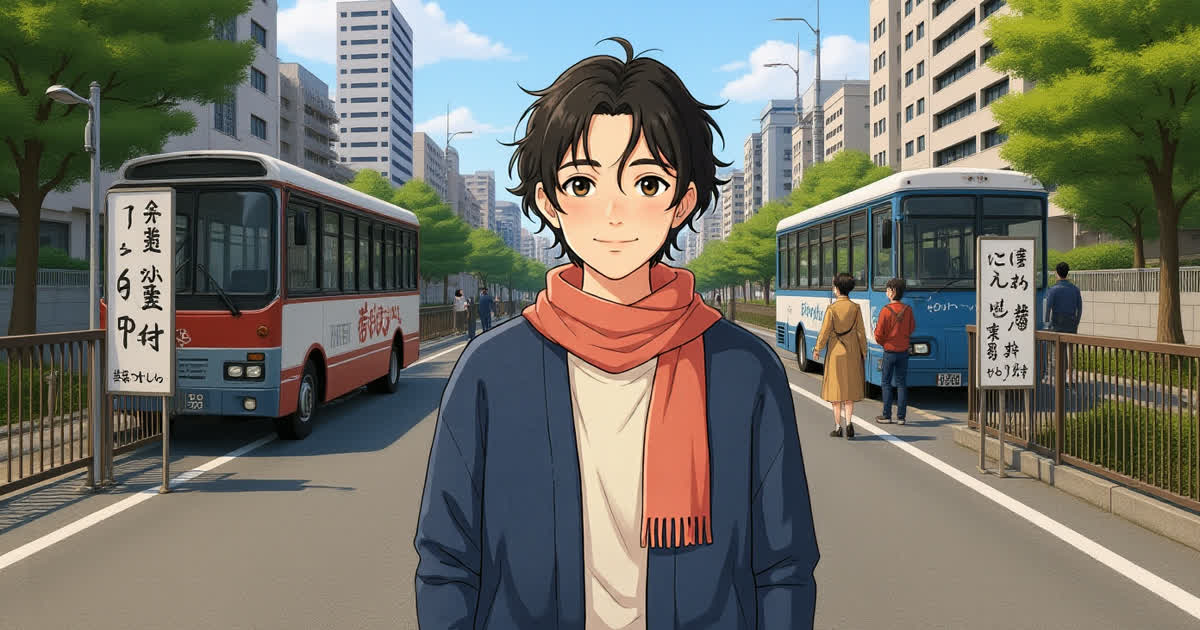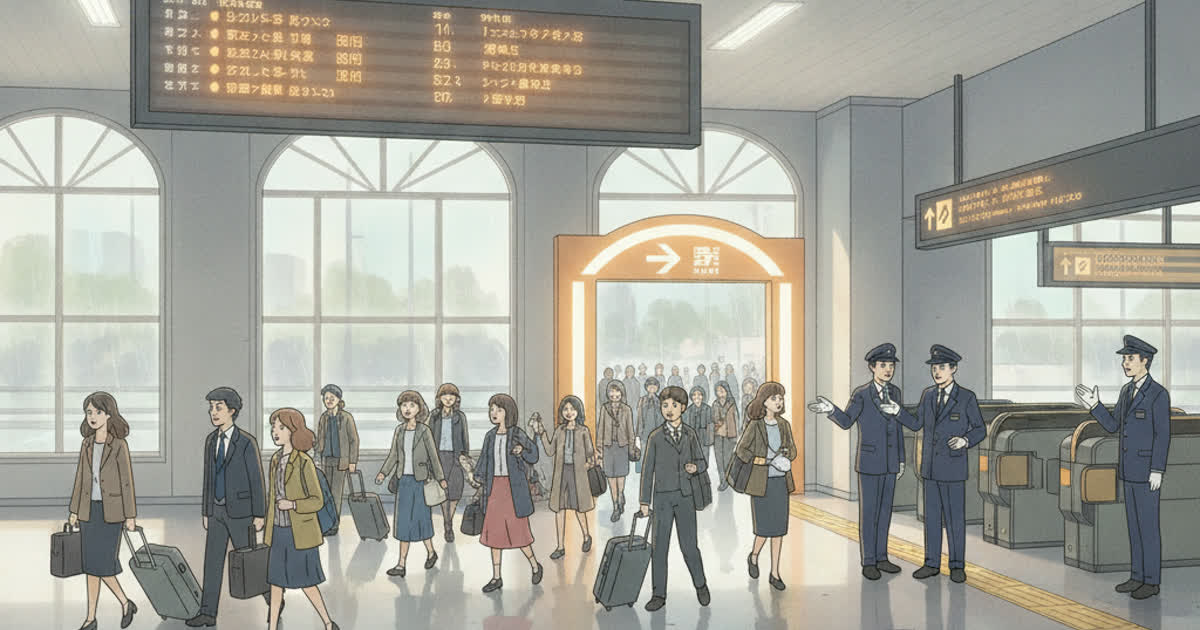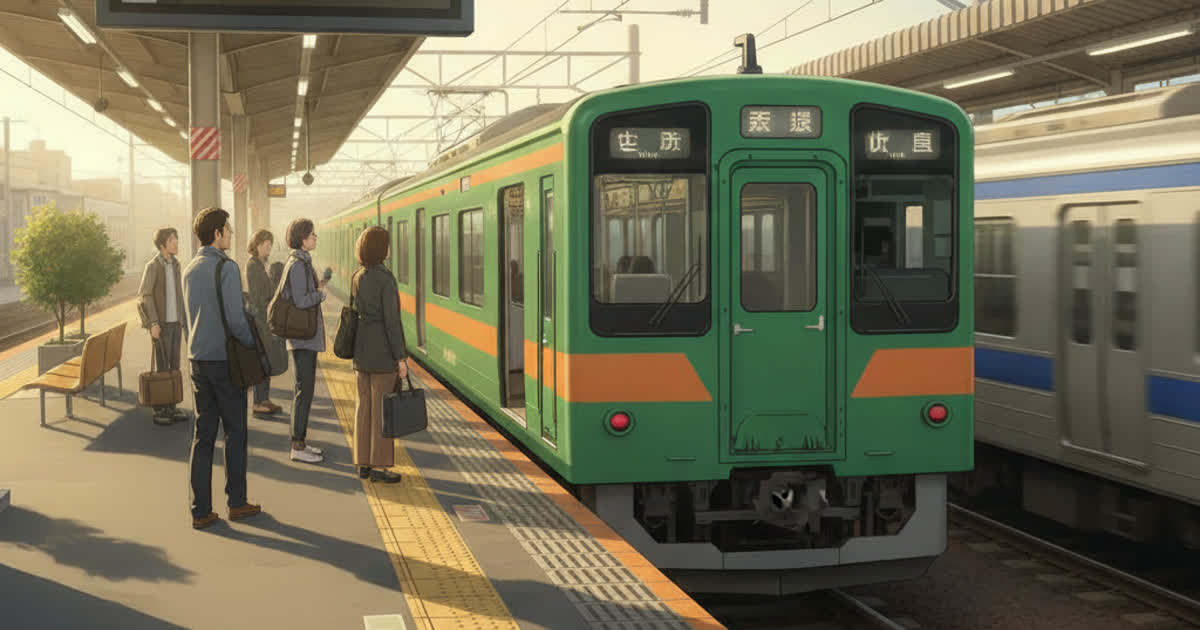
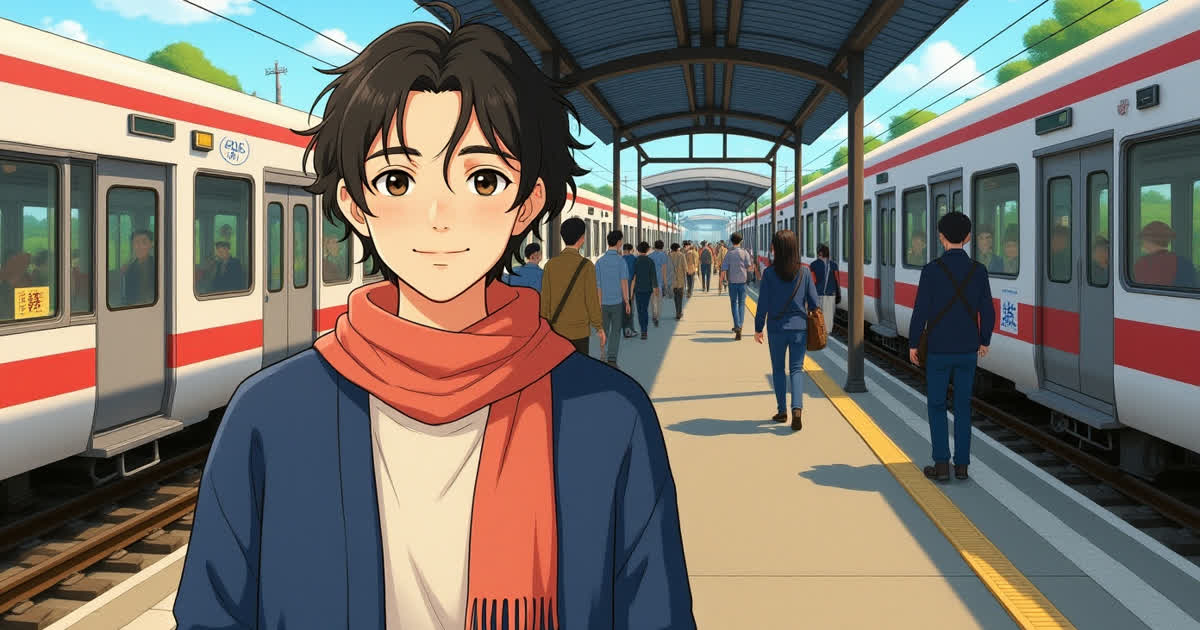
The destination on the front of the train is yours. The seat is empty. Nine minutes later the back half is sitting in a siding and you are not where the ticket said. Japanese trains split. The word for that is 切り離し (kirihanashi), and it is announced once, fast, usually with no English. The reel above is thirty seconds of that word. This page is how to hear it, read the car numbers, and walk to the half that is actually going where you are.
What does 切り離し mean on a Japanese train?
切り離し (kirihanashi) means uncoupling. The train you boarded as one set will split at a named station: one half continues, the other peels off toward a different city or stops dead. 切る (kiru) is "cut," 離す (hanasu) is "separate," and together they name a scheduled move, not a delay and not a cancellation. Plenty of JR limited expresses and the coupled Shinkansen north of Tokyo do this every hour. Hear the word, then match your car to the half that still goes where you are going — the same kind of check as asking whether you boarded a local or an express that skips your stop.
What does 切り離しを行います mean in the announcement?
切り離しを行います (kirihanashi o okonaimasu) means "this train will be uncoupled." It sits right after the station name: 盛岡で切り離しを行います (Morioka de kirihanashi o okonaimasu), "we uncouple at Morioka." There is often no English loop. The next clause names which cars drop — 後ろ四両, 前より四両, or a 号車 range. Once is all you get. Treat the word as a stand-up-now cue, in the same family of alerts as まもなく, the one word that means stand up now. If the sentence flew past, the overhead LCD usually repeats the split in kanji on the next cycle.
How do you tell which cars stay on after the split?
Read the car number, 号車 (gōsha), on the door and on the platform boarding marks, then match it to the destinations on the split diagram. Coupled Shinkansen print two names on the front: はやぶさ (Hayabusa) and こまち (Komachi) look like one train until Morioka, when Komachi peels off for Akita and Hayabusa continues north. やまびこ (Yamabiko) and つばさ (Tsubasa) do the same at Fukushima. Your reserved ticket already names the car. Unreserved riders must pick the half whose destination is theirs. On those coupled sets you cannot walk between the two units, so the choice is made on the platform, the same moment you confirm the car number itself.
What does 後ろ四両は行きません mean?
後ろ四両は行きません (ushiro yon-ryō wa ikimasen) means "the back four cars are not going there." 後ろ (ushiro) is the rear in the direction of travel, 四両 (yon-ryō) is four cars — 両 (ryō) is the counter for carriages — and 行きません (ikimasen) is "will not go." The dropped half may terminate at the split or continue somewhere else. 前より (mae yori, "from the front") names the half that stays on. Walk through only if the gangway between cars is open, and only before the split station. After the units uncouple, that floor is gone. If you are already in the wrong half and the next stop is the split, stand by the door with your bag; you will be changing trains whether you planned to or not.
How do you read the split diagram on a Japanese platform?
Find the 乗車位置 (jōsha ichi) marks: numbered boxes or colored bars painted on the platform edge, repeated on the overhead LCD. A splitting train shows two colors or two destination names, each spanning a run of car numbers. Stand at the number that matches your 号車, not at the pretty nose of the train. The same diagram lives above the doors inside. If the board is kanji-only, the attendant in white gloves will point you to a number if you hold out your ticket. The marks also tell you where the doors will open, which is how Japanese platforms stay orderly — queue on the painted lines, not in a huddle at the first door. Miss the number and you can still be on the "right" train and in the wrong city.
How do you ask which car to sit in before the train splits?
Ask 何号車に乗ればいいですか? (nan-gōsha ni noreba ii desu ka), "which car should I board?" while showing your ticket or naming the destination. To check the car you are already in: この車両は秋田行きですか? (kono sharyō wa Akita-yuki desu ka), "is this car bound for Akita?" Swap the city. Pair either sentence with すみません. Staff answer with a car number or a pointed finger toward the front or the back. Ask on the platform. After the doors close at the split, the two halves no longer share a floor. If the reply arrives too fast, the phrasing that slows a station conversation down works here too. And if you still cannot find the platform itself, 何番線ですか is the question for that.
What happens if you sit in the wrong half of a splitting train?
You go to the wrong city, or you get dumped at the split station when that half terminates. On Hayabusa plus Komachi, and on Yamabiko plus Tsubasa, there is no walkway between the two units, so you cannot fix it in motion. Get off at the split, read the next departure, and board the half that matches. A reserved seat in the wrong coupled set is the same mistake: the ticket's 号車 was the instruction, the same number that decides whether you are in a reserved or an unreserved car. Do not wait for English. The Japanese word already told you. If the missed connection blows your evening, check what time the last train actually is before you assume another one is coming.
Carry three habits onto a splitting train. Hear 切り離し and treat it as an order, not trivia. Match the 号車 on the door to the destination on the diagram, not to the name on the nose. Ask 何号車に乗ればいいですか? before you sit. Do that and the two-headed train stops being a trap and starts being what commuters already use it as — one departure, two cities, and a car number that decides which one you get.