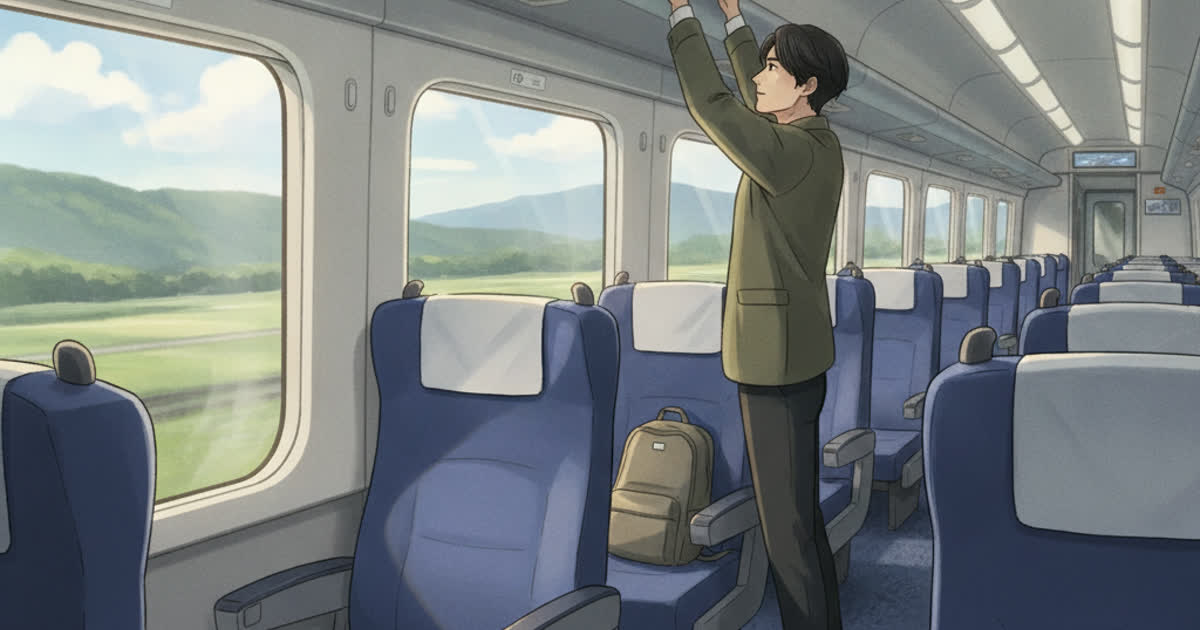
Every Shinkansen ticket forces one small decision before you board: 自由席 (jiyūseki), an unreserved car where you take any open seat, or 指定席 (shiteiseki), a specific car and seat number printed on your ticket. Most of the time either one gets you there in the same seat, on the same train, at the same speed. Here's when the extra few hundred yen is worth it, when it isn't, and the one sentence that gets you the right ticket at the window.
What's the difference between a reserved and unreserved Shinkansen seat?
A reserved seat (指定席, shiteiseki) is a guaranteed, specific seat on a specific train; an unreserved seat (自由席, jiyūseki) lets you board any departure that day and sit wherever's free. The seats themselves are identical — same car interior, same legroom, same recline. What you're paying for with a reservation is certainty: a printed car number and seat number that nobody else can take. With 自由席 you're flexible but gambling, because if the unreserved cars fill up you stand in the aisle for the whole ride.
Do you need a reserved seat on the Shinkansen?
Usually no — on an ordinary weekday, unreserved cars have plenty of empty seats and you can just walk on. Reserve when any of these apply: you're traveling on a weekend, a public holiday, Golden Week (late April to early May), Obon (mid-August), or the New Year period; you're a group of three or more who want to sit together; you're boarding mid-route rather than at the origin station; or you simply don't want to think about it. Unreserved cars are cheapest and most forgiving early in the morning and mid-afternoon on weekdays, and worst on Friday evenings and Sunday afternoons.
How much more does a reserved Shinkansen seat cost?
Roughly ¥500 to ¥1,000 more than unreserved on most routes — a small fraction of the total ticket. A Shinkansen fare is two parts stacked together: the base fare (運賃, unchin) for the distance, plus a limited-express surcharge (特急料金, tokkyū ryōkin) for the train itself. Only that second part changes, and it shifts a little by season — slightly cheaper in quiet months, slightly dearer at peak. On a Tokyo-to-Kyoto ticket of around ¥14,000 that difference is a couple of coffees, which is why most travelers with fixed plans just reserve.
Which Shinkansen trains have no unreserved cars at all?
Several of the fastest services are fully reserved, so 自由席 isn't an option no matter what you'd prefer. On the Tōhoku Shinkansen, the Hayabusa and Komachi are entirely reserved; on the Hokuriku line, so is the Kagayaki. Tōkaidō Nozomi trains normally keep a few unreserved cars at the front, but JR turns them fully reserved during the busiest holiday stretches. Hikari, Kodama, Sakura, and most local Shinkansen services always carry unreserved cars. Green Cars (グリーン車, gurīn-sha) are reserved-only everywhere.
Do you need a reservation for large luggage on the Shinkansen?
Yes, if your suitcase is oversized and you're on the Tōkaidō, Sanyō, or Kyushu Shinkansen. Bags whose height, width, and depth add up to more than 160 cm require a reserved seat in a designated oversized-baggage row, which costs nothing extra if you book it in advance — but boarding with one unbooked means paying a fee on the spot. Standard carry-ons and normal checked-size suitcases are fine anywhere, including unreserved cars. If you're hauling a very large case, this rule alone settles the reserved-versus-unreserved question for you.
How do you ask for a reserved seat in Japanese?
Say 指定席をお願いします (shiteiseki o onegai shimasu) — "a reserved seat, please." Swap in 自由席をお願いします (jiyūseki o onegai shimasu) for unreserved. Staff at the green-signed ticket office, みどりの窓口 (midori no madoguchi), handle this all day and will understand immediately. Two add-ons worth memorizing: 窓側 (madogawa) for a window seat and 通路側 (tsūrogawa) for the aisle. If you want to check availability first, ask 指定席は空いていますか (shiteiseki wa aite imasu ka?) — "are reserved seats available?" Lead with sumimasen and you're set. The one-question version of this exchange is the fastest way to hear it spoken.
What happens if you sit in the wrong Shinkansen seat?
Nothing dramatic — the ticketed passenger will show you their stub, and you move. Japanese passengers handle it quietly, so a small bow and すみません (sumimasen) closes it politely. The two mistakes to avoid: sitting in a reserved car with only an unreserved ticket, which means paying the difference to the conductor, and boarding an unreserved car with a reserved ticket, which is allowed but throws away what you paid for. Your car number is printed on the ticket and painted on the platform floor, so matching the number before you board avoids the whole thing.
How do you actually book a reserved Shinkansen seat?
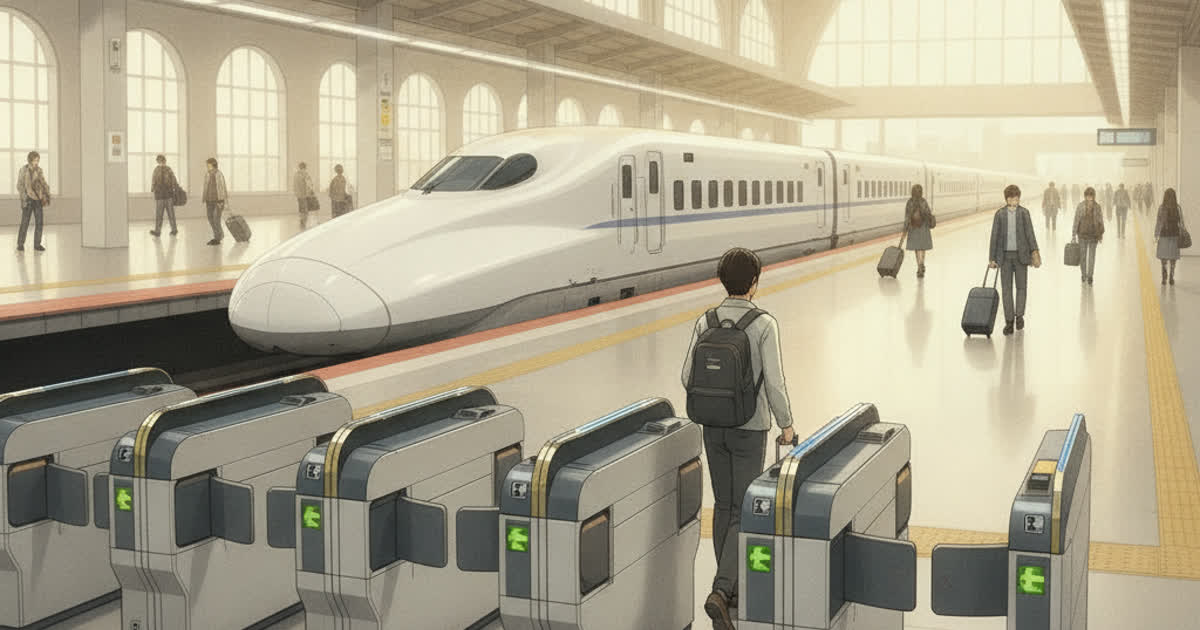
Three ways, all quick. The green ticket machines in any Shinkansen station switch to English and sell reserved seats directly. The みどりの窓口 counter is best for anything unusual — group seating, oversized baggage rows, rail-pass exchanges. Online reservation services let you book from your phone and tap through the gate with an IC card, which is the easiest option if you're planning several legs. A convenient option for international visitors is to book Shinkansen tickets through Klook. I used it exclusively as an American visiting Japan since the official Shinkansen app was so bad. A Japan Rail Pass covers reserved seats at no extra charge on the trains it's valid for, so pass holders should reserve as a matter of habit — there's no reason not to.
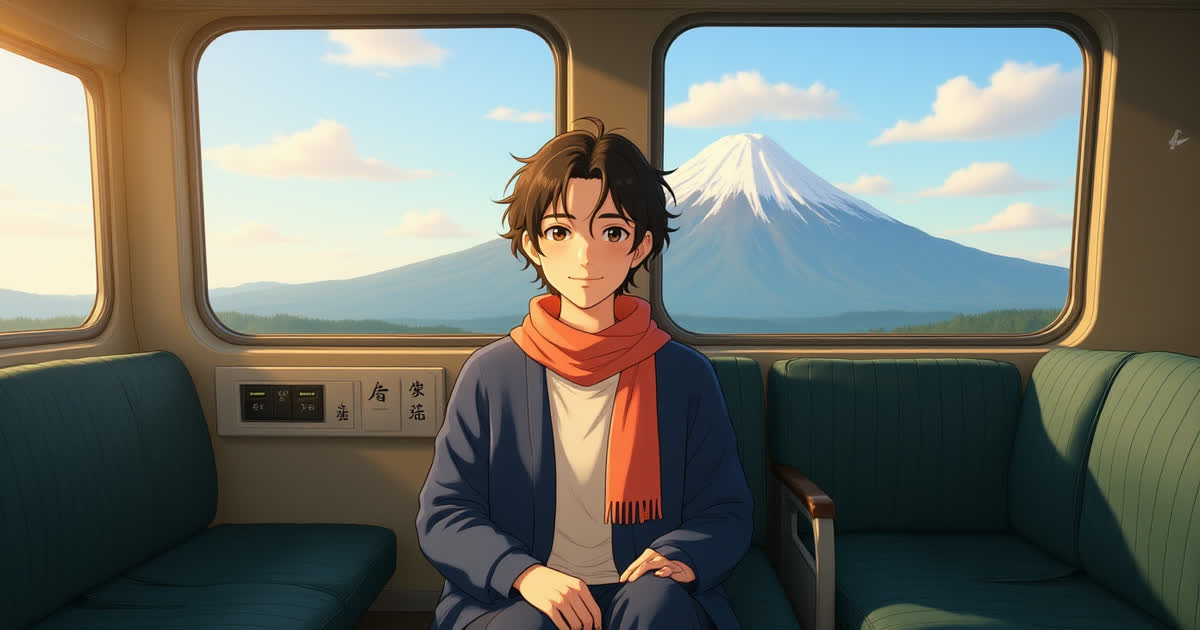
Tip: If you're traveling between Tokyo and Osaka or Nagoya, sit on the right side of the train (seat E) for the Tokyo to Osaka direction and on the left side (seat A) for the Osaka to Tokyo direction. Those are the Mt. Fuji side seats when the weather is clear. Ask for 眺めの良い席 (nagame no ii seki, 'a seat with a good view') or specifically 富士山側 (Fujisan-gawa, 'Mt. Fuji side') when booking.
Once your seat is sorted, the rest of the ride is the fun part: a platform bentō bought before boarding is a Shinkansen tradition worth keeping. And if a station announcement loses you, the ask-for-directions pattern works just as well on a Shinkansen concourse as anywhere else.