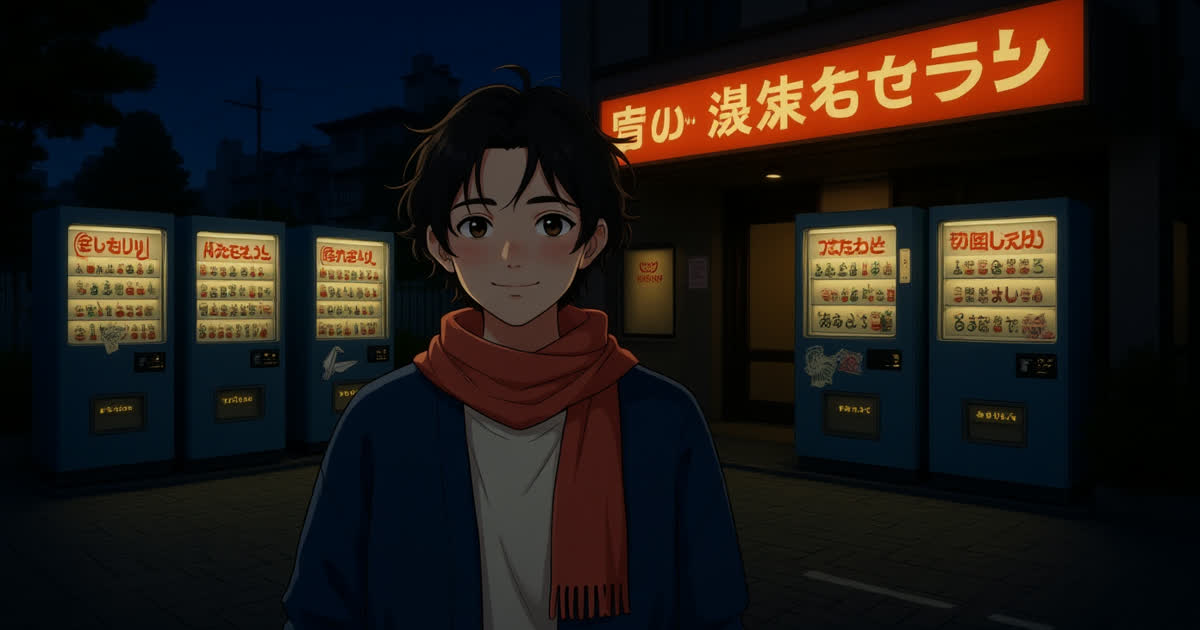
The drink is in the window. The machine took your thousand-yen note. Then it spat the note straight back, and the can did not drop. The machine is not broken, and it is not rejecting you. Look down by the coin slot for a small lit label: つり銭切れ (tsurisen-gire). The reel above is thirty seconds of that light. This page is how to read it, what to pay instead, and how to ask a shop to break the note into coins.
What does つり銭切れ mean on a Japanese vending machine?
つり銭切れ (tsurisen-gire) means the machine is out of change. つり銭 (tsurisen) is the coins it owes you after a note; 切れ (gire) means it ran out, the same suffix as 電池切れ (denchi-gire, out of battery) and 売り切れ (urikire, sold out). Japan has no circulating banknote smaller than ¥1,000, so a ¥160 drink paid with a thousand-yen note needs ¥840 back in coins. When the hopper is empty, the machine will not take the note at all. That is the whole message: exact coins only, until a restocker refills the change.
Why did a Japanese vending machine spit my thousand-yen note back?
Because it cannot make change, so it refuses the bill before the sale. The sequence is the trap: you press the button, the note is pulled in, then it comes back out, sometimes twice, and the drink stays in the coil. People assume the bill is wrinkled, the slot is fussy, or the machine is dead. Check the coin panel first. A lit つり銭切れ means the note path is working and the change path is not. Japanese vending machines still run on cash more than cards; a lot of street units take notes and coins only, which is why asking whether a shop takes a card still matters for everything around them too. Flattening the note will not help if the light is on.
What does おつりが出ません mean on a vending machine?
おつりが出ません (otsuri ga demasen) means "no change will come out." It is the same fact as つり銭切れ, written as a full sentence instead of a compound. おつり (otsuri) is everyday "change"; 出ません (demasen) is "will not come out." Some panels print both. Some print only one. Treat either as a lock on the bill slot. Do not keep feeding the same note. Do not feed a ¥5,000 or ¥10,000 note hoping a larger bill will go through; if it cannot return coins, it will not accept a bigger note either. The polite phrase from the reel is the diagnosis out loud: つり銭切れですね (tsurisen-gire desu ne), "it's out of change, isn't it."
How do you buy a drink when the machine is out of change?
Pay with coins, and pay the exact price. Count the yen on the button — often ¥130 to ¥180 for a can — and drop 100円 and 10円 coins until the display matches. 500円 coins usually work too, but only if the machine still has smaller coins to return; under つり銭切れ a ¥500 coin for a ¥160 drink will come back the same way a note does. The sentence that goes with the fix is じゃあ、小銭で買います (jā, kozeni de kaimasu), "I'll buy it with coins, then." If you have no coins, skip this machine and use the next one, or buy the drink after you break a note. Once you have coins, the rest of the panel still works the usual way — including the red and blue marks that tell you hot from cold.
How do you ask a Japanese shop for coins?
Walk into the nearest convenience store, buy something small, and pay with the thousand-yen note. The cashier returns coins in the tray. That is the reliable way. If you only want the note broken, ask 千円札を崩せますか? (sen-en-satsu o kuzusemasu ka), "can you break a thousand-yen note?" or 小銭に替えてください (kozeni ni kaete kudasai), "please change this into coins." Pair it with すみません. A konbini will often do this if you are also buying; a tiny shop may shake its head at a ¥10,000 note with no purchase. If you have no yen at all, the 7-Bank ATM inside 7-Eleven is the foreign-card machine that usually works, and the phrases at the register are the same ones in the konbini counter guide.
Where is the つり銭切れ light on the machine?
Down on the payment panel, beside the coin slot and the bill mouth, not on the big drink window. It is a small rectangular lamp or an LCD line, often next to 売切 (urikire, sold out) and 準備中 (junbi-chū, not ready). At night the drink photos glow; the status lights are easy to miss unless you look at the metal strip where the money goes. Some machines use the hiragana form つり銭切れ, some use 釣銭切れ or 釣り銭切れ — same words, same meaning. If nothing is lit and the note still comes back, try a second note, then move to the next machine. Do not keep stuffing the slot. The address sticker on the side is for staff and for telling an ambulance where you are, not for this light.
How do you tell つり銭切れ from a broken vending machine?
Read the panel. つり銭切れ is out of coins: the machine still sells if you pay exact. 故障中 (koshō-chū) or 故障しています (koshō shite imasu) means out of order: walk away. 準備中 means it is being restocked or not open for sales. If the machine takes the coin and does not drop the drink, and no label explains it, that is a jam or a fault — the situation in the reel about a machine that ate a 500-yen coin. Stay put, press the return lever, and look for a phone number on the side. Do not assume every spit-back is a fault. Most tourist spit-backs on a working street machine are つり銭切れ, and the fix is coins, not a repair call.
Carry three habits to a Japanese vending machine. Read the coin panel before you feed a note. Hear つり銭切れ as "exact coins only," not "this machine is dead." If your pocket is notes, break one at a konbini and come back. Do that and the spit-back stops being a mystery and starts being what locals already treat it as — an empty hopper, a working machine, and a drink that will drop as soon as the coins match the button.