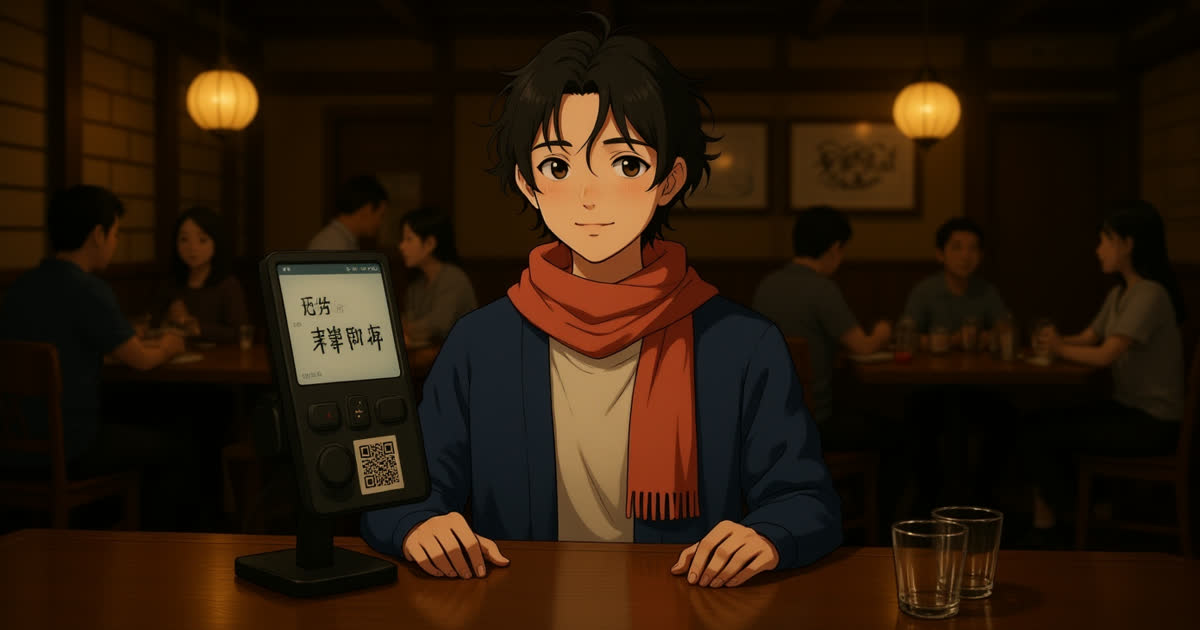
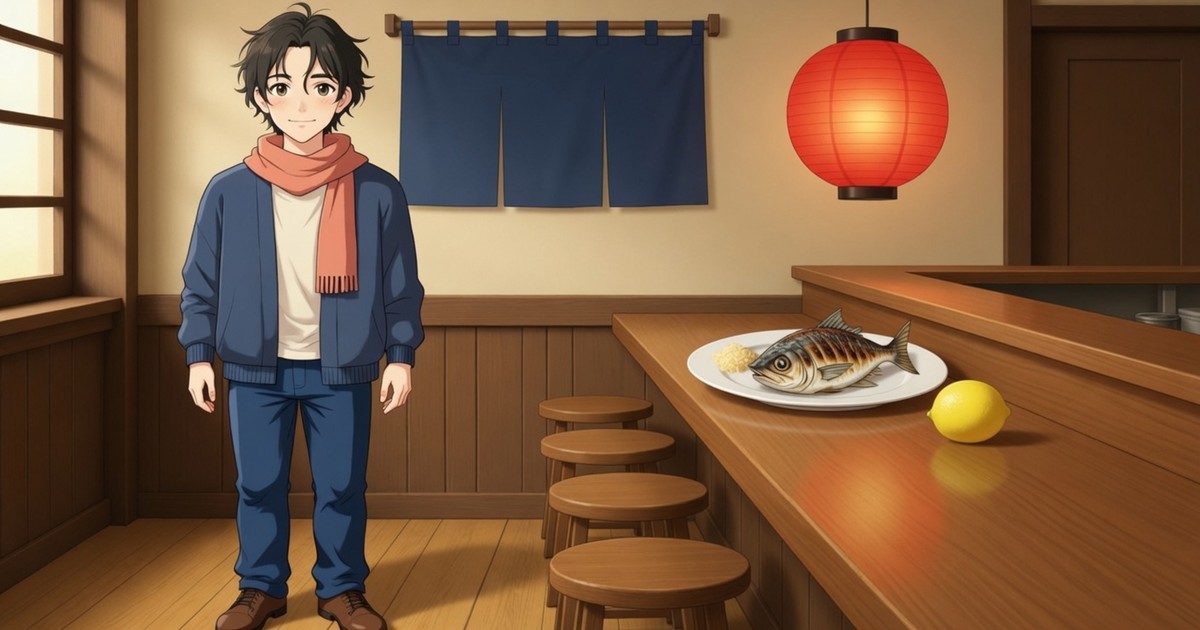
The plate in the reel above, published 30 September 2026, is a whole grilled fish with the head still on. The line that orders it is さんまの塩焼きをお願いします. This page is that dish: the fish, the salt grill, and the words you say when you want it.
What does さんまの塩焼きをお願いします mean at a Japanese restaurant?
さんまの塩焼きをお願いします (sanma no shioyaki o onegai shimasu) means "Salt-grilled saury, please." さんま (sanma) is Pacific saury. の (no) ties the fish to the cooking. 塩焼き (shioyaki) is the salt grill. を (o) marks that dish as the thing you want. お願いします (onegai shimasu) means "please." Say sanma in three beats, sa-n-ma. The ん is its own beat. Say shioyaki in four, shi-o-ya-ki, with a short o in しお. The reel's line is さんまの塩焼きをお願いします。 The recap adds a call first: すみません、さんまの塩焼きをお願いします。 (sumimasen, sanma no shioyaki o onegai shimasu). Use that when you need the person's attention. The dish words stay the same.
Why does salt-grilled sanma still have its head?
The head stays on because the dish is the whole fish. Keep the plate. Shogakukan's Digital Daijisen, on Kotobank, checked 7 October 2026, reads 秋刀魚 as sanma and describes a saltwater fish about 40 centimeters long. The body is narrow, flat, and knife-shaped, with a dark blue back and a silver-white belly. It is an ocean fish that shows up off Hokkaido in summer and moves south along Japan. Britannica's entry for 塩焼, on Kotobank the same day, names sanma among the sea fish suited to salt-grilling, beside sea bream and horse mackerel. The same entry uses 尾頭つき (okashira-tsuki) for a whole fish kept for a celebration, and it names sea bream for that festive plate. The izakaya fish is the ordinary autumn grill. The head is on the plate because you ordered the fish whole.
What is on the plate besides the fish?
Grated daikon, and a sour citrus. The reel puts grated daikon and a small sour citrus beside the fish. Kikkoman's recipe for さんまの塩焼き, checked 7 October 2026, plates 大根おろし (daikon oroshi, grated daikon) and lemon wedges, with soy sauce if you want it. Kikkoman says the grated radish belongs with the fat of the fish. The same page says the guts can be eaten. Sanma is a 無胃魚 (muigyo), a fish with no stomach, so the feed that makes guts smell does not sit inside it. That note is about cooking at home. A restaurant may already have cleaned the belly. The head is the part people try to send back. The white mound and the citrus come with the fish.
How do you pronounce さんま and 秋刀魚?
Both say sanma. さんま is three beats, sa-n-ma. 秋刀魚 is the kanji writing of that same word. Digital Daijisen writes the headword さんま【秋=刀=魚】. The equals signs mean you do not sound the kanji one by one. 秋 is not aki in this word, 刀 is not katana, and 魚 is not sakana. The plant-and-animal dictionary on the same Kotobank page gives the scientific name Cololabis saira. The Nihon Kokugo Daijiten lists a second writing, 三馬, beside 秋刀魚. An izakaya board uses さんま or 秋刀魚. Digital Daijisen writes the grill as 塩焼(き) and reads it shioyaki. The full form can take the hiragana き. On a menu the word is 塩焼き. The first sense is fish or meat with salt shaken on, then grilled, and also the grilled dish. The second sense is an old trade, boiling seawater to make salt. The menu means the dish.
When do you order sanma in Japan?
Order it in autumn, and in 2026 the specials are up in early October. Digital Daijisen marks 秋刀魚 as a seasonal word for autumn. It says the fish that pass the Joban coast, in Fukushima and Ibaraki, and the Boso coast, in Chiba, around October are the fattiest. The reel is set in late September, when those specials land. On 2 October 2026, Onagawa fish market in Miyagi landed sanma for the first time this season, about a month later than in 2025. Sendai Television's report on FNN Prime Online, checked 7 October 2026, gives about 13 tons, caught off Miyako in Iwate. Most of the fish weighed 120 to 130 grams. The first auction ran from ¥1,180 to ¥1,550 a kilo, about three times last year's price. The market said landings there continue through late December. A smaller, dearer fish still answers to the same sentence. If the board lists さんまの塩焼き, say さんまの塩焼きをお願いします。
How is this different from the izakaya ordering page?
This page is one dish. The izakaya ordering page is the system the shop uses when nobody comes to the table: a tablet, a QR code, or a ticket. Say さんまの塩焼きをお願いします when a person is taking the order. When the shop never sends a person, use that system and choose this dish on it. お通し (otoshi) is a different plate. The otoshi page covers the small dish the shop brings before you order, and the charge that comes with it. This fish is the dish you named. 並でお願いします (nami de onegai shimasu) is the ramen size line, and it ends in the same please. The words in front of お願いします are the order. Here those words are the salt-grilled saury.
What if you did not want a whole fish?
Say the line when you want the whole grill. A fillet, or a fish with the head already off, is a different item. Choose that item before the kitchen starts. Once this plate is on the table, the head is the dish you named. Eat the meat off the bone and leave the head. はい (hai, yes) accepts the dish if staff repeat it back while they are still on the question. Correct a mix-up then: すみません (sumimasen), then the dish you actually want. After the grill is down, a change can mean a new plate. To call someone over, use the waiter page. The words for this plate stay さんまの塩焼きをお願いします。
The sentence orders one dish. さんまの塩焼きをお願いします means salt-grilled saury, please. The head stays on the plate.