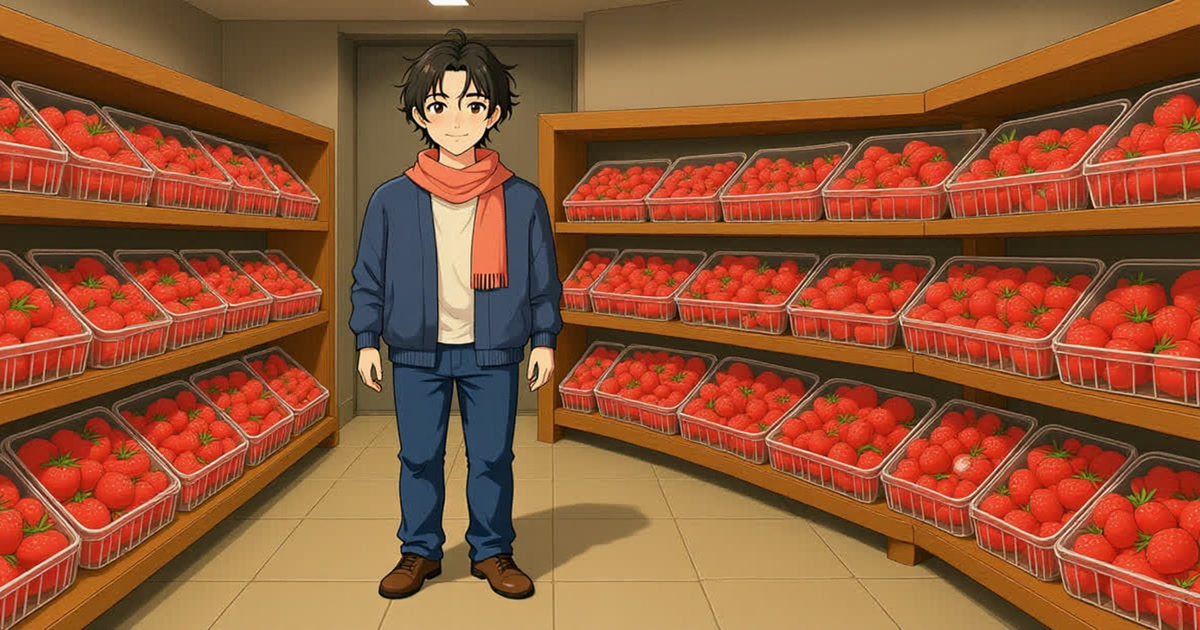
The reel above, published 29 September 2026, stops on a pack of strawberries with a reason written on it. 訳あり (wake ari) means there is a reason the pack is cheap. The reason is a split, a squash, or an odd shape. The evening sticker that says 半額 (hangaku) is a different word, and it tracks the date.
What does 訳あり mean on Japanese food?
訳あり (wake ari) means "there is a reason." 訳 (wake) is a reason. In this word the reading is wake. The reading yaku belongs to other words, such as 翻訳 (hon'yaku), a translation. あり is hiragana for "there is," from ある (aru). Count the beats: wa, ke, a, ri. Four beats, with a real break in the middle, so it is wake ari. On a food pack the reason is a flaw you can see, and the shop has cut the price because of that flaw. The usual spelling on fruit is one kanji plus hiragana: 訳あり. The two-kanji spelling is 訳有り. Stickers also print ワケあり and 訳アリ. All four spellings point at the same shelf. The clerk's line in the reel is 訳ありなので、お安くなっています。
How is 訳あり different from the 半額 sticker?
半額 (hangaku) means half price. 半 (han) is half, and 額 (gaku) is the amount. On a bento, an onigiri, or a side dish, that sticker shows up in the evening because the shop is racing 消費期限 (shōhi kigen), the use-by stamp. The expiry-date guide reads that stamp, and it reads 賞味期限 (shōmi kigen), the best-before stamp on food that keeps. 訳あり is the other label. The strawberries in the reel are cheaper because a berry is split, squashed, or the wrong shape. The clerk says the pack has become cheaper. 半額 is the word that means half. A 訳あり pack can still carry an ordinary date. The date tells you how long the food keeps. The 訳あり line tells you why the price dropped. Read both. Buy the pack when you accept the look and the date is still good.
What does a 訳あり mark look like on fruit and snacks?
On fruit, the reason is the look. A berry is split. A peach is bruised. The berries are too small for the gift box. Under 訳あり you may see 形不揃い (katachi fuzoroi), uneven shape, 傷 (kizu), a bruise or a scratch, or 割れ (ware), a crack. The Ministry of Agriculture, Forestry and Fisheries page on shipping grades, checked 1 October 2026, describes that kind of sort for major vegetables. Each producing area now sets the grade. The old national grades were abolished in 2002. A vegetable that misses the grade and is still good to eat may be used at home, given away, or sent for processing. The strawberry sticker in the reel is the shop's version for fruit: the berry missed a clean shape. A cracked rice cracker uses the same word, and so does a shirt with a pulled thread, the reel's example from outside the food aisle. Loose fruit with no barcode is a different job. Ask 計量はどこですか? The weighing guide covers the scale.
Is 訳あり food safe to eat?
A split, a squash, or an odd shape is a look. Mold, a wet leak, and a sour smell are spoilage. Eat the berry when the split is dry, the smell is sweet, and the rest of the pack still looks like fruit. Put the pack back when the soft spot smells off. A bruise you can cut away is why the price fell. Packaged snacks still carry a stamp. 消費期限 (shōhi kigen) is the last day the food is safe. 賞味期限 (shōmi kigen) is the last day the maker promises the flavor. A cracked cracker inside its best-before date is the 訳あり case. A bento past its use-by stamp is a date problem, and the expiry-date guide is the page for those two stamps. Smell the fruit. Read the date. Then decide.
What does 訳ありなので、お安くなっています mean?
訳ありなので、お安くなっています。 (wake ari na node, o-yasuku natte imasu) means "It is marked with a reason, so it is cheaper." なので (na node) means "because it is." 訳あり takes な in this sentence, the same link a な-adjective uses. お安く (o-yasuku) is the polite form of 安い (yasui), cheap. お is the polite prefix. 安く is the form that leads into the next verb. なっています (natte imasu) means it has become that way and it still is. The clerk gives you the reason and the result in one breath. The price is lower. 半額 (hangaku) is the separate word for half. You hear the line when you pick up the pack and hesitate. わかりました (wakarimashita), "I see," closes it. If you want the pack, put it in the basket. The sticker already said the reason.
What do you say if you want the cheaper imperfect pack?
Ask 訳ありはありますか? (wake ari wa arimasu ka), "Do you have the imperfect ones?" は (wa) marks 訳あり as the topic. You write は and you say wa. ありますか (arimasu ka) asks whether the shop has any. Point at one pack and ask これ、訳ありですか? (kore, wake ari desu ka), "Is this the imperfect one?" これ (kore) means this one, close to you. When two boxes sit side by side, the cheaper one is the one with the reason on it. Take that box when the fruit still looks good to eat and the date, if the pack has a date, is still ahead. A clerk who walks you back to the fruit may answer with the reel's line, 訳ありなので、お安くなっています。 Loose grapes with no barcode need a weight. That question is 計量はどこですか? and the weighing guide is the page for it.
The cheap strawberries have a reason, and the sticker says it. 訳あり (wake ari) means the pack is split, squashed, or odd, and the shop cut the price for that. 半額 (hangaku) is the evening half-price sticker, and it tracks a date. Read the reason, look at the fruit, and take the box when both are fine.