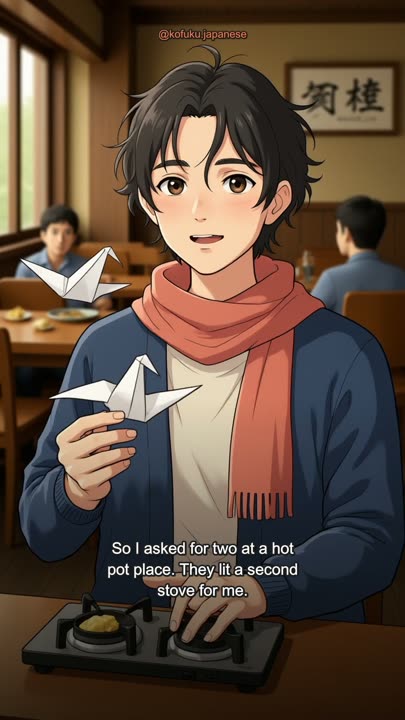
The reel above, published 30 September 2026, is the bag check. Staff open a backpack, and the konbini snacks are the problem. 持ち込み禁止 (mochikomi kinshi) means bringing it in is prohibited. On that sign, food and drink from outside stop at the rope.
What does 持ち込み禁止 mean on a Japanese sign?
持ち込み禁止 (mochikomi kinshi) means bringing it in is prohibited. 持ち込む (mochikomu) is the verb, to carry something in. 持ち込み (mochikomi) is that act as a noun. 禁止 (kinshi) means prohibited. Hear it in two pieces: mochikomi, then kinshi. The short line in the reel is 持ち込み禁止です (mochikomi kinshi desu), "you can't bring that in." Some signs drop the hiragana and print 持込禁止. The reading stays mochikomi kinshi. Four kanji with no object still need the smaller line under them, or the thing in your hand. At a park rope, that thing is the food.
What does 飲食物の持ち込みは禁止です mean?
飲食物の持ち込みは禁止です (inshokubutsu no mochikomi wa kinshi desu) means bringing food and drink in is prohibited. 飲食物 (inshokubutsu) is food and drink as things you can hold. 飲食 (inshoku) is the eating and the drinking. 物 (butsu) marks the stuff. の links that stuff to 持ち込み. You write は and you say wa. This is the second line in the reel, and it names the object the short sign left out. A different sign, 飲食禁止 (inshoku kinshi), bans eating and drinking in that spot, including a snack the counter inside just sold you. 持ち込み禁止 is about what crosses the door. Popcorn bought inside is not a 持ち込み. A rice ball from the shop down the street is.
How is 禁止 different from ご遠慮ください?
禁止 (kinshi) is a ban. ご遠慮ください (go-enryo kudasai) means please refrain. Both tell you to stop. Only 禁止 is the hard word. TOHO Cinemas FAQ No. 414, updated 5 August 2025, says 外部からの飲食物のお持ち込みはご遠慮いただくようご協力をお願いしております: please cooperate by refraining from outside food and drink. A health reason is a question for that theater. The reel's cinema feels looser than a park rope because the cinema's printed word is ご遠慮, and a rope that says 禁止 is where the bag stops. Read the word on the sign in front of you.
Can you bring konbini food into Tokyo Disney Resort, USJ, or Ghibli Park?
Carry a bento through Tokyo Disney Resort and eat it outside the park. USJ asks you not to eat food you brought in. Ghibli Park's areas have no place to eat food you brought. Tokyo Disney Resort's bento FAQ says the picnic areas sit outside, and you may carry the bento in a bag. Step out only after the re-entry step at the exit. The prohibited-items FAQ, updated 27 August 2026, also allows candy, gum, a small child's snack, a water bottle, and a non-alcoholic plastic bottle. A guest with a food limit, including baby food and formula in a can or a jar, may take that food into a park restaurant when the people with them order from the menu. Ask the cast at the restaurant door. Universal Studios Japan's prohibited-items page, and its 13 July 2026 post, say please refrain from eating food you brought in. Ask a crew member about baby food, a small child's snack, or a dietary limit. Glass bottles, cans, alcohol, and a drink that does not seal are refused. Hold a water bottle or a plastic bottle in your hand at that bag check. Ghibli Park's FAQ names the place to eat: 愛・地球博記念公園 (Ai-Chikyūhaku Kinen Kōen), the Expo 2005 park around the areas. A drink with a lid is for the outdoors, or for a path that is not an exhibition room.
Do stadium bag checks ban every snack?
No. Read the list on that gate. Tokyo Dome's visitor page, checked 2 October 2026, titles one list 持込禁止物 (mochikomi kinshibutsu), things you may not bring in. On it: glass bottles, cans, plastic bottles that are frozen or over 1,000 ml, alcohol, and anything with a strong smell that would bother other people. A rice ball is not on that list. A frozen tea taller than a liter is. The Dome's food hall, FOOD STADIUM TOKYO, uses the hard line instead: 飲食物のお持ち込みはお断りしております (inshokubutsu no mochikomi wa o-kotowari shite orimasu), outside food and drink are refused. Koshien's FAQ bans cans and bottles, and the bag check looks for those and for dangerous items. The high-school tournament FAQ on the same site says plastic bottles and water bottles may come in. There is no pour-into-a-cup service. A 飲食物の持ち込みは禁止です sign stops the rice ball. These stadium lists stop the can.
How is 持ち込み禁止 different from the trash-bin 持ち込み line?
The verb is the same. The object is not. On a convenience-store bin the line is 家庭ごみの持ち込みはご遠慮ください (katei gomi no mochikomi wa go-enryo kudasai), please refrain from bringing household rubbish. That sign is the trash guide. 家庭ごみ (katei gomi) is garbage from a house or a hotel room. A rice ball you are about to eat is not 家庭ごみ, and a park gate is not a bin. ご遠慮ください on the bin is the soft request. 禁止 on the gate is the ban. The shop that sold the snack uses a different set of lines, in the konbini phrase guide.
What do you say if the food is for a baby or an allergy?
Say すみません (sumimasen), then name the exception before you open the bag. For a baby, 赤ちゃんの食べ物ですが (akachan no tabemono desu ga) means this is food for the baby. For an allergy, use the allergy guide: アレルギーがあります (arerugī ga arimasu), "I have an allergy," and show the food written in Japanese. To ask first, say これは持ち込めますか (kore wa mochikomemasu ka). You write は and you say wa. 持ち込めます (mochikomemasu) means "can I bring it in." If the answer is 持ち込み禁止です, eat it before the rope or leave it outside.
持ち込み禁止 means bringing it in is prohibited, and 飲食物の持ち込みは禁止です names food and drink. ご遠慮ください is the softer line on a cinema door and on a trash bin. Disney, USJ, Ghibli Park, Tokyo Dome, and Koshien each print a list, and the list on that gate is the rule.