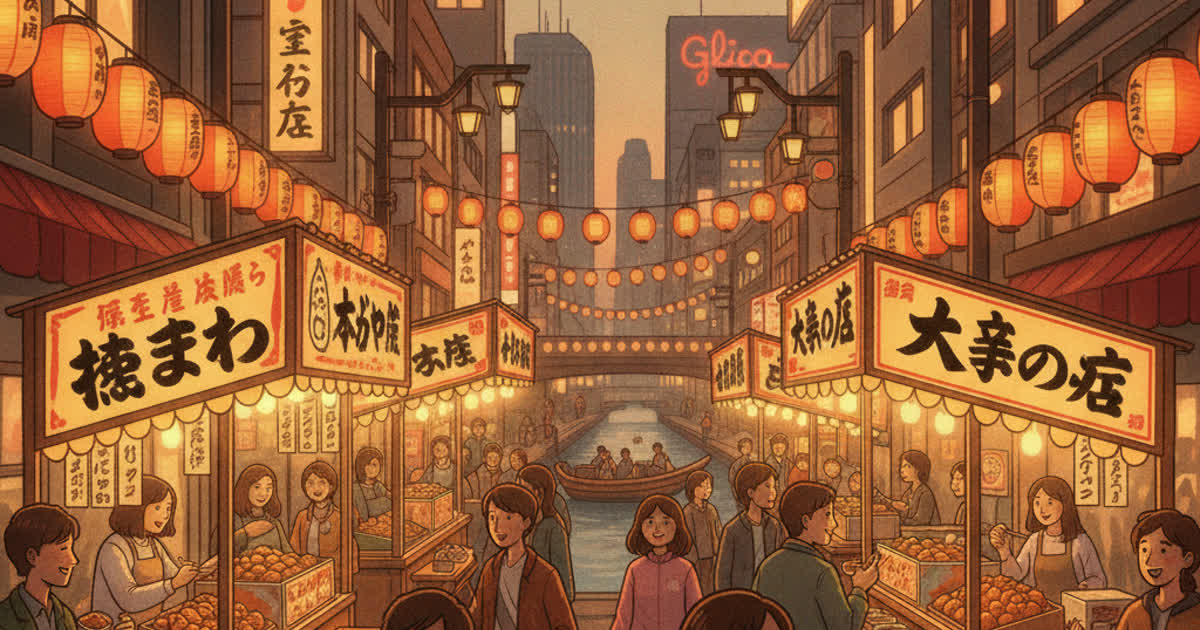
Osaka is Japan's kitchen — locals call the city's eat-til-you-drop spirit kuidaore. From the neon counters of Dōtonbori to the seafood stalls of Kuromon Ichiba market, the best food is at small spots where a few words of Japanese get you served faster and warmer. You don't need to be fluent. You need this short, high-yield phrase set — say each one out loud a few times before you go.
| Japanese | Romaji | English |
|---|---|---|
| 二人です | futari desu | Two people (party size) |
| これをください | kore o kudasai | This one, please |
| おすすめは何ですか? | osusume wa nan desu ka? | What do you recommend? |
| …アレルギーがあります | … arerugii ga arimasu | I'm allergic to … |
| お会計をお願いします | o-kaikei o onegai shimasu | The bill, please |
| ごちそうさまでした | gochisousama deshita | Thank you for the meal |
Do you need to speak Japanese to eat in Osaka?
No, but a little goes a long way. Many Osaka spots have picture menus or English, and staff are used to tourists. Still, a few polite phrases — a greeting, an order, a thank-you — change how you're treated, especially at the small counters where English is limited and the food is best. The phrases above are the whole job; everything below is how and when to use them.
What should I say when you enter an Osaka restaurant?
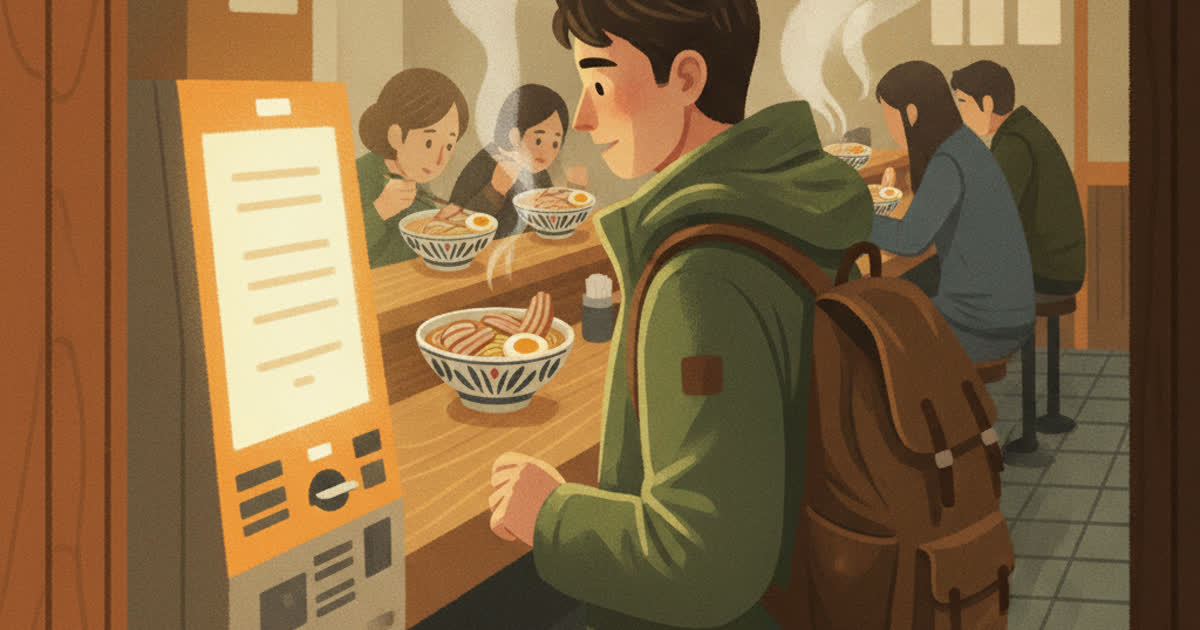
Wait to be greeted with irasshaimase (welcome) — you don't reply to it. Then signal your party size: hold up fingers and say futari desu (two people) or hitori desu (just me). A smile and your number is exactly right. At a busy counter you may just be waved to a seat.
How do you order food in Japanese?
Point to or name the dish and add o kudasai (please): "Takoyaki o kudasai." To eat like a local, ask osusume wa nan desu ka? (what do you recommend?) — the single most useful question for a foodie, and staff will steer you to the best plate of the day. Want to hear these said aloud first? Browse the food & restaurant reels.
How do you say you have a food allergy in Japanese?
Say the food plus arerugii ga arimasu (I have an allergy): e.g., soba arerugii ga arimasu (I'm allergic to buckwheat). For "I can't eat ___," use … wa taberaremasen. Carry it written down, too — buckwheat (soba) and shellfish are common in Osaka street food and easy to miss. Full guide with the allergen words: how to say you have a food allergy in Japanese.
What are the must-try foods in Osaka?
- Takoyaki — molten octopus balls, the city's icon.
- Okonomiyaki — a savory cabbage pancake grilled at your table.
- Kushikatsu — deep-fried skewers. The one rule: don't double-dip the communal sauce.
- Negiyaki — a thinner, green-onion-loaded cousin of okonomiyaki.
Head to Dōtonbori for the classics and Kuromon Ichiba market for fresh seafood and stall snacks.
How do you ask for the bill and pay in Japanese?
Catch the staff's eye and say o-kaikei o onegai shimasu (the bill, please). Many small places are cash-only, so if you're unsure, ask kaado wa tsukaemasu ka? (can I use a card?). Then close with gochisousama deshita — "thank you for the meal" — which always earns a smile and marks you as a thoughtful guest.
Is it rude to eat while walking in Osaka?
It's generally frowned on elsewhere in Japan, but Osaka's street-food culture is more relaxed — eating right by the stall you bought from is normal. Step to the side, don't block foot traffic, and bin your trash or carry it with you. When in doubt, eat where you bought it.