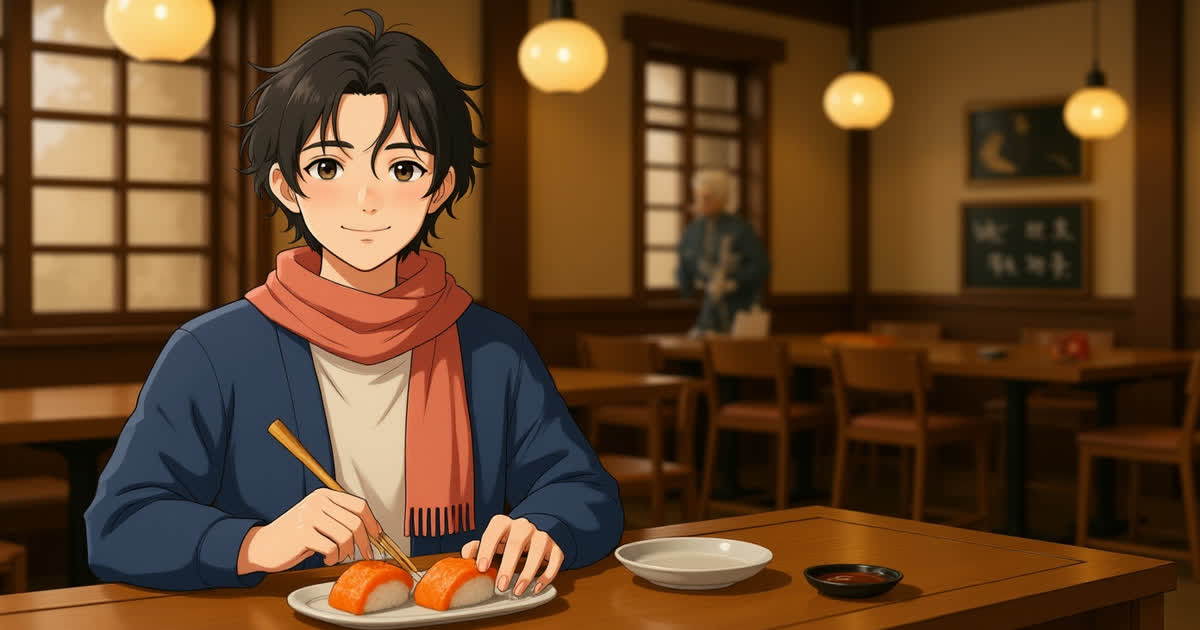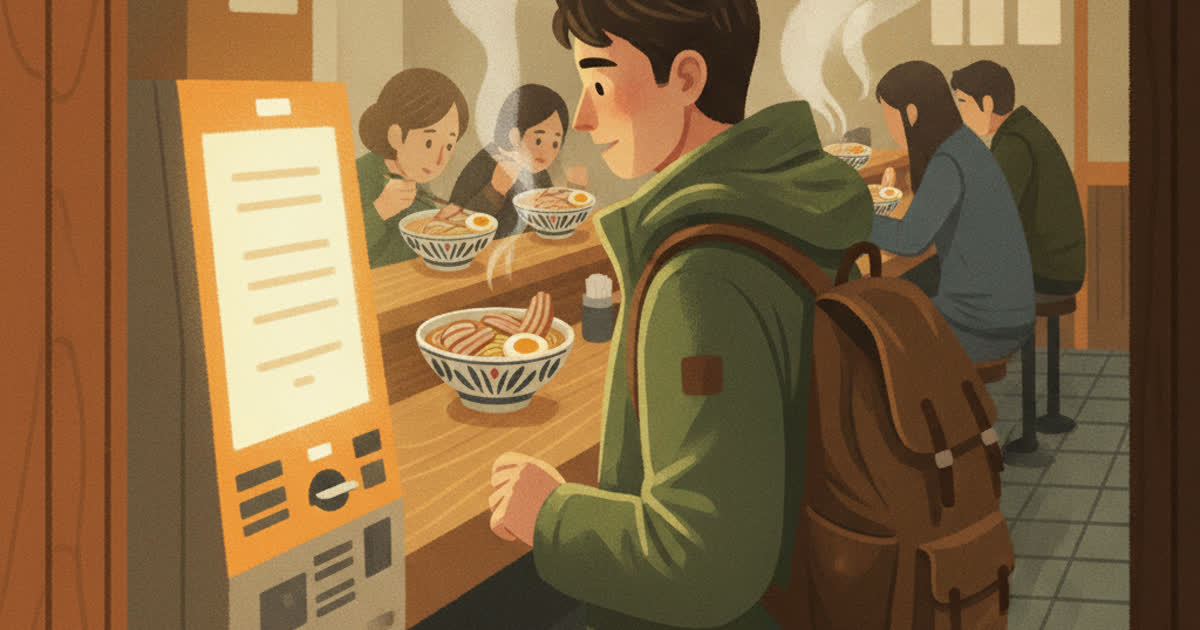
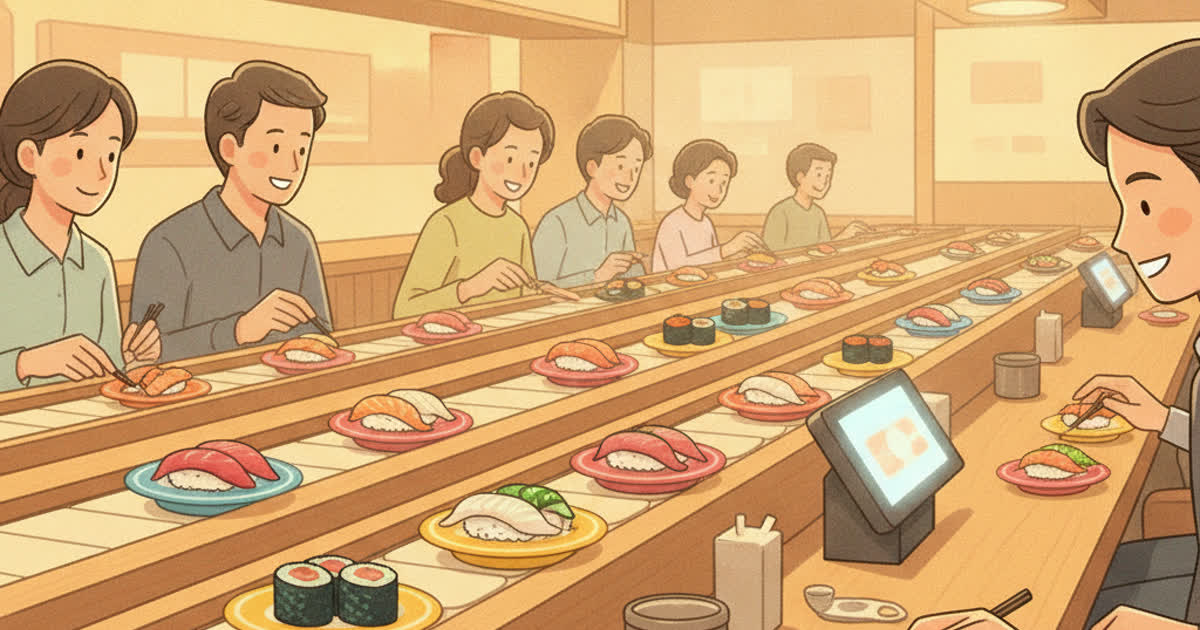
A belt of little plates glides past your elbow, a screen glows at your seat, and nobody comes over to take your order. Conveyor-belt sushi looks like the most confusing restaurant in Japan for about ninety seconds, and then it becomes the easiest one — cheap, fast, and almost entirely wordless. Here's the whole meal, from the door to the register.
How does conveyor-belt sushi work in Japan?
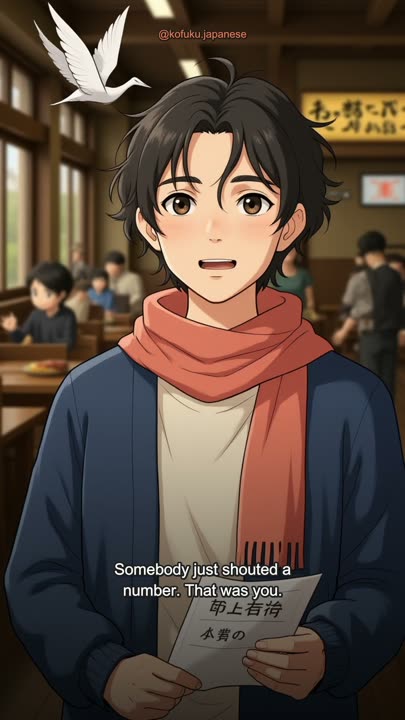
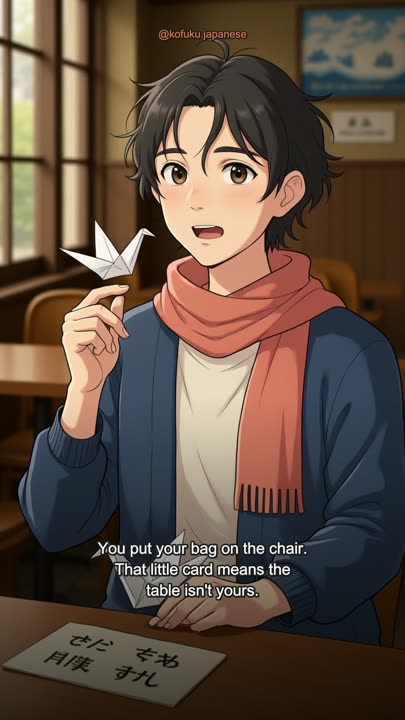
You help yourself, and the plates you keep are the bill. At the door you'll find either a host or a ticket machine that prints a number; press the button for your group size, take the slip, and wait for your number to be called or displayed. Once you're seated, everything circling past on the レーン (rēn, the belt) is fair game — take any plate you want, no permission needed. Anything you'd rather have fresh, you order from the touch panel at your seat. Empty plates stay next to you in a stack, and that stack is what you pay for. The reel above shows the flow in about thirty seconds; the sections below fill in the details that trip people up.
Should you take plates off the belt or order from the touch panel?
Order from the panel for anything you actually care about. Plates on the belt have been going around for a while — chains time them out and pull them automatically, so it's safe, but the texture of a piece that's done six laps isn't what the shop is capable of. The belt is best for the fast movers that get replaced constantly: サーモン (sāmon, salmon), たまご (tamago, sweet egg), and いなり (inari, sweet tofu pouches). Everything else, tap it into the タッチパネル (tacchi paneru) at your seat. Nearly every chain panel has an English toggle and photos of every item, so this needs no Japanese at all. Your order comes down a second, faster 特急レーン (tokkyū rēn, express lane) — usually above or below the main belt — with your seat number on the tray, and the panel chimes when it's arriving. Take your plate off promptly; the tray goes back to the kitchen.
What do the plate colours mean at conveyor-belt sushi?
Colour is price, and nothing else. Each plate colour or rim pattern maps to one price band, and the key is posted on the wall, printed on the table, or tucked into the touch-panel menu. At a standard chain that means roughly ¥120 for the cheapest plates, ¥180 to ¥240 in the middle, and ¥300 and up for premium cuts like 大トロ (ō-toro, fatty tuna belly). One plate is normally two pieces — 二貫 (nikan) — though premium items are often served as one. Two chains break the pattern worth knowing about: Kura Sushi prices almost everything identically regardless of plate, and Sushiro mixes colour bands with seasonal fair items priced separately. Glance at the price key before your first plate and the rest of the meal needs no arithmetic. Budget-wise, most people eat eight to twelve plates, which lands a full meal around ¥1,500 to ¥2,500 a head.
How do you get green tea at conveyor-belt sushi?
You make it yourself, and it costs nothing. Take a cup from the rack overhead or under the counter, spoon in one scoop of 粉茶 (konacha, powdered green tea) from the canister at your seat, and hold the cup under the hot-water tap set into the counter in front of you. In sushi shops this tea has its own name, あがり (agari), and it's poured strong on purpose to cut the fish. The same self-serve logic covers the rest of the table: chopsticks, 醤油 (shōyu, soy sauce), ガリ (gari, pickled ginger to reset your palate between fish), and often water are all within arm's reach. Nobody is coming to refill anything, and that's not neglect — it's the design. If you want something that isn't at the seat, it's on the touch panel, including beer, dessert, and an English menu at shops that still use paper.
How do you pay at conveyor-belt sushi in Japan?
Press the 会計 (kaikei, "bill") button on your touch panel — it's usually the corner button on the home screen — or flag a staff member and say お会計お願いします (o-kaikei onegaishimasu). Someone comes to your seat and counts your plate stack, either by eye or with a handheld scanner that reads a chip in each plate, then leaves a printed slip. Take that slip to the レジ (reji, register) by the door and pay there. Never leave money on the table, and never tip — the topic is covered fully in do you tip in Japan. Most large chains now take cards and IC cards like Suica, but smaller local kaiten shops can still be cash-only, so it's worth checking before you order; see can you pay by card in Japan. At Kura Sushi the counting is automated: you post your empties into a slot at the table as you finish them, and every five plates triggers a little lottery animation for a capsule toy, which is either delightful or a trap depending on how many children you brought.
What are the etiquette rules at conveyor-belt sushi?
Two rules genuinely matter, and both are about the belt. First, once a plate leaves the belt it never goes back — not if you changed your mind, not if you grabbed the wrong thing. Second, don't hover, poke, or lift lids on plates you aren't taking. Everything else is relaxed by Japanese restaurant standards: eat sushi with fingers or chopsticks, dip the fish side rather than the rice in soy sauce so it doesn't fall apart, and pour only a little soy sauce at a time. Keep your empty plates stacked in one neat pile so the count at the end is fast. Don't put used chopsticks or wrappers on the belt, and don't take photos of other diners. Saying おいしい (oishii, "delicious") to the staff still lands, even in a chain — it's the one word that works everywhere. If you have a food restriction, panels list allergens but the wording is Japanese-only at some chains, so read how to say food allergy in Japanese before your trip.
What Japanese phrases do you need at conveyor-belt sushi?
Four phrases carry a whole meal. At the door you'll hear 何名様ですか (nanmei-sama desu ka — "how many people?"); hold up fingers and you're done. For the green paste, say わさび抜きでお願いします (wasabi-nuki de onegaishimasu — "without wasabi, please"), which most panels also offer as a checkbox on each item — the reel on ordering wasabi off has the pronunciation. Pointing at an unfamiliar plate and asking これ、なんですか (kore, nan desu ka — "what is this?") gets you a name and usually a gesture. And to finish, お会計お願いします (o-kaikei onegaishimasu — "the bill, please"), covered in our reel on asking for the bill. On the way out, ごちそうさまでした (gochisōsama deshita) is what you say instead of thank you — here's why.
Kaiten-zushi is the cheapest good meal in Japan and the least demanding: no reservation, no conversation required, no bill negotiation, and a menu you can read with your eyes. Take a seat, make your tea, order the things you want fresh, and let the plates stack up. For more of the phrases that make eating in Japan easy, read how to use a ramen ticket machine or our guide to Japanese for foodies visiting Osaka, and browse all our travel reels.