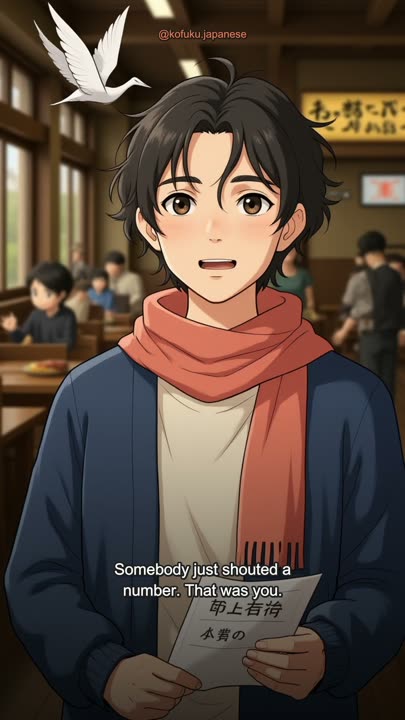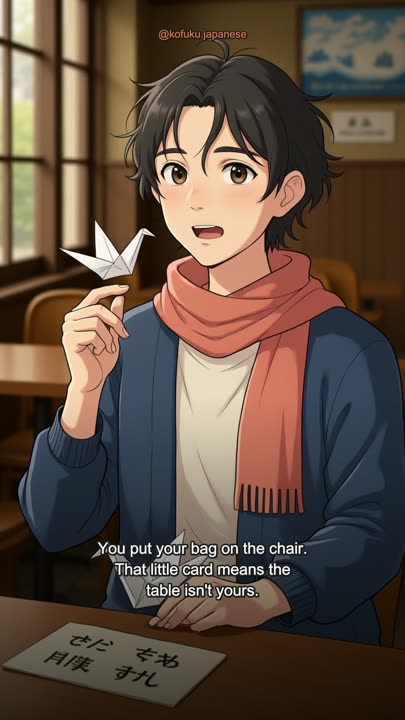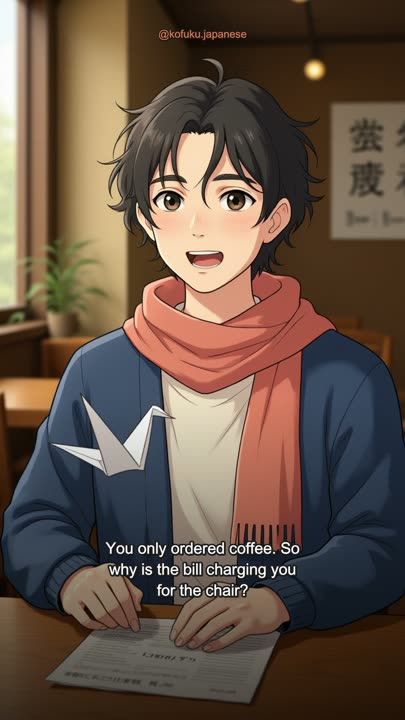
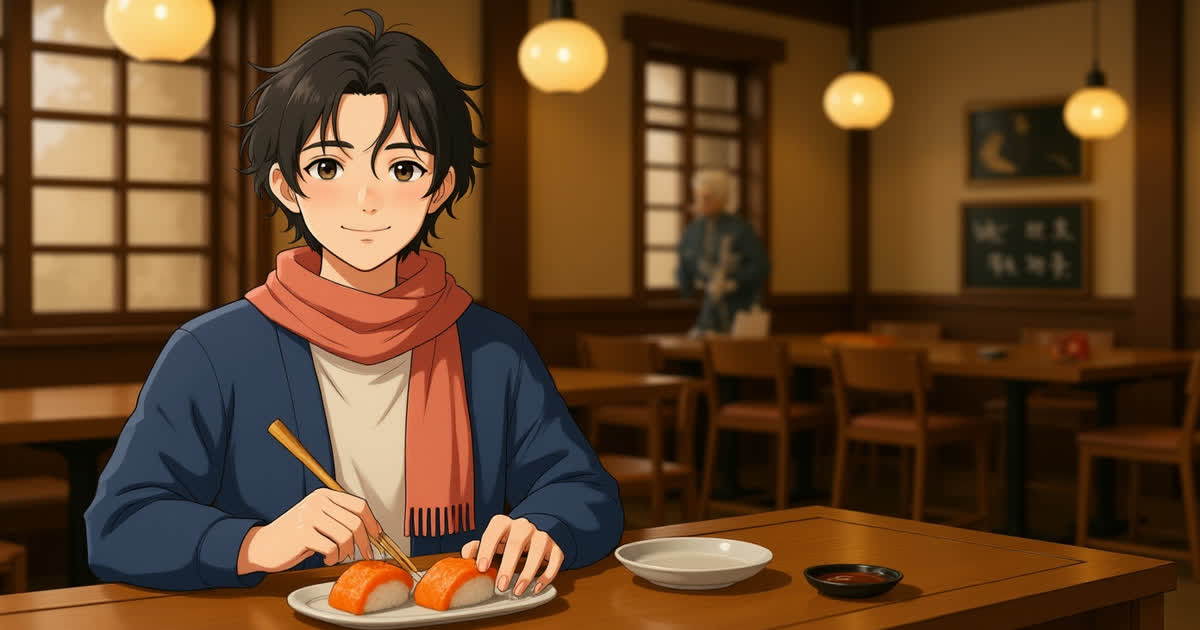
The etiquette book said chopsticks. The nigiri is falling apart in the soy sauce. That is the mismatch this page exists to fix. Nigiri was street food in Edo, sized for a standing customer who picked it up with two fingers and ate it in one bite. The reel above is the short version; below is when fingers are correct, when chopsticks stay, and how to dip without losing the rice.
Can you eat nigiri with your fingers in Japan?
Yes. 握り寿司 (nigiri-zushi) is meant to be eaten with your fingers. Pick the piece up from the sides, turn it so the fish faces down, touch the fish to a little soy sauce, and eat it in one bite. Chopsticks are not wrong — nobody will scold you for using them — but they are the tourist default, not the original one. If you want a verbal green light first, the sentence is 手で食べてもいいですか (te de tabete mo ii desu ka), "is it okay to eat this with my hands?" The chef's usual answer is はい、どうぞ (hai, dōzo), "sure, go ahead."
Why is nigiri sushi eaten with your fingers?
Because it started as fast street food, not as a sit-down meal. In early-1800s Edo, nigiri was sold from 屋台 (yatai, stalls) as 早寿司 (haya-zushi, "fast sushi"): a standing snack you ate with your hands and finished in a few bites. The rice is packed loosely on purpose so it falls apart in the mouth, not in a chopstick pinch. Fingers give you control that chopsticks do not — you can turn the piece, dip only the fish, and keep the rice intact. That is also why a sushi counter brings a hot towel before the first piece: your hands are the utensils. The same logic does not apply to sashimi, which has no rice to protect and is eaten with chopsticks.
When should you use chopsticks instead of fingers?
Use chopsticks for anything that is not nigiri. 刺身 (sashimi) is sliced fish with no rice; fingers would be oily and awkward, and chopsticks are the expected tool. The same goes for 軍艦巻き (gunkan-maki, "battleship" pieces with a nori wall — sea urchin, salmon roe) because they spill if you pinch them, and for side dishes like tamagoyaki, soup, or a small salad. If a piece is already on a shared plate, use the opposite ends of your chopsticks to move it, then eat. When in doubt at a mixed set, nigiri with fingers, everything else with chopsticks. That split is the whole rule.
How do you dip nigiri in soy sauce with your fingers?
Fish side down, never rice side down. Pour a little 醤油 (shōyu, soy sauce) into the dish — a shallow pool, not a bath — pick up the nigiri from the sides, tilt it, and touch the ネタ (neta, the fish) to the surface. The シャリ (shari, the rice) soaks like a sponge; if it hits the soy sauce the piece goes heavy, salty, and often falls apart on the way to your mouth, which is exactly the mess the reel above is warning you about. At a serious counter, some pieces are already seasoned and should not be dipped at all. Watch what the chef does, or ask. Do not mix a lump of wasabi into the soy sauce at a high-end bar — the chef already put wasabi between the fish and the rice. At a chain, mixing is common; if you want none, say わさび抜きでお願いします (wasabi-nuki de onegaishimasu), covered in how to order wasabi off.
What does 手で食べてもいいですか mean?
It means "is it okay to eat this with my hands?" Break it in two. 手で食べて (te de tabete) is "eat it with your hands." The tail, もいいですか (mo ii desu ka), is how Japanese asks permission. Together they are 手で食べてもいいですか. The て in the middle is the verb ending, not a second "hand." Swap the verb and the same sentence works for almost anything a tourist needs to ask — eating here, taking a photo, sitting down. You do not have to ask at a sushi counter; fingers are already correct for nigiri. Asking is useful when you are unsure, or when the piece looks fragile. The reply you want is はい、どうぞ. If the answer is chopsticks, they will say so, and you switch.
Is it okay to eat sushi with your fingers at conveyor-belt sushi?
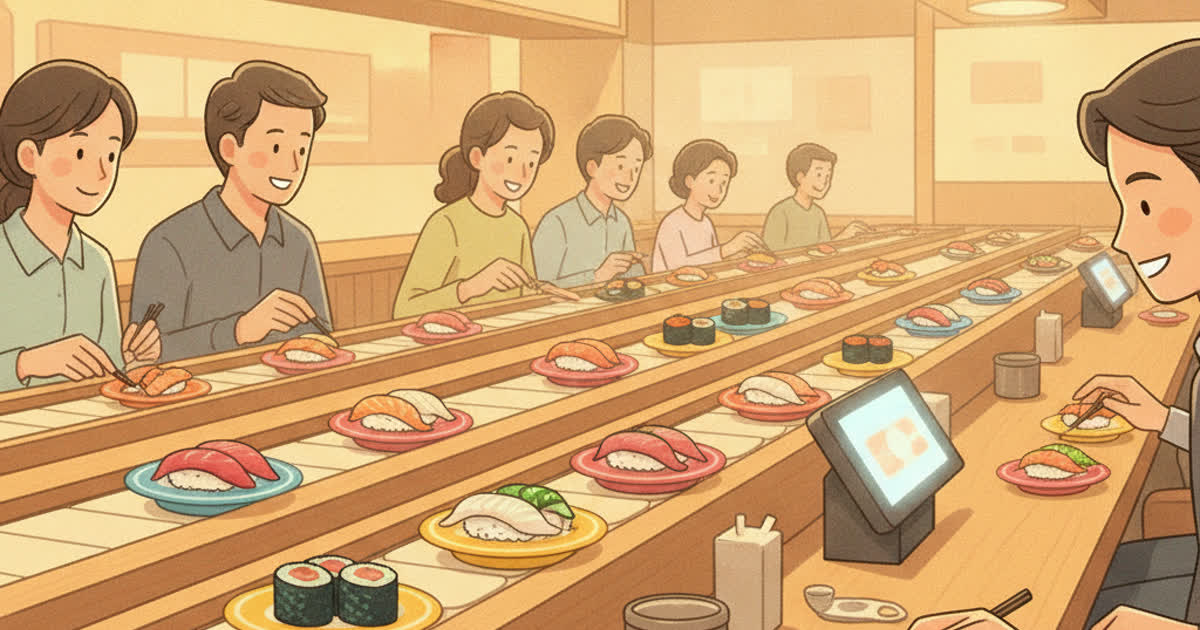
Yes, and it is the more relaxed place to do it. Conveyor-belt sushi — 回転寿司 (kaiten-zushi) — is self-service and built for speed: fingers or chopsticks, both are normal, and nobody is watching your form. The two rules that actually matter there are about the belt, not your hands — never put a plate back, and do not hover over plates you are not taking. Fingers still help with nigiri, because the dip-the-fish trick is easier by hand than with chopsticks over a tiny soy dish. If you would rather use chopsticks for everything, that is also fine. The chain is not grading you.
What other sushi-counter rules should first-timers know?
A few, and none of them are traps. Eat each nigiri in one bite if you can; it is sized for that. If you must take two, do not put the bitten piece back on the plate. The hot towel, おしぼり (oshibori), is for your fingers between pieces, not only for the start of the meal — wipe, eat, wipe. Pickled ginger, ガリ (gari), is a palate reset between different fish, not a topping you stack on the nigiri. Do not stand chopsticks in the rice — that is a funeral offering, explained in the hashioki reel. Do not pass food from your chopsticks to someone else's. Say いただきます (itadakimasu) before the first piece — why that word exists — and ごちそうさまでした (gochisōsama deshita) when you leave. If a fish will be a problem, read how to say a food allergy in Japanese before you sit down.
The short version is the one in the reel: nigiri with fingers, sashimi with chopsticks, fish side in the soy sauce, rice side never. Ask 手で食べてもいいですか if you want the green light out loud. For more of the phrases that make eating in Japan easy, read Japanese for foodies visiting Osaka and browse all our travel reels.