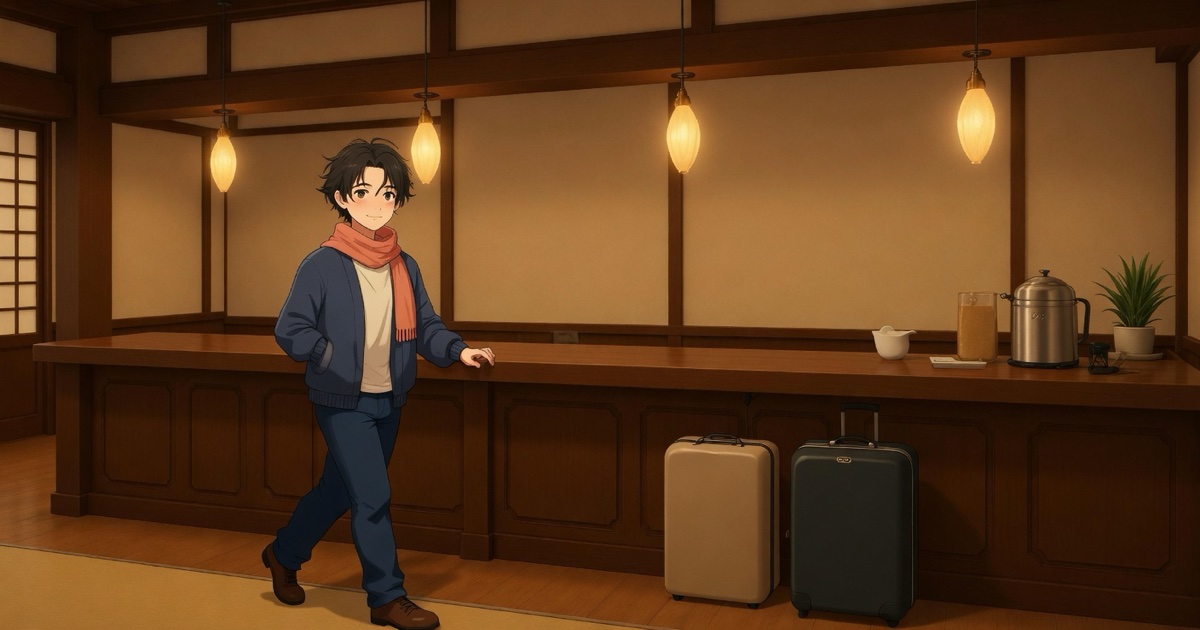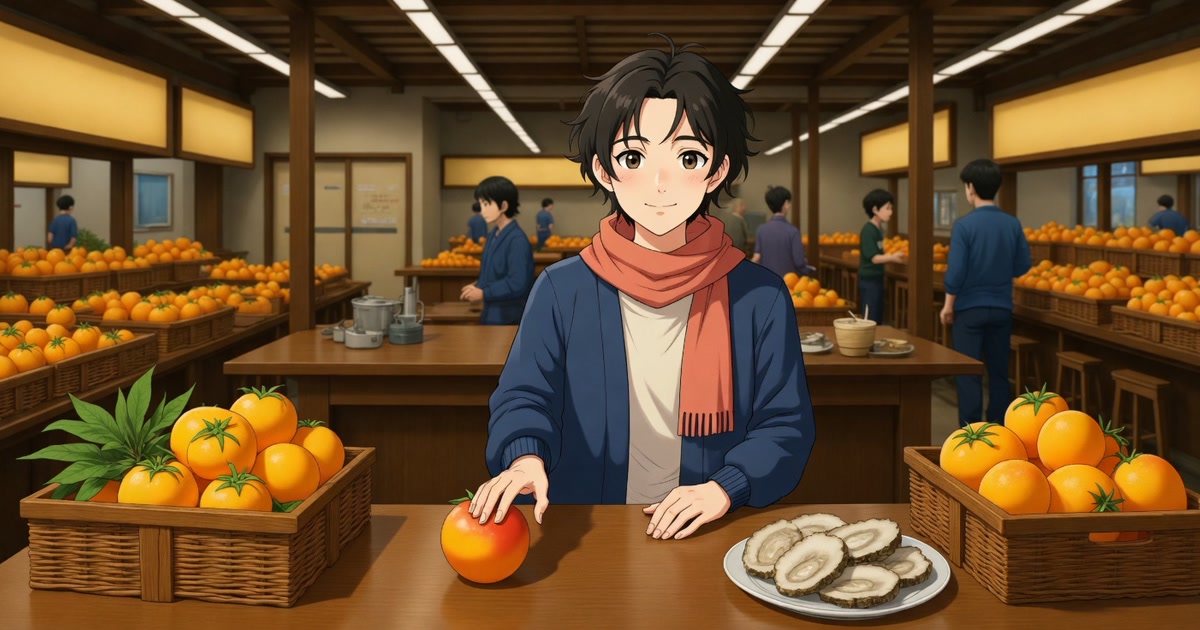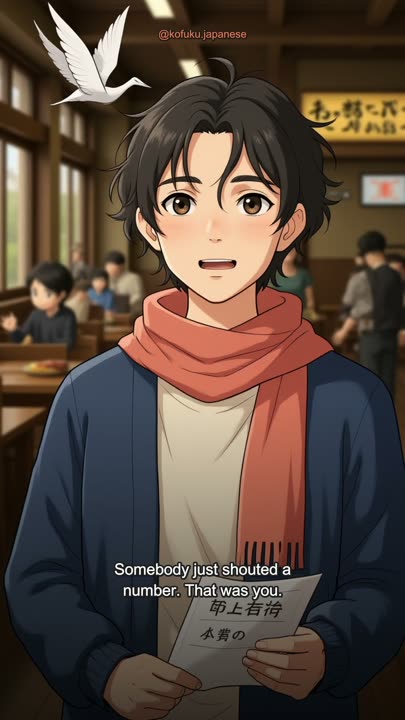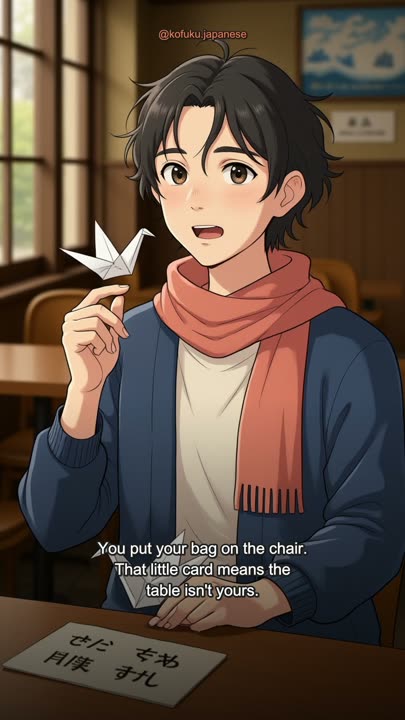
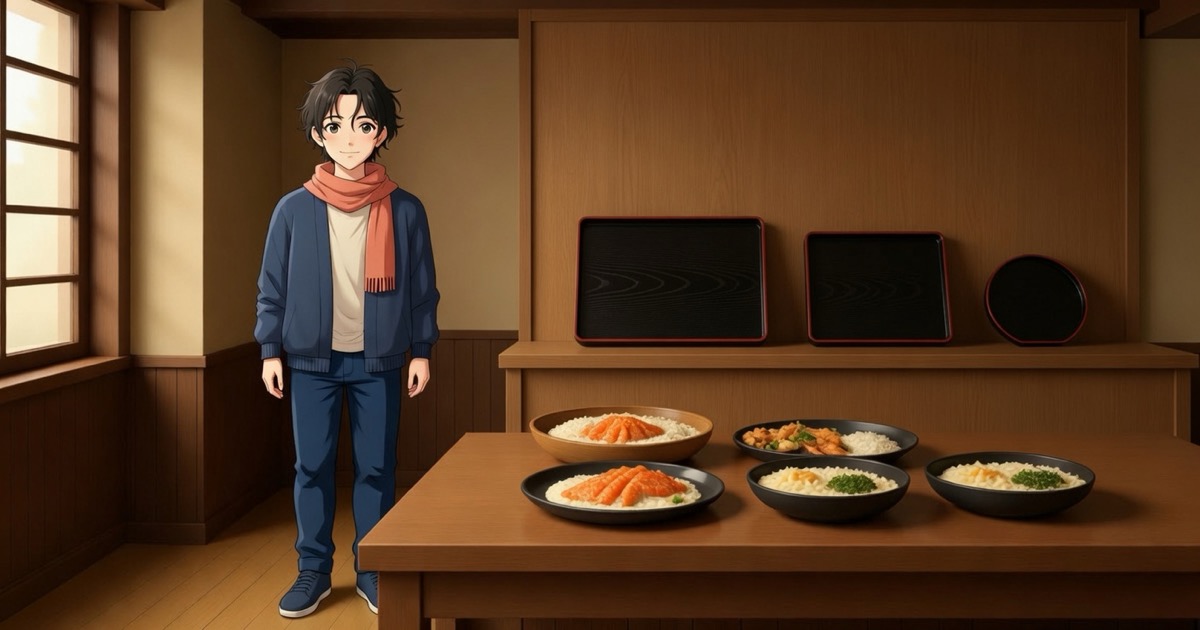
The reel above, published 23 October 2026, is a board of set meals. Hana is taking the order. The first line on the board is 松. The line for the smaller set is 梅でお願いします。 This page is that one sentence: what it orders, what the three plants are, and why the yen beside each name still wins.
What does 梅でお願いします mean on a Japanese set menu?
梅でお願いします (ume de onegai shimasu) means "I'll take the plum set." That is the reel's English. 梅 (ume) is one grade on a 松竹梅 (shōchikubai) board. Shogakukan's Digital Daijisen, on Kotobank, checked 27 October 2026, defines 松竹梅 first as 松と竹と梅。 (Matsu to take to ume.) Pine, bamboo, and plum. Sense 2 is the menu sense: 品物などを三つの等級に分ける際に用いられる語。ふつう松を最上級とする。 (Shinamono nado o mittsu no tōkyū ni wakeru sai ni mochiirareru go. Futsū matsu o saijōkyū to suru.) A word used when goods are split into three grades. Usually pine is the top grade. で marks the grade you are choosing. お願いします (onegai shimasu) is the polite please. Say the whole line to the person taking the order. You are not asking for a plate of fruit. The tree is where the grade got its name. The tray that comes back is a set meal.
How do you pronounce 梅でお願いします?
Say u-me de o-ne-ga-i shi-ma-su, ten beats: う, め, で, お, ね, が, い, し, ま, す. Daijisen's kanji entry for 梅 lists the kun reading うめ and the on reading バイ (bai). This line uses the kun. Both vowels are short. で is de, one short beat. It is not te. お願いします is seven beats, and it keeps the い. That い sits between が and し. Drop it and you are no longer saying this line. There is no か on the end. This is a request, not a question. The on reading ばい shows up inside the compound. Daijisen prints that headword as しょう‐ちく‐ばい. Six beats: しょ, う, ち, く, ば, い. The しょう is long, so a short "sho" drops the う. Those six beats name the trio. They are not the order line. The reel says the ten beats twice.
What are 松, 竹, and 梅 on the board?
They are three plants, used as three grade names. 梅 is a tree, not a sauce and not a flavor of the set. Daijisen, checked 27 October 2026, defines うめ as バラ科の落葉高木。 (Baraka no rakuyō kōboku.) A tall deciduous tree in the rose family. In early spring, before the leaves, it opens strongly scented flowers in white, pale pink, or red. The fruit is round, turns yellow around June, and is sour. That fruit is pickled as 梅干し (umeboshi) and steeped as 梅酒 (umeshu). The 動植物名よみかた辞典, on the same Kotobank page, gives the scientific name Prunus mume. English often calls this tree a plum, which is why the set is the plum set. On this board you are naming the grade, not asking the kitchen for the fruit. 竹 (take) is bamboo. Daijisen defines たけ as イネ科タケ亜科の多年生植物の総称。 (Ineka take-aka no tannensei shokubutsu no sōshō.) A general name for perennial plants in the bamboo group of the grass family. The stalk grows straight up from a rhizome that runs sideways. The stem has joints, and the stretch between joints is hollow. The young shoot is 竹の子 (takenoko), and people eat it. Two beats when the kanji stands alone: た, け. 松 (matsu) is the pine, the first plant in Daijisen's 松と竹と梅. Two beats: ま, つ. Inside the compound its reading is the long しょう. Daijisen's first sense says why the three sit together: 三つとも寒さに耐えるところから、歳寒三友とよび、めでたいものとして慶事に使われる。 (Mittsu tomo samusa ni taeru tokoro kara, saikan san'yū to yobi, medetai mono to shite keiji ni tsukawareru.) All three endure the cold, so they are called the three friends of winter, and they are used as auspicious things at celebrations. A set meal named after them is a grade. It is not a bowl of pine, bamboo, and plum.
Which of 松, 竹, and 梅 is the top price?
Usually the pine. Daijisen's grade sense ends with ふつう松を最上級とする。 (Futsū matsu o saijōkyū to suru.) Usually pine is treated as the highest grade. On a set-menu board that puts 松 at the top price, 竹 in the middle, and 梅 at the modest price. The reel is that board. The first line is the pine, and the pine is the one that costs more. ふつう is the word that keeps this from being a rule. It means usually. Daijisen does not say pine is always the highest, and it does not print a yen amount. A shop may put the big number next to 梅. Read the number in the column before you choose a name. The plant order is a custom. The yen is the price.
How is 梅でお願いします different from pointing at the first line?
Pointing at the first line orders the pine. The board in the reel lists 松 first, because that is the usual top. A finger, or これ (kore, "this"), lands on that line. 梅でお願いします names the plum grade out loud, so the first line is not what you get. 松でお願いします (matsu de onegai shimasu) is the pine, usually the top price. 竹でお願いします (take de onegai shimasu) is the middle. Each line is ten beats, with まつ or たけ in front of で. Use those kun readings when the kanji stand alone, the same way this line uses うめ and not ばい. A clerk may echo しょう, the reading from inside 松竹梅. That echo is still the pine. The grade is this page. The izakaya ordering guide is how you find who takes the order.
What do you do if the yen on the board is flipped?
Say the name whose yen you want. If 梅 is the big number, 梅でお願いします buys the expensive set. Pick the column with the price you mean, and say that plant: 松でお願いします, 竹でお願いします, or 梅でお願いします. While the order is still being written, start with すみません。 (Sumimasen.) Sorry. Then say the right line. A nod at the first column is how the pine gets ordered by accident. Once the kitchen has started, this page does not set a refund. When the trays are finished, thanks for the meal and "I'll pay" are different sentences. The ごちそうします page is the one that picks up the bill.
梅でお願いします。 orders the plum grade, usually the modest set. 松 is usually the top price. 竹 sits in the middle. The three names are a pine, a bamboo, and a sour-fruited tree, not three flavors of one dish. Read the yen, then say the ten beats. The 30-second version is the same line, said out loud.