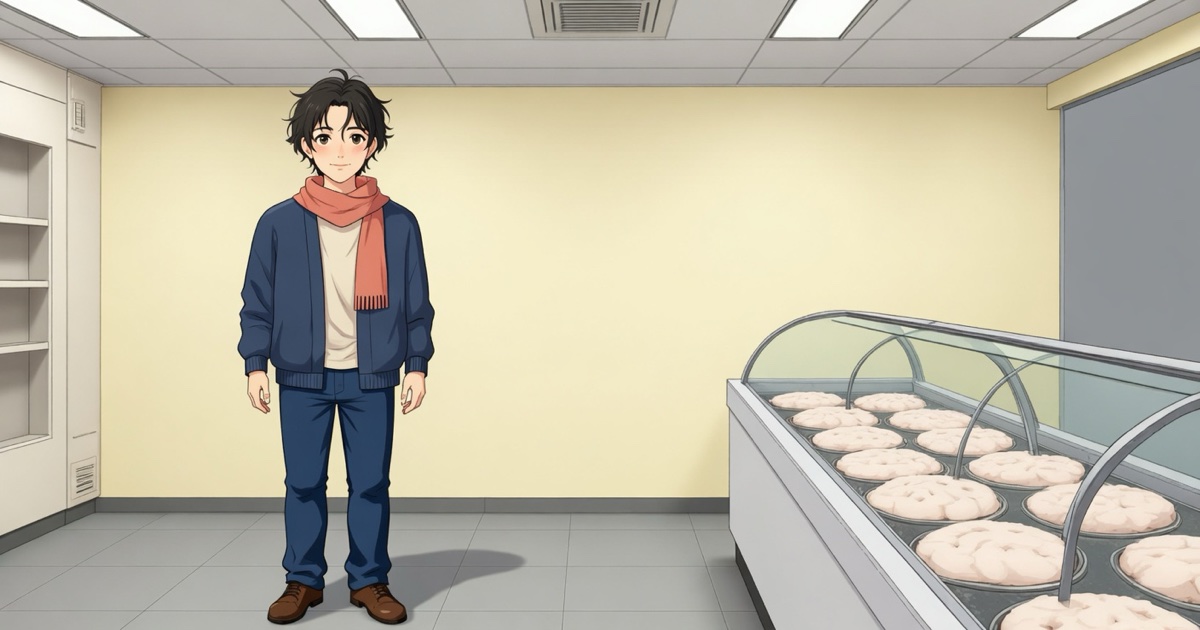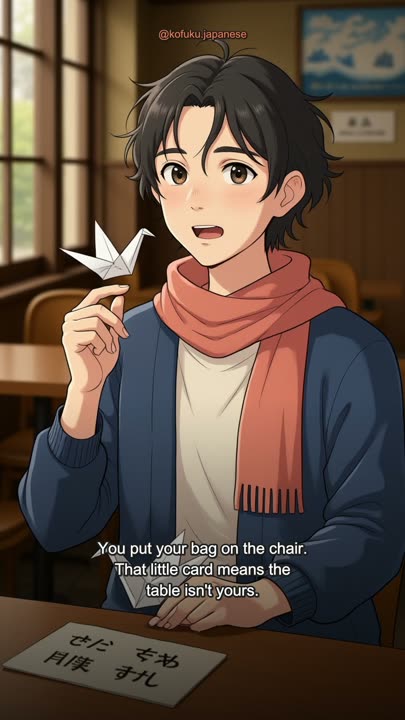
The request was a different room, or a table with no booking. The answer that came back never used the word no. The reel above, published 23 October 2026, is that desk. Staff say 難しいですね. The guest hears a puzzle and asks again. From staff, the line was already the refusal. This page is that one sentence: what the words mean, why a second ask is too late, and how it differs from the けっこうです you say when you turn an offer down.
What does 難しいですね mean when Japanese staff say it?
難しいですね (muzukashii desu ne) from hotel or restaurant staff means the thing you just asked for is difficult, and they are not going to do it. 難しい (muzukashii) is the adjective. Shogakukan's Digital Daijisen, on Kotobank, checked 27 October 2026, gives sense 2 as hard to solve. The example is 難しい注文 (muzukashii chūmon), a difficult request. Sense 3 is close to impossible to carry out. The examples are 生還は難しい (seikan wa muzukashii), getting back alive is close to impossible, and 登頂は難しい (tōchō wa muzukashii), reaching the summit is close to impossible. The same three senses mark 易しい (yasashii), easy, as the opposite. Staff did not pick the easy word. です (desu) makes the sentence polite. ね (ne) sits on the end. At the desk the request was a room change, or a seat with no booking. The reel's line is 難しいですね。 The longer line in the same reel is すみません、それは難しいですね。 (Sumimasen, sore wa muzukashii desu ne.) それ (sore) is that request. You write は and you say wa. すみません (sumimasen) is the apology in front. The words mean "that's difficult." The answer to the request is no.
How do you pronounce 難しいですね?
Say mu-zu-ka-shi-i de-su ne. That is eight beats: む, ず, か, し, い, で, す, ね. Daijisen prints the historical kana as むづかしい. You do not say dzu. Today that づ is zu. The same entry lists むつかしい as another form of this word. The reel, and the usual reading at the desk, is むずかしい, with zu. The い after し is its own beat, so the adjective is five beats, not four. Drop the い and the shape is wrong. です is two beats, de and su, and both vowels are short. ね is one short beat. The reel's longer line, すみません、それは難しいですね, is sixteen beats: す, み, ま, せ, ん, そ, れ, は, then the eight. The ん in すみません is its own beat. The particle は is wa, not ha.
Why is 難しいですね a no and not a puzzle?
Because the request is the thing that is difficult, and sense 3 is close to impossible to carry out. A puzzle would be sense 1: hard to understand or to learn. Daijisen's examples are 説明が難しい (setsumei ga muzukashii), the explanation is hard, and 難しい文章 (muzukashii bunshō), a hard piece of writing. The clerk is not grading your Japanese, and she is not handing you a riddle. Sense 2 names the shape on the counter: 難しい注文, a request that is hard to grant. Sense 4 is a tangled situation that is a pain to handle, as in a position that has become difficult. Sense 5 is a person who is troublesome to deal with. She did not call you that person. The short line leaves the subject out. The longer line puts it back: それ, the request. Daijisen's sentence-final ね, checked the same day, uses sense 3 to state your own view. The example is その方法はまずいね (sono hōhō wa mazui ne), that way is a bad idea. Sense 2 of the same ね expects the other person to agree or to answer. The clerk has judged the request. The ね asks you to share that judgment. It does not open a problem for you to solve. Asking the same thing again says you heard a maybe.
What should you say after 難しいですね?
Say わかりました (wakarimashita), then stop. That is "I understand." It is six beats: わ, か, り, ま, し, た. Add ありがとうございます (arigatō gozaimasu) if you want thanks in the same breath. The o in arigatō is the う after と, and it is its own beat. Do not repeat the request. The reel's close is the same stop: hear the line, thank them, and do not ask again. A new question is allowed when it is actually new. At a full restaurant, 空いている時間はありますか (aite iru jikan wa arimasu ka) asks whether another time is open. At a hotel, 別の部屋はありますか (betsu no heya wa arimasu ka) asks whether a different room exists. Those are different requests. The one she just called difficult is closed. If another path exists, staff usually name it themselves. A bare 難しいですね, with nothing after it, has no second path in it. かしこまりました (kashikomarimashita) is the opposite word. That one means she will do it. The かしこまりました reel is the yes you do not answer. This line is the no you do not push.
How is 難しいですね different from けっこうです?
けっこうです (kekkō desu), written 結構です, is the refusal you say when staff offer you something. A bag, a point card, a pair of chopsticks. The konbini reel is that freeze at the register. You are the one saying no. 難しいですね runs the other way. Staff say it, and the no lands on your request. The sounds are not alike. Both lines refuse, and the speaker is different. One turns down an extra. One turns down a favor you asked for. できません (dekimasen) is the flat "we cannot." Staff often leave that word unsaid. 難しいですね does the same job with Daijisen's "close to impossible to carry out" in place of a bare cannot. いいです (ii desu) on the cashier page is your short no to a free extra. It is not this sentence. A nod plus いいです does not accept a room change. Save けっこうです for the offer they make. Save 難しいですね for the request they will not grant.
Where else will you hear 難しいですね?
You will hear it anywhere staff cannot grant the thing you just named. A later checkout, a window seat, a dish with one ingredient taken off, a train seat that is already held. The come-now page uses a shorter cousin when a shop is full: すみません、今は難しいです (sumimasen, ima wa muzukashii desu), it is difficult right now. That line has no ね, and 今 (ima) pins the no to this moment. The reel's line has the ね and no 今. ちょっと難しいですね (chotto muzukashii desu ne) puts "a bit" in front. The bit does not turn the answer into a maybe. It is the same no, with a softer front. A textbook that glosses 難しい only as "difficult, as on a hard exam" stopped at sense 1. At the counter, sense 2 and sense 3 are the senses in the room. If a friend says この問題は難しいね (kono mondai wa muzukashii ne) over homework, that is sense 1, a hard problem, and you can help. Staff at a desk are not asking you to help them grant the request. They have closed it.
難しいですね from staff means the request is a no. Say わかりました. Ask a different question, or leave the request there.