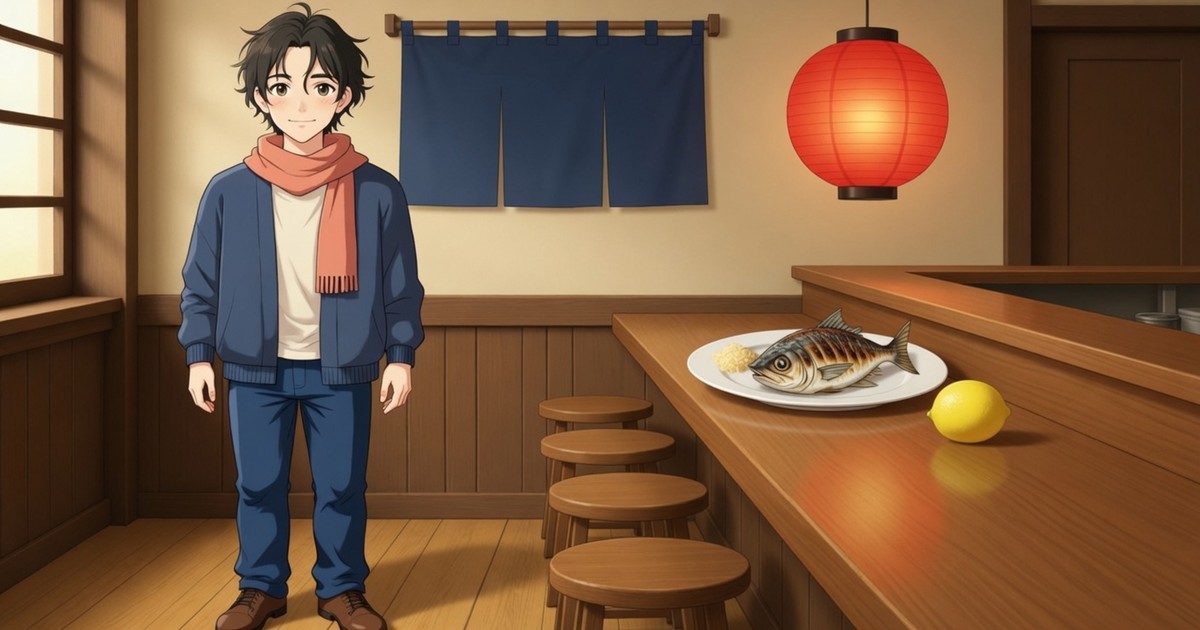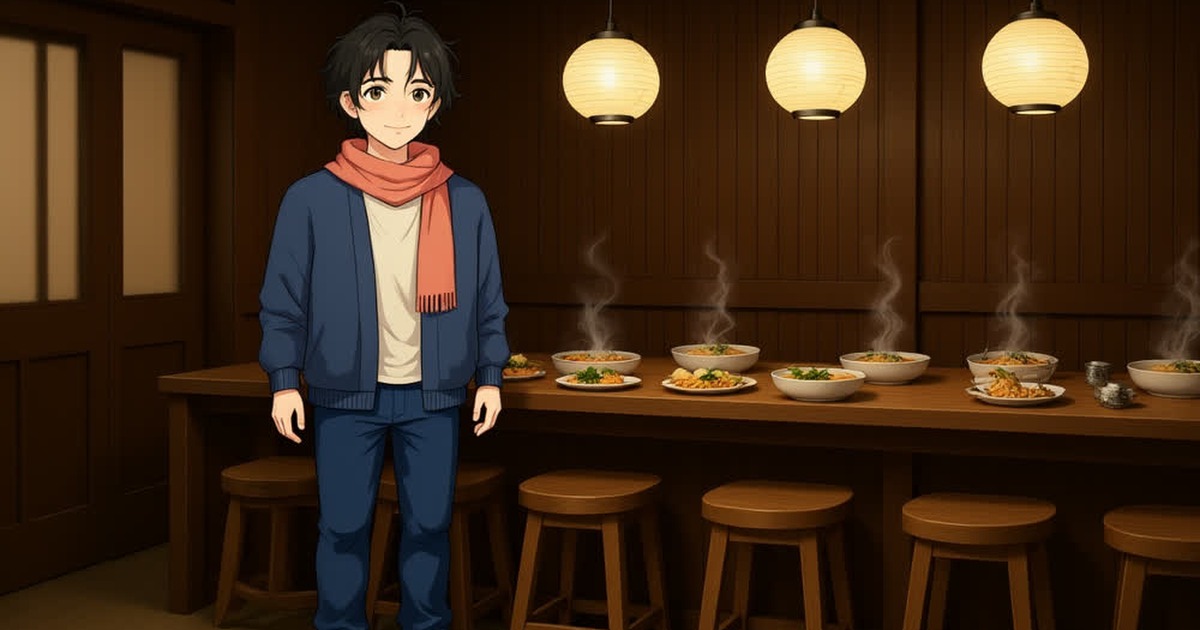

A whole egg showed up with your beef bowl. The reel above is the short version: that egg is part of the order, and you crack it. This page is the word on the menu, the button that adds the egg, and the button that leaves it off.
What does 生卵 mean on a Japanese beef bowl?
生卵 (nama tamago) means a raw egg. 生 (nama) means raw. In this word the reading is nama, not sei. 卵 (tamago) means egg. Five beats: na, ma, ta, ma, go. On a 牛丼 (gyūdon), a beef bowl, the raw egg is a topping. You crack it over the hot beef and rice, stir, and eat. The line in the reel is 生卵です (nama tamago desu), "it's a raw egg." That sentence names what is in front of you. Menus also print the same egg as 生玉子, and they shorten it to 玉子. Both are read tamago. A button that says ギョク (gyoku) is the egg too. Gyoku is the on-reading of 玉, and beef-bowl shops use it as shorthand. If that button does not say 半熟 (hanjuku), the egg in it is the raw one.
How do you eat the 生卵 that comes with the bowl?
Crack it onto the beef and rice while the bowl is hot, break the yolk, and stir. The egg coats the beef and turns glossy. Eat it then, with the spoon or the chopsticks on the tray. Put the shell in the empty dish. Keep the shell out of the rice. The egg often arrives whole, in a small dish beside the bowl, rather than already mixed in. Yoshinoya's ねぎ玉 page says the green onion and the egg come in a separate dish. At some counters a raw egg comes with two little dishes. Crack into the dish you will eat from, and put the shell in the spare one. Some trays include a small separator, so you can keep the yolk and leave the white. The usual way is the whole egg, stirred through the beef. Fingers are for nigiri. This egg is stirred into a beef bowl.
How do you order 生卵 at a beef-bowl shop?
Say 生卵ください (nama tamago kudasai), "raw egg, please," or 生卵を一つください (nama tamago o hitotsu kudasai), "one raw egg, please." That adds the egg to a plain 牛丼 (gyūdon). For the green-onion bowl, say ねぎ玉で (negitama de), "the negitama," or ねぎ玉牛丼をください (negitama gyūdon o kudasai). On a tablet or a ticket machine, press 生卵 or the photo of an egg. 生卵です (nama tamago desu) names the egg you are looking at. ください (kudasai) is the word that orders one. Say すみません (sumimasen) first if you are stepping up to a busy counter. If the picture shows beef, green onion, and an egg, that button is ねぎ玉, and the raw egg is already in the order.
What does ねぎ玉 mean, and how is it different from ねぎだく?
ねぎ玉 (negitama) means green onion plus egg. ねぎ (negi) is green onion. 玉 (tama) is short for 玉子, the egg. The bowl is beef, sliced green onion, and a raw egg you crack on top. ねぎだく (negidaku) is a different button: extra onion, and no egg. Yoshinoya lists both. On the in-store menu as of 25 September 2026, a regular ねぎ玉牛丼 is ¥660 with tax, and a regular plain 牛丼 is ¥498 with tax. Another shop, or a delivery order, can show a different number, so read the tablet in front of you. The large line 大盛ねぎだくギョク (ōmori negidaku gyoku) is extra onion and the egg together. ギョク is the egg. ねぎだく alone leaves the egg off.
Is 生卵 the same as 温泉卵 or a boiled egg?
生卵 (nama tamago) is raw, and you crack the shell yourself. 温泉卵 (onsen tamago) is a soft-cooked egg, the white barely set and the yolk still runny, heated before it reaches you. 半熟卵 (hanjuku tamago) is a soft-boiled egg. Yoshinoya sells that as its own side, 半熟玉子. Ask for it with 半熟卵ください (hanjuku tamago kudasai), "soft-boiled egg, please." ゆで卵 (yude tamago) is a hard-boiled egg, the one on a konbini shelf. That boiled egg can stand in for a meat-free snack. A raw egg on 牛丼 (gyūdon) cannot. It is sitting on beef. 卵かけご飯 (tamago kake gohan) is a raw egg on plain rice at breakfast, with no beef under it.
Is a raw egg on a Japanese beef bowl safe to eat?
Eat the egg the shop put on the tray. Crack it onto the hot bowl, and finish it before you stand up. Leave it there. Do not carry it back to the hotel. Japan's health ministry tells older people, children under two, anyone pregnant, and anyone with a weak immune system to skip raw eggs, including quail eggs, and to eat eggs cooked until the white and the yolk are firm. If that is you, order 半熟卵 (hanjuku tamago) or leave the egg off. A raw egg is still a raw egg. The shop serving one does not bring the risk down to zero.
What do you say if you do not want the raw egg?
Say 生卵はいりません (nama tamago wa irimasen), "I don't need the raw egg." Point at the egg if the bowl already arrived. If egg itself is the problem, say 卵アレルギーがあります (tamago arerugī ga arimasu), "I have an egg allergy," and use the allergy phrases. 半熟卵 (hanjuku tamago) is still egg. A softer yolk does not make it safe for an allergy. Staff need the allergy word, not only a request to skip the topping. If you ordered ねぎ玉 and want the onion without the egg, point at the egg and say 生卵はいりません. The onion can stay.
Three lines cover the counter. 生卵です (nama tamago desu) names the raw egg on the beef bowl. 生卵ください (nama tamago kudasai) orders one, and ねぎ玉で (negitama de) orders it with green onion. ねぎだく (negidaku) is extra onion, with the egg left off. Crack the egg onto the hot rice, stir, and eat it there. If you should not eat a raw egg, 生卵はいりません (nama tamago wa irimasen) takes it off the bowl.