
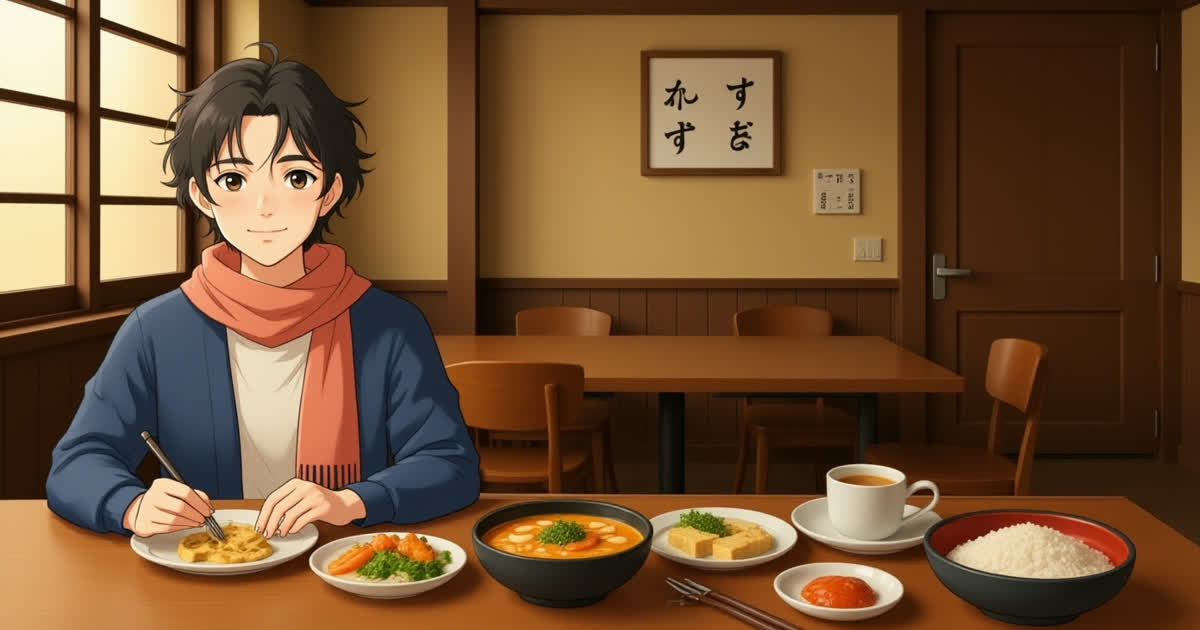
Japan is a genuinely awkward place to be vegetarian — not because there is nothing to eat, but because the meat is hiding. Nearly every soup, sauce and stock in a restaurant starts from a base made with fish or pork, so a dish that looks completely "vegetable" can quietly carry neither. The escape is not one perfect sentence but three small moves: say you don't eat meat, check the dish anyway, and know where the safe food actually lives. Here is the whole playbook, starting with the phrase in the reel above.
How do you say you can't eat meat in Japanese?
Say 肉は食べられません (niku wa taberaremasen), "I can't eat meat" — the one sentence in the reel above, and the right thing to say before you order anywhere. It tells staff plainly what is off the table before they describe, guess or serve you. When the conversation stalls, say the sentence and point at the menu; 肉 (niku) is the word for meat, and hearing it is enough for most staff to start steering you toward what you can actually eat.
Why isn't saying 'no meat' enough in Japan?
Because in Japan much of what looks like vegetable food quietly starts from meat. The near-universal broth base dashi is commonly made with fish, often dried bonito, and pork and fish stock hide inside soups, miso broth, seasoning powders and even some soy sauces. A dish staff describe as a "vegetable soup" can still carry fish stock, and you will not be able to taste it — it reads as background savouriness, not meat. The same is true of many soy sauces, the seasoning powders in instant foods, the gelatine in some desserts and the lard some bakeries use in bread. That is exactly why a single sentence is only the first move: you confirm each dish rather than trusting a friendly nod or an apparently meat-free name, and you treat a short labelled menu as safer than an empty description.
How do you ask whether a dish has meat in it?
When you order, ask これに肉は入っていますか? (kore ni niku wa haitte imasu ka), "does this have meat in it?" — a question staff are genuinely used to from tourists. To catch the two specific culprits that hide in Japanese cooking, add the pork version, buta-niku wa haitte imasu ka? — "does it contain pork?" — and the same pattern swapped to fish, 魚 (sakana). At a counter with no English, hold up the phrase and point at the photo or the neighbouring plate — staff understand the question from one glance.
What does 精進料理 (shōjin ryōri) mean on a menu?
精進料理 (shōjin ryōri) is the standard, good-faith label for vegetarian cooking, and a restaurant or dish carrying it is safe to relax around — the kitchen has already done the dashi and seasoning work for you. Look for it in signage, menu headers and on the laminated specials board outside; many places that advertise it also mark the few items that are fully vegan. When you do not see the label, go back to the check-the-dish questions rather than assuming a vegetable-looking name means vegetable food.
Where can a vegetarian reliably eat in Japan?
Concentrate on three safe circles. First, dedicated 精進料理 restaurants — real vegetarian kitchens exist in the big cities and at temple canteens, and they are the least stressful answer because nothing on the menu needs checking. Second, convenience-store (konbini) aisles, where every label is short enough to read or photograph. Third, chain restaurants with picture or English menus, where the ingredients are fixed and the kitchen will not surprise you. Treat anything a street vendor or small family counter describes as "vegetable" as suspect until you ask, because that is exactly where the hidden stock lives. When you do find a counter you trust, note it — a good vegetarian meal in Japan is a find worth returning to, and the same three or four places will carry you through a whole trip once you know they work.
What can you eat at a Japanese convenience store?
Quite a lot, and it is the safest vegetarian bet in the country. Look for boiled eggs, cheese, yoghurt, fruit, bread and the pre-made tray items with a full ingredient list printed on the pack — photograph the label and check it against the words for meat, fish and pork. Instant noodles and cup instant soups are the ones to actually read, because their seasoning sachets are precisely where hidden pork and fish stock slip in. When the label is unreadable, the boiled-egg and cheese shelf saves the day.
The whole system fits in your head in three moves: say 肉は食べられません, check with これに肉は入っていますか?, and default to the 精進料理 label or a konbini shelf. Once you have that down, the rest of eating in Japan opens up — how to call a waiter when you need one, what to say about a food allergy when it is stricter than vegetarian, and the full Japanese for foodies visiting Osaka when you are ready to go deeper on the food scene.