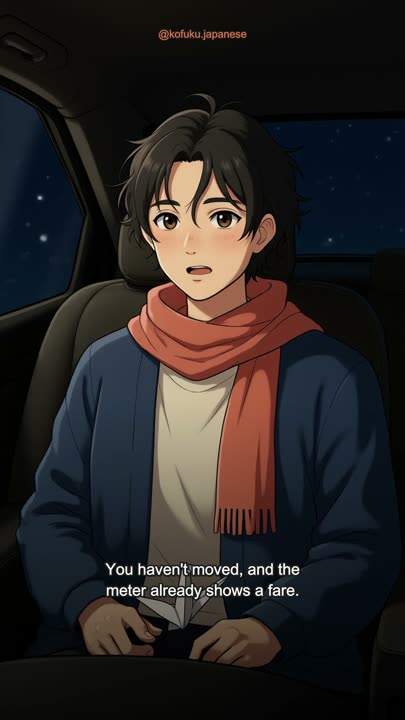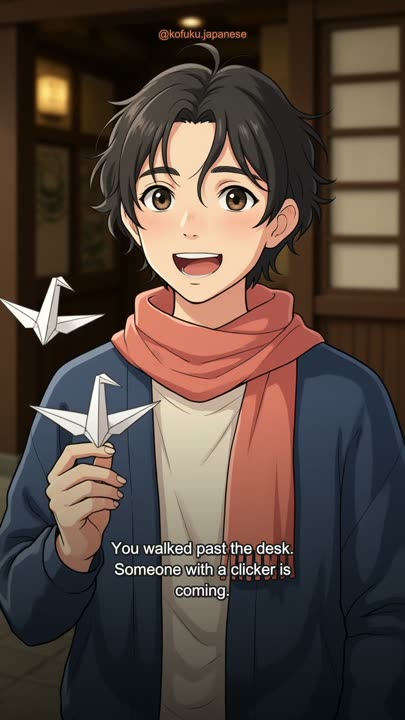

The alley shop has no website. No booking button. No English form. Locals do not walk over and hope. They call and ask one sentence. The reel above is that sentence. This page is the phone loop around it: how many you are, what yes and full sound like, and why peak hour is still worth the call.
How do you ask a Japanese restaurant or shop if you can come right now?
Call and say 今から行っても大丈夫ですか? (ima kara itte mo daijōbu desu ka?), "is it okay if we come now?" That is the whole ask. It works for a tiny ramen counter, a neighbourhood izakaya, a cake shop with two tables, or a barber with one chair. Japan still has thousands of places that take walk-ins by phone and nowhere else. Lead with すみません (sumimasen), add your headcount, then the sentence. Do it before you walk. A no on the phone costs two minutes. A no at the door after thirty minutes is the trap in the reel about needing a booking.
What does 今から行っても大丈夫ですか mean?
Word by word: 今から (ima kara) is "from now." 行っても (itte mo) is "even if we go." 大丈夫ですか (daijōbu desu ka) is "is it okay?" Together: is it okay if we come right now. The も is the polite hedge; dropping it to 今から行きます sounds like you are already on the way. 今から行ってもいいですか (ima kara itte mo ii desu ka) is the same ask, a shade more casual. 今から伺っても大丈夫ですか (ima kara ukagatte mo daijōbu desu ka) uses 伺う (ukagau), the humble "to visit," and fits a kaiseki counter or a hotel restaurant. For a normal lunch, the reel line is the one to use. Pair the opener with what sumimasen actually covers if you want the first word to land clean.
How do you add your headcount when you call?
Put the number first, then the question. 二人なんですけど、今から行っても大丈夫ですか? (futari nan desu kedo, ima kara itte mo daijōbu desu ka?), "we're two, is it okay if we come now?" 一人 (hitori) is one. 二人 (futari) is two. 三人 (san-nin) is three. 四人 (yo-nin) is four. After four, the restaurant form 名 (mei) is cleaner: 五名 (go-mei). The なんですけど softens the ask; it is how locals flag the size before the shop has to ask 何名様ですか? (nan-mei-sama desu ka?), "how many guests?" If they ask that first, answer with the number plus です: 二人です. Do not skip the count. A table for two and a table for six are different answers at 12:15, and a shop that can seat two may already be full for six.
What do they say if they can take you, or if they are full?
Yes is short. 大丈夫です (daijōbu desu), はい、どうぞ (hai, dōzo), or 空いてます (aite masu, "we have space"). You may also hear かしこまりました (kashikomari mashita), "certainly" — that is not a question; it is them taking the yes, which the reel on kashikomari mashita unpacks so you do not freeze and answer it. Full is 満席です (manseki desu, "every seat is taken") or すみません、今は難しいです (sumimasen, ima wa muzukashii desu, "it's difficult right now"). 貸切 (kashikiri) means the whole shop is privately booked: lights on, door closed to you — that turn-away has its own reel. If they can take you later, they will offer a time: 19時なら大丈夫です (jūku-ji nara daijōbu desu), "7pm is okay." Repeat the time back and go. If it is a no, thank them with わかりました、すみません and call the next place. Do not negotiate a squeeze-in unless they offer it.
When is peak hour, and should you still call?
Lunch peak is about 12:00 to 13:30. Dinner peak is about 18:30 to 20:30, later on Friday and Saturday. Call anyway. Peak is when the sentence earns its keep: a thirty-minute walk to a のれん (noren, the shop curtain) that then says 満席 is the expensive mistake. A ten-second call from the station is the cheap one. Small ramen counters and standing bars often will not hold a seat; they will say come now and mean now. If they say 今すぐ来てください (ima sugu kite kudasai), "please come right away," leave. A kaiseki or sushi counter at peak will usually already be on 予約 (yoyaku). The call still tells you that in one sentence instead of a queue at the door. Once you are seated, ordering is a different system: how to order at an izakaya when nobody comes.
Do you need a reservation, or is a walk-in call enough?
For most neighbourhood shops, the walk-in call is the reservation. They are not writing your name in a book; they are checking whether a table is free in the next twenty minutes. 予約なしで今から行っても大丈夫ですか? (yoyaku nashi de ima kara itte mo daijōbu desu ka?) adds "without a booking" if you want that explicit. Popular sushi, yakiniku, and kaiseki often need a real 予約 days ahead. If you are not sure, ask 予約は必要ですか? (yoyaku wa hitsuyō desu ka?), "do I need a reservation?" — that is the sentence in the booking reel. A yes there means stop walking and book, or pick another shop. Tabelog and Google hold some of those books. The alley shop with no website will not be on either. That is who this phone sentence is for.
What if nobody answers the phone?
Hang up after five or six rings and try once more in ten minutes. A one-person shop cannot pick up while plating. Do not leave a voicemail in English; many small places have no voicemail, and a long message does not hold a table. If they answer and you freeze, say すみません、今から行っても大丈夫ですか and your number of people. That is enough. If you cannot find a number, look at the noren, the sidewalk sign, or the facade for 電話 (denwa). Walking in without calling is still normal at ramen counters and lunch spots with a visible queue: join it. The phone sentence is for the shop with no queue in the street and no form on the internet. After you sit down, the next job is getting staff over: how to call a waiter in Japan.
Carry three habits to a shop with no website. Call before you walk. Put the headcount in front of 今から行っても大丈夫ですか. Treat 満席です as a clean no and ring the next place. Do that and the best shops in the alley stop being a coin toss. Watch the thirty-second version of the call once, then dial. For the rest of the meal — the call button, the unasked starter, the bill — keep how to call a waiter, what otoshi is, and all our travel reels on your phone.