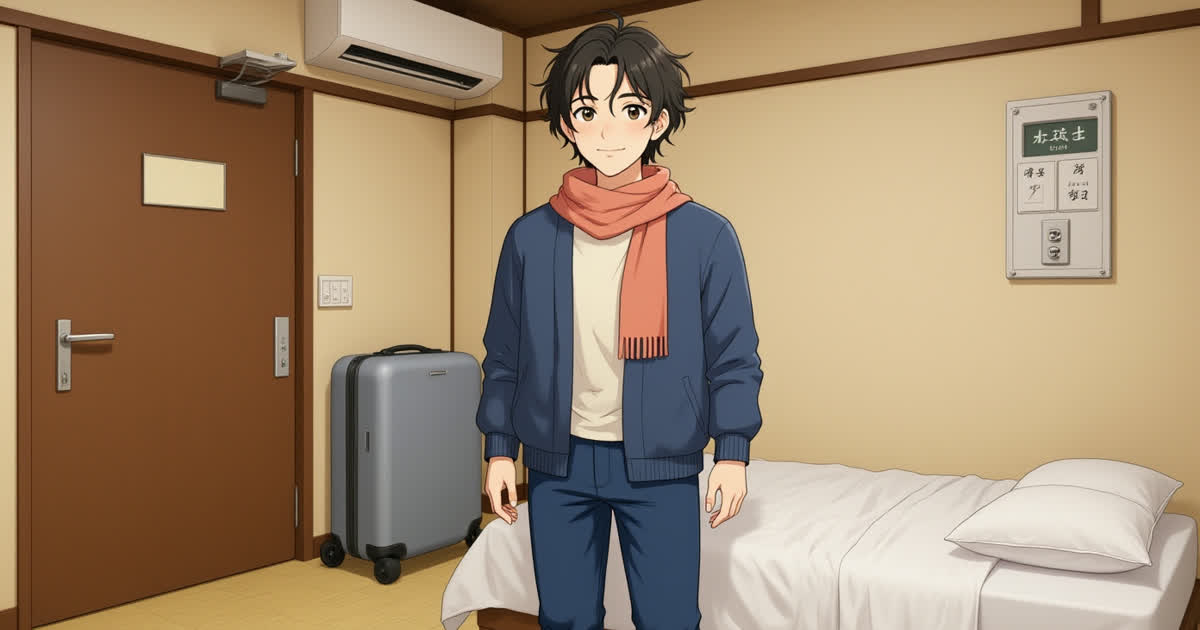
Housekeeping opened the door. The hanger you wanted was still on the inside knob. The reel above, published 9 October 2026, is that morning. The line on the hall face is 起こさないでください. This page is what the line means, which face faces the corridor, and what the other face asks them to do.
What does 起こさないでください mean on a Japanese hotel door?
起こさないでください (Okosanaide kudasai) means please do not wake me. 起こす (okosu) is the verb. Shogakukan's Digital Daijisen, on Kotobank, checked 11 October 2026, gives sense 2 as 目を覚まさせる (me o samasaseru): to make someone's eyes open. The entry's example is 寝入りばなを起こされる (neiribana o okosareru), being woken just as you fall asleep. The same entry writes the verb as 起(こ)す, so you will also see the shorter spelling 起す. The hotel card uses 起こす. The verb is transitive. Someone else does the waking. ない makes it negative, で turns that negative into a request, and ください (kudasai) is please. Staff who see the line on a door stay out. Forbes JAPAN, on 12 September 2024, quoting a former front-desk worker, says 起こさないで下さい also means cleaning is not wanted. The printed words are about waking. The closed door is what you get.
How do you pronounce 起こさないでください?
Say o-ko-sa-na-i-de, then ku-da-sa-i. That is ten beats. 起こす is o-ko-su. The さ starts the negative, and the い after な is its own beat. Do not drop it. ください is ku-da-sa-i. The last i is quiet in ordinary speech, and you still write it. Many cards print 下さい with the kanji. Forbes uses that spelling. Comfort Hotel Yokohama Kannai, on its Jalan page updated 29 August 2021, prints ください in kana. Same word. Read both as kudasai. The reel's line is a request, not a question. There is no か on the end. Add か only when you are asking a person, not when you are hanging a card.
Which face of the hanger do you turn toward the hall?
The face that says 起こさないでください. Housekeeping walks the corridor and reads the side that faces them. Forbes JAPAN, on 12 September 2024, says you hang the card on the outside of the door. A card left on the inside knob is a note only you can see. If you can read 起こさないでください from the bed, the hall is seeing the other face. Turn the hanger around before you sleep. At check-in it usually waits on the inside knob. Move it to the outside, this face out, when you want the room left alone. A magnet uses that same outside face. Some doors use a touch panel instead of a card. Hotel Grand Consort Naha, on 19 March 2026, still labels the quiet choice 起こさないでください.
What does the other face ask housekeeping to do?
It asks them to clean. The reel says one face asks them to clean, and the face you needed is 起こさないでください. Forbes says the common pair, on the two sides of one plate, is 起こさないで下さい and 清掃して下さい (seisō shite kudasai), please clean. 清掃 (seisō) is the hotel word for that job. 掃除してください (sōji shite kudasai) is the plainer line. Hotel critic 瀧澤信秋 (Takizawa Nobuaki), on 28 October 2021, writes about hotels that keep the two requests on separate cards. His title pairs 起こさないでください with 掃除してください. Hotel Grand Consort Naha labels the other choice MAKE UP ROOM, お部屋を清掃してください (o-heya o seisō shite kudasai). Comfort Hotel Yokohama Kannai's note of 2 June 2021 uses a different second plate: シーツ交換をしてください (shītsu kōkan o shite kudasai), please change the sheets. Read the second face in your room. English beside the quiet face is often Please Don't Disturb, and the other face often says Please Make Up. The Japanese on the quiet face is still about waking.
What happens if you leave the hanger on the back of the door?
Staff do not see the request. Forbes says a complaint that housekeeping walked in, even with the do-not-wake card out, is often the card turned the wrong way. The inside of the door is the back. The hall is the front. On a two-sided hanger, a clean face toward the corridor asks them to come in. A do-not-wake face left on the inside knob means the corridor sees no request. A bare knob is not one rule across Japan. At Comfort Hotel Yokohama Kannai, the magnet has to be outside by 10:00 a.m. Once staff see 起こさないでください, they do not enter that day, and they hang fresh towels on the knob. The same hotel's June 2021 note says that no plate still means bed-making, an amenity refill, a towel change, and room cleaning, while the sheets and pillowcases stay. For a stay of five nights or more, sheets can wait through the third day, and on the fourth day they change them anyway. If this hotel has no card, ask the desk. Lead with すみません (sumimasen). The すみません page is that opener.
How is 起こさないでください different from 起きないでください?
起こす wakes another person. 起きる (okiru) is what you do yourself: you get up. Digital Daijisen treats 起こす as the verb whose object is the sleeper. Sense 2 is someone making those eyes open. 起きないでください (Okinaide kudasai) means please do not get up. That line is aimed at the person in the bed. The hanger is aimed at the person in the hall, so the hotel prints 起こさないでください. The okurigana shows which verb you have. 起こす keeps こ. 起きる keeps き. Swap them and you have asked the guest to stay down, which housekeeping cannot use as a door instruction. The positive of the hanger's verb is 起こしてください (okoshite kudasai), please wake me. The Progressive Japanese-English Dictionary, 4th edition, on Kotobank, glosses 明朝7時に起こしてください (myōchō shichiji ni okoshite kudasai) as please wake me at seven tomorrow morning, and it gives the hotel sense as a morning call.
What do you say if you want a morning call instead?
Say 明朝7時に起こしてください. Change the hour. Seven is 7時 (shichiji). Lead with すみません at the desk. That sentence is a wake-up. It is the opposite of the hanger. If you want the room cleaned and the quiet face is already toward the hall, flip the hanger, or call and say お掃除をお願いできますか? (o-sōji o onegai dekimasu ka?), could I ask you to clean? Hotels also call the do-not-disturb card a ドンディスカード (don disu kādo) or a DD card. Forbes uses both names. You do not need the nickname at the desk. Name the face, or point at the hanger. The rest of a hotel stay has its own signs. The 宿泊 page is the overnight row on a two-price board, and the reel for that board is those two prices. A wet walk from the lobby is the 貸傘 barrel, in the loan-umbrella reel. Downstairs, the washer is hotel laundry. The desk still wants the passport page in the check-in guide.
起こさないでください means please do not wake me. Hang that face toward the hall. If you can read it from the bed, turn it around.