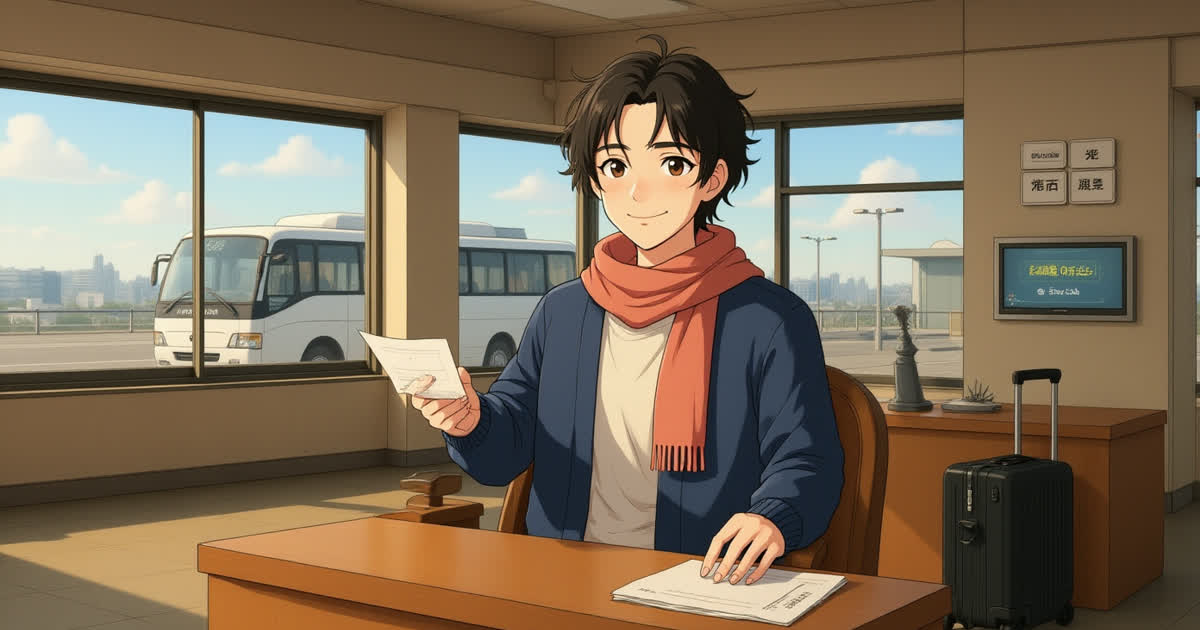
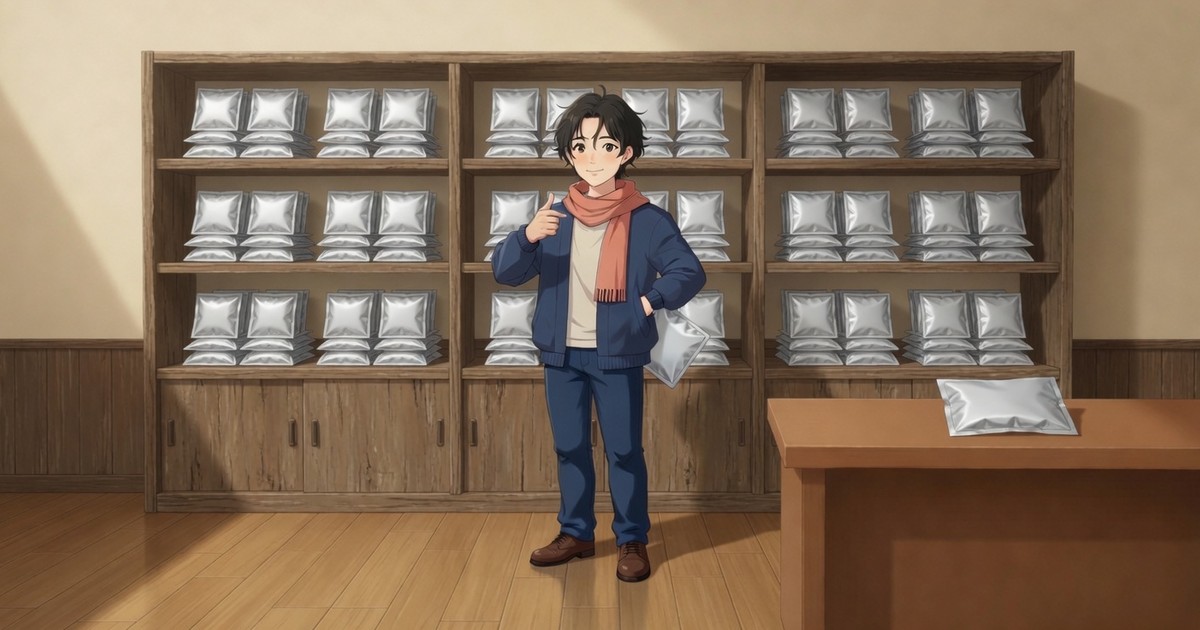
The reel above, published 1 October 2026, is the drugstore counter on a cold day. The spoken line is 貼るカイロをください。 This page is that request: which pack the words name, where the adhesive goes, and why bare skin is the wrong surface.
What does 貼るカイロをください mean, and where does a Japanese stick-on heat pack go?
貼るカイロをください (haru kairo o kudasai) means "a stick-on heat pack, please." Shogakukan's Digital Daijisen, on Kotobank, checked 22 October 2026, reads 懐炉 as かい‐ろ〔クワイ‐〕 and defines it as a device you put inside the front of your clothes to keep warm. The same entry includes the disposable kind, the one that warms by a chemical reaction in iron powder. On that Kotobank page, the Seisen edition of the Nihon Kokugo Daijiten says the device warms the chest or the stomach, and it names the disposable pack that warms when you shake it. On the shelf the word is katakana, カイロ. Those same characters also spell the city Cairo. Next to 貼る, the word is the pack. 貼る (haru) means to stick something on. Kobayashi Pharmaceutical's page for 桐灰カイロ はる, checked the same day, says to take the pack out of the bag just before use, peel the release sheet (はく離シート, hakuri shīto), and stick it to 衣類 (irui, clothing) so it does not touch the skin. The reel's picture is a shirt over the lower back. The box's rule is cloth between the pouch and you.
How do you pronounce 貼るカイロをください?
Say ha-ru ka-i-ro o ku-da-sa-i, ten beats: は, る, か, い, ろ, を, く, だ, さ, い. Daijisen's headword is かい‐ろ〔クワイ‐〕. The bracket is the old spelling of かい. Say か, then い, then ろ. There is no w, and none of the three vowels is long. One sliding "kai" drops the い. The る on 貼る is what makes the reading haru. The particle を is o. ください keeps the final い. There is no か on the end. The line is a request, not a question. 貼らないカイロをください (haranai kairo o kudasai) asks for the pocket pack and runs twelve beats: ha-ra-na-i ka-i-ro o ku-da-sa-i.
Why does the stick-on pack say not to knead it?
Do not knead the stick-on pack. The usage line on the 桐灰カイロ はる page says もまずに (momazu ni), without kneading, in the same sentence as "stick it to clothing." Kobayashi's how-to page, checked 22 October 2026, gives the reason. The stick-on type takes in oxygen across the whole non-woven face, and kneading (揉む, momu) shifts the powder to one side. The pocket pack is the one that page tells you to shake. A hard knead does not make it warm faster. Take it out of the outer bag and shake it a few times. Air enters through tiny holes, and a hard rub can clog them. Open the stick-on pack when you are about to wear it. Put any unopened packs back in the outer bag. Once the inner bag is open, the reaction has started.
How is 貼るカイロ different from 貼らないカイロ?
貼る sticks. 貼らない (haranai) means it does not stick. Kobayashi's page for 桐灰カイロ 貼らないタイプ, checked 22 October 2026, says to take that pack out just before use, shake it lightly a few times, and keep it over clothing or inside a cloth so it does not sit on bare skin. If it cools while you are out, shake it again. The feature line there is 24 hours for the regular size and 12 hours for the mini. The stick-on はる page lists 14 hours, and 10 hours for its mini. Both pages mark those hours as Tokyo-ordinance lab figures, and both notes say use on a body will differ a little. The stick-on regular size on that page is 13 cm by 9.5 cm, with a listed maximum of 63°C and an average of 53°C. That is the pouch in the lab, not a promise about your skin. The suggested retail price excluding tax, on the same page, is 974 yen for a 10-pack and 798 yen for a mini 10-pack. The shop can charge another number. A sock pack is a third product. 桐灰カイロ くつ下用 貼る is marked くつ専用 (kutsu sen'yō), for shoes, and it sticks to the sock. 貼るカイロをください。 asks for the clothing pack. Say 貼らないカイロをください。 when you want the pocket one.
What does the ordinary stick-on box tell you not to do?
The ordinary はる page says not to use the pack while you sleep, under a futon, or beside a heater, a kotatsu, or an electric carpet. It also says not to use it if you have trouble feeling heat or trouble with circulation, diabetes included, and to take extra care if your skin is sensitive. Do not press on the pack. Do not stick it on bare skin. Stop as soon as it feels too hot, and see a doctor if a burn appears. Kobayashi's how-to page defines 低温やけど (teion yakedo) as a burn from something warmer than body temperature left against you for a long time. The surface can look mild while the deeper skin is hurt. Blood carries that heat away. Pressure slows the blood, and the spot gets hotter. Skip cloth the adhesive will damage, and skip expensive cloth. When you peel the pack off, do not pinch the non-woven face. Slide a finger under the part with no adhesive and peel slowly. Some heat-retaining clothes do not hold the adhesive well. A different box is made for sleep. 桐灰カイロ 寝るときデコルテカイロ went on sale 24 September 2026, for cold shoulders while you sleep, and its page still says to stick it to clothing or underwear so it does not touch the skin. The box in your hand is the one to follow. The ordinary はる box is the one that prints 就寝時は使用しない。 (Shūshin-ji wa shiyō shinai.) Do not use it while sleeping.
How is this different from the heatstroke page?
A heat pack is the cold-weather purchase. It does not treat heatstroke. The heatstroke guide is the summer emergency, when dizziness means stop and ask for help. 経口補水液をください (keikō hosuieki o kudasai) is the oral rehydration drink on that shelf. The reel about that white box is the pharmacist reaching past the cooler. 貼るカイロをください。 is for a cold day, at a drugstore counter or a convenience-store till. The konbini phrase guide covers bags and hot food. This line covers the winter pouch. The reel was published 1 October 2026. On 22 October 2026 that season is open.
貼るカイロをください。 asks for the stick-on pack. It goes on clothing, with cloth between the pouch and your skin. The pocket pack is 貼らないカイロをください。 The short reel is the line from the counter.