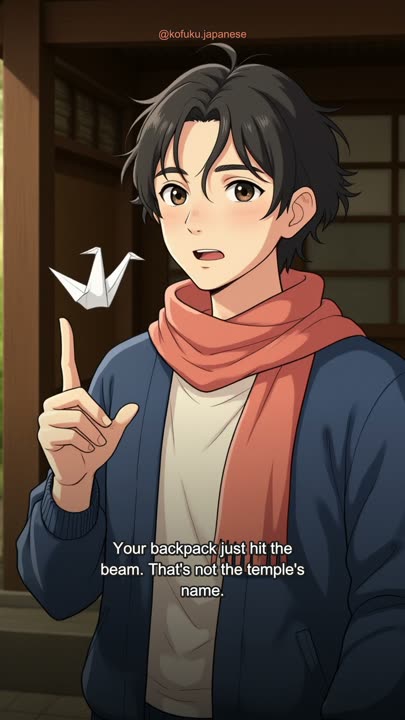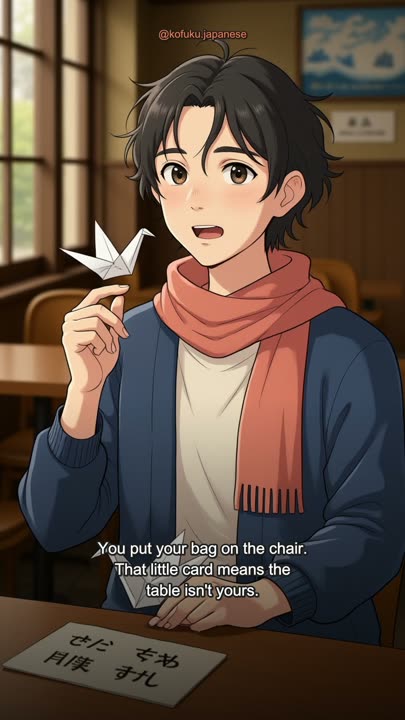
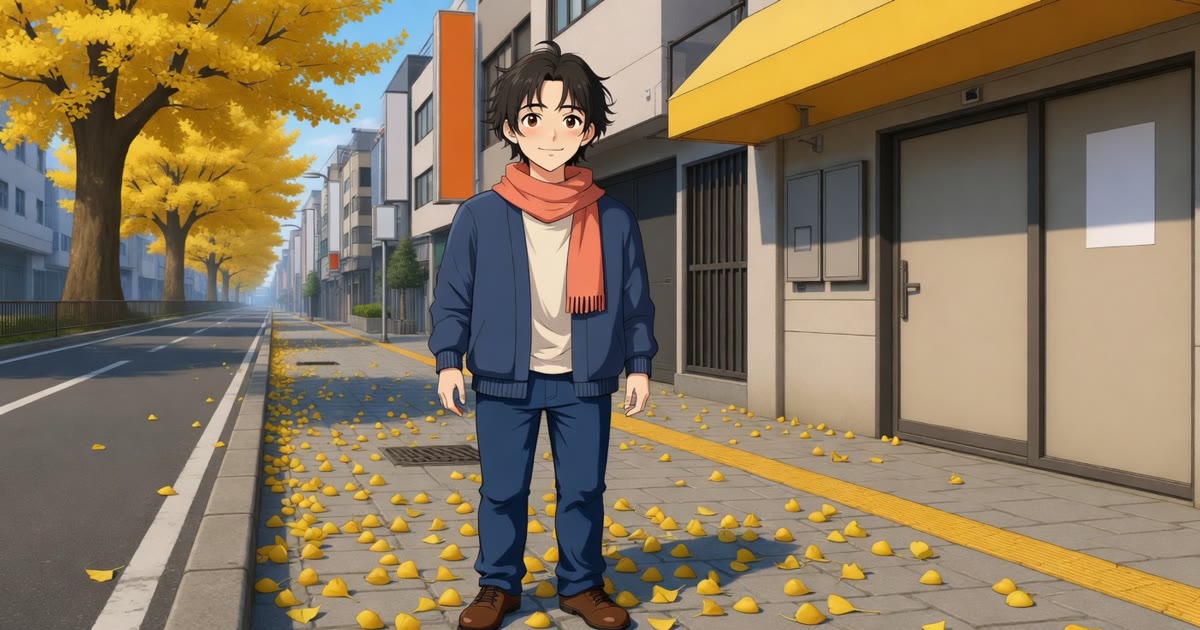
The reel above, published 8 October 2026, is a yellow ball on a Japanese sidewalk. The spoken line is ぎんなんの実を踏まないでください。 This page is that request: what the words name, why one step stays on your shoe, and how the nut in a dish is a different part of the same seed.
What does ぎんなんの実を踏まないでください mean on a Japanese sidewalk?
ぎんなんの実を踏まないでください (ginnan no mi o fumanaide kudasai) means please don't step on the ginkgo fruit. Shogakukan's Digital Daijisen, on Kotobank, checked 21 October 2026, reads 銀杏 as ぎんなん and gives two senses. The first is another name for the イチョウ (ichō), the ginkgo tree. The second is the fruit of that tree. Daijisen says the outer seed coat is yellow and foul-smelling, and that you remove it, by burying it in soil or by some other method, before you eat the kernel inside. The reel's English is "Please don't step on the ginkgo fruit." 実 (mi) names the fruit on the ground. の ties that fruit to ぎんなん. を marks it as the thing the foot must not press. Daijisen's first sense of 踏む (fumu), checked the same day, is to put your weight on something with your foot, from above. 踏まないでください asks you not to. There is no か on the end, so the line is not a question. There is no 禁止 (kinshi), so it is not a legal ban. You step around the soft yellow ball.
How do you pronounce ぎんなんの実を踏まないでください?
Say gi-n-na-n no mi o fu-ma-na-i de ku-da-sa-i, sixteen beats: ぎ, ん, な, ん, の, み, を, ふ, ま, な, い, で, く, だ, さ, い. Daijisen's headword is ぎん‐なん, from ぎんあん by 連声 (renjō). The vowel in each of な, の, み, and を is short. Each ん is its own beat. The ん before な makes the n sound long, and "gina" drops that beat. を is o, not wo. 踏む is fumu. The vowel in ふ is short, and the word is not a long fū. ないで is the "don't" form. な, い, and で are three beats, and the い stays. ください is four beats, and the final い stays too. There is no か after it. The same request can show up in kanji as 銀杏の実. On a kitchen menu, 銀杏 is the nut and you read it ぎんなん. On a tree label, 銀杏 is the tree and you read it いちょう, three beats, い, ちょ, う, with a long o. The reel picks ぎんなん for the ball at your feet. If a board prints イチョウの実, that is the tree's fruit, and it is the same ball.
Why does the ginkgo fruit on the sidewalk smell?
The yellow ball is a seed that still has its coat on. Daijisen's entry for the tree says a ginkgo is male or female, the fruit is round, and the outer seed coat, 外種皮 (gaishuhi), turns yellow-orange when it ripens. The seed inside that coat is what people call ぎんなん. The Nipponica entry for ぎんなん (日本大百科全書), on Kotobank, checked 21 October 2026, says the fruit ripens on the female tree, 雌木 (megi), from the middle to the end of October. The ripe fruit is about 2 centimeters across, and the soft yellow-brown outer coat smells bad. The smell is in that coat. The kernel inside is not what you smell on the street. A step puts your weight on the coat, the coat bursts, and the smear stays on the sole. The shoe carries it onto the train and into the hallway. Heibonsha's MyPedia encyclopedia says that coat contains bilobol and ginkgolic acid, and that it often causes a rash, かぶれ (kabure). Pick the ball up with a bare hand and the same coat can irritate the skin. Leave it where it fell. Do not rub a smeared sole on an indoor mat. Scrape the pulp off outdoors, then wash the sole with soap.
Is sidewalk ginkgo the same as the nut in chawanmushi?
No. The nut in 茶碗蒸し (chawanmushi), a savory steamed egg custard, is the kernel. Daijisen says you take the foul outer coat away, then eat the kernel, 仁 (jin), inside. The revised Heibonsha world encyclopedia says the part you eat is the yellow-green endosperm, 胚乳 (hainyū), inside the hard white inner seed coat, and that this nut is used in chawanmushi. Nipponica calls that hard white shell 鬼皮 (onikawa). The nut a shop sells is the seed after the soft coat is gone, down to that shell. The sidewalk ball still wears the coat. That coat is not the custard ingredient. A kitchen has already removed it and cooked the kernel. The fruit under a street tree has not. Do not pick a handful off the pavement and eat it. A single nut in a custard is the kitchen item. A lapful of sidewalk fruit is not, and a small child should not be handed a pile of the seeds. The sign is about your shoe.
When do ginkgo fruits fall, and which trees drop them?
The fruit ripens from the middle to the end of October on a female tree. Nipponica gives that window, and 21 October 2026 sits inside it. The reel went up on 8 October 2026, at the start of the same stretch. Only the female tree bears the seed. Daijisen says the species is 雌雄異株 (shiyū ishu), with male and female flowers on separate trees, and that ginkgo is widely planted as a street tree, 街路樹 (gairoju). The fan-shaped leaf does not tell you the sex. The yellow balls under the trunk do. One sidewalk can be clear while the next block is covered, because one tree is female and the next is not. The same dictionary entry says the leaves turn yellow in autumn, 黄葉 (kōyō). That yellow is the leaf. The 紅葉前線 page is the map of when autumn color moves south across Japan. This page is the fruit on the pavement under the yellow tree. The weeks can overlap. The jobs do not. The sweet smell on another block is a different tree. キンモクセイの香りです is the cake-like scent of fragrant olive, and the fragrant-olive page is that smell. This line is the smell you do not want on a shoe.
How is this different from 足元にご注意ください?
足元にご注意ください asks you to watch your step. It does not name a fruit. On a train, that line plays when the doors open, and the 足元 page is that announcement. ぎんなんの実を踏まないでください names the fruit and tells the foot not to press it. The verb is the difference. A board can also say 注意 (chūi), be careful, and never use 踏む. When the verb is 踏まないで, look down and walk around the yellow ball. One photographed board uses the reel's request. At 陶山神社 (Tōzan Jinja) in Arita, Saga, Sirabee on 2 October 2025 quotes the sign as お願い ぎんなんの実を踏まないでください. お願い (onegai) marks the words as a favor. The chief priest told Sirabee he picks the fruit up when he notices it in the morning, the approach still gets ahead of him, and people step on it because their eyes are not on their feet. The board then lists three results of a step: a rash, a shoe that starts to stink, and a car ride home that the sign calls hell. The reel stops at the request. The job is the same. Step around the fruit.
ぎんなんの実を踏まないでください means please don't step on the ginkgo fruit. The soft yellow coat is what smells, and the kernel in a dish is what is left after that coat is gone. On 21 October 2026 a female ginkgo is in the ripening window Nipponica describes. The 30-second version is the request from the sidewalk.