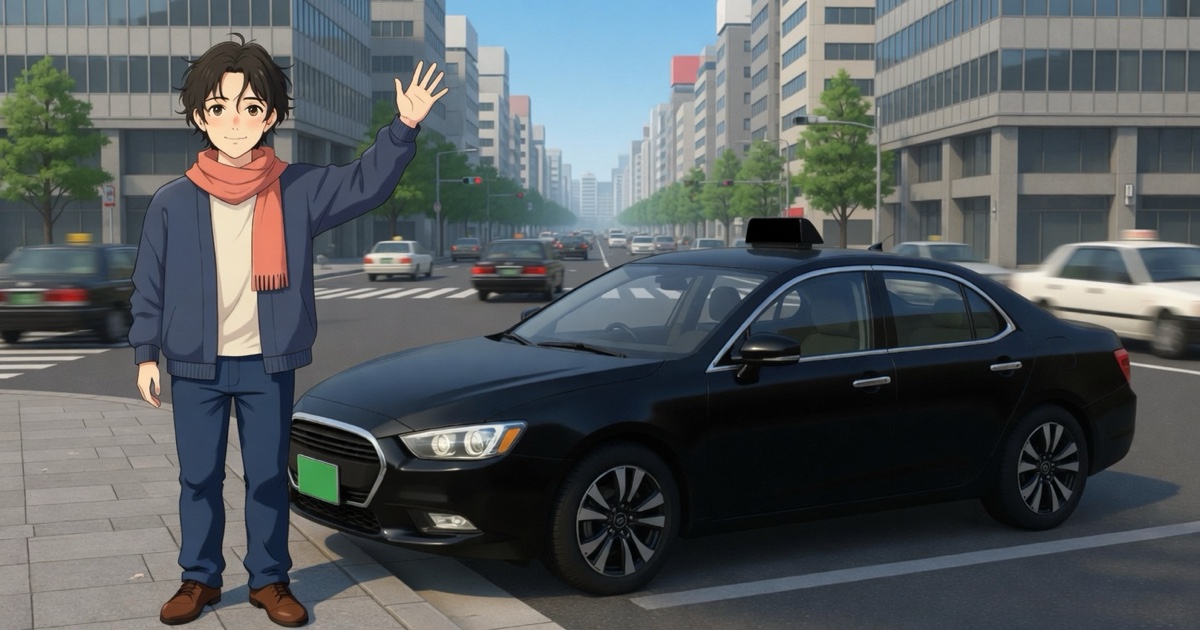
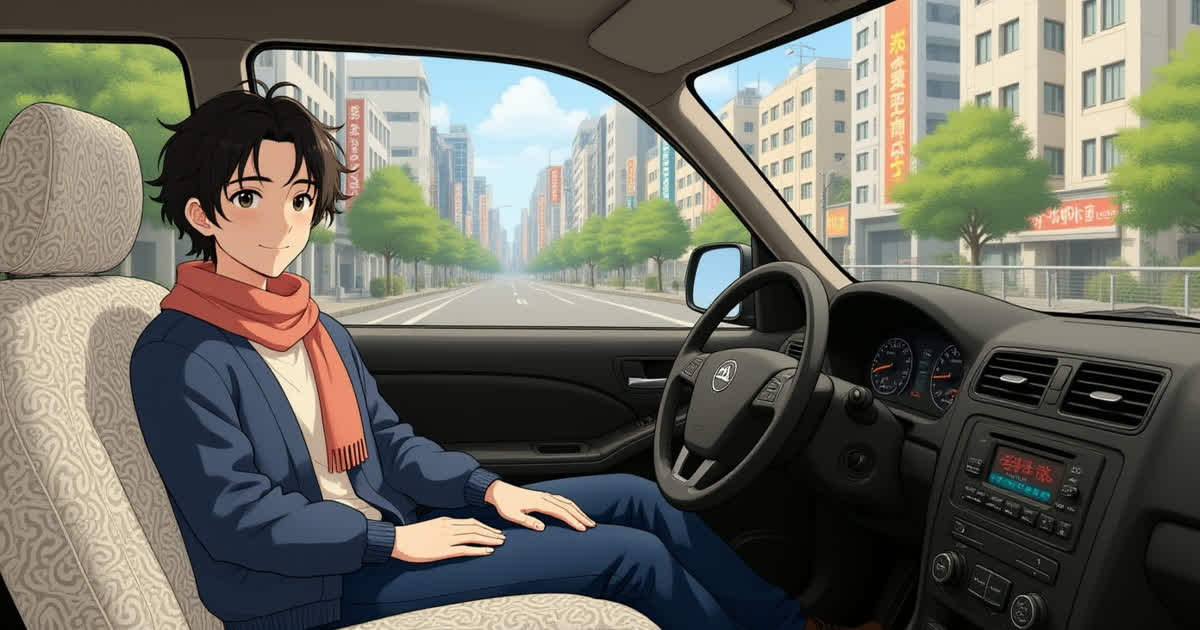
The reel above, published 7 October 2026, is the moment you sit down and the meter already shows a fare. The word for that fare is 初乗り. This page is that number: what it pays for, what Tokyo charges since 20 April 2026, and the two extras that are not part of it.
What does 初乗り mean on a Japanese taxi?
初乗り (hatsunori) on a taxi is the starting fare, and the distance that fare covers. Say it in four beats, ha-tsu-no-ri. Every vowel is short. In this word 初 is hatsu, not sho, and 乗 is nori, not jō. Shogakukan's Digital Daijisen, on Kotobank, checked 9 October 2026, gives the word three senses. The first is the first ride of the new year. The second is the first time you board a vehicle that just opened. The third, the one on the meter, is the minimum fare unit on a train, a bus, or a taxi, and also the money for that unit. A note on that entry says this third sense drifted from the older meaning of "first time." The older trade names were 最低運賃 (saitei unchin, minimum fare) and 基本料金 (kihon ryōkin, base charge). Shogakukan's Progressive Japanese-English Dictionary, fourth edition, glosses 初乗り運賃 (hatsunori unchin) as the starting fare. You may also hear ワンメーター (wan mētā). Digital Daijisen defines it as the base charge set when the driver starts the meter, another name for 初乗り運賃, and says the amount and the distance change by region and by the size of the car.
What does これは初乗りです mean?
これは初乗りです。 (Kore wa hatsunori desu.) means "This is the starting fare." That is the line in the reel, and the recap says it again. これ (kore) points at the number already on the meter. は (wa) marks it as the topic. です (desu) states what it is. Say it while you look at the meter, or use it when a friend thinks the driver has started charging for nothing. To ask instead of tell, change the end: これは初乗りですか? (Kore wa hatsunori desu ka?), "Is this the starting fare?" To ask the price before you sit, say 初乗りはいくらですか? (Hatsunori wa ikura desu ka?), "How much is the starting fare?" Lead with すみません (sumimasen) if you need the driver's attention. すみません is that opener. The sentence names the number. It does not argue with it.
How much is the Tokyo taxi starting fare?
In Tokyo's 23 wards, plus Musashino and Mitaka, the ordinary-car starting fare since 20 April 2026 is ¥500 for the first 1.0 km. The Tokyo Private Taxi Association's notice of that date, checked 9 October 2026, says the starting amount stayed ¥500 and the add-on stayed ¥100. The distance is what changed. The first ¥500 used to cover 1.096 km. It now covers 1.0 km. After that kilometer, the meter adds ¥100 every 232 meters. The old step was 255 meters. KM Taxi's notice for the same day prints those same ordinary-car numbers. Companies set the fare inside a band the government allows, and the amount can also change with the size of the car. Read the sticker in the window. That sticker is the table for the cab you are entering.
Why does the meter show a fare before the taxi moves?
Because the driver has started the meter, and 初乗り is the first number it shows. It pays for the opening stretch, up to 1.0 km in that Tokyo zone, even if you get out after one block. It is not a fee for sitting still, and it is not a scam. A later climb is a different clock. When the cab goes 10 km/h or slower, the association's current table adds ¥100 every 85 seconds. Green Cab's notice for that zone shows the old step was 95 seconds. A pickup is a separate line. If you called the cab and it drove empty to you, the association lists a 迎車回送料金 (geisha kaisō ryōkin) of ¥500, once. 迎車 (geisha) means the car came to collect you. It is not 芸者 (geisha), the entertainer. Same sound, different kanji. A street hail does not add that line. The roof lamp 回送 (kaisō) means this taxi is not taking passengers. You cannot hail it, and it is not a fare.
How is 初乗り different from the late-night surcharge?
初乗り is the base yen. 深夜料金 (shin'ya ryōkin) is the late-night rule, printed by the association as 深夜早朝割増 (shin'ya sōchō warimashi). From 22:00 to 05:00 the association does not replace ¥500 with a higher starting price. It shortens the distance, and it names that method 距離短縮方式 (kyori tanshuku hōshiki). Their fare-system page, checked 9 October 2026, divides the daytime 1.0 km by 1.2, which leaves about 833 meters. The add-on shrinks the same way: 232 meters becomes about 193 meters per ¥100. The meter still opens on 初乗り. It reaches the next ¥100 sooner, so a longer ride totals about 20 percent more. The late-night taxi guide is the page for the hours, the mid-ride switch, and why that extra is not a tip. The four kanji on the meter are the night rate, not the name of the starting fare. If the clock is close to 10 p.m., ask 今は深夜料金ですか? (Ima wa shin'ya ryōkin desu ka?), "Is the late-night rate on now?"
How is 初乗り different from an expressway toll?
初乗り is inside the meter. 高速料金 (kōsoku ryōkin) is the expressway toll, a road fee added on top of whatever the meter shows. The night rule shortens meter distance. It does not multiply the toll. The driver asks 高速、使いますか? (kōsoku, tsukaimasu ka?), "shall I take the expressway?", because you pay that extra. The expressway page has the two answers: はい、お願いします (hai, onegai shimasu) for yes, and 下道でお願いします (shitamichi de onegai shimasu), "surface roads, please," for no. A short hop that is still inside 初乗り does not need the ramp. Green Cab's 20 April 2026 notice says the slow-speed clock does not run on the expressway. The meter stays on distance only, and the toll is still a separate line. The starting fare and the toll are two bills, not one.
Does every Japanese city charge the same starting fare?
No. The zone sets both the yen and the distance. Western Tokyo is already a different table. The same association's Tama notice, dated 16 March 2026 and checked 9 October 2026, also lists ¥500 for the first 1.0 km, but the old distance there was 1.091 km, not 1.096. After the first kilometer, Tama adds ¥100 every 211 meters, down from 233. The slow clock there adds ¥100 every 80 seconds. Osaka, Kyoto, and every other city post their own numbers. Do not carry the Tokyo ¥500 into another prefecture. Read the fare table on the window before you open the door, or ask 初乗りはいくらですか? The driver's answer is the fare for that cab.
The number on the meter before the cab moves has a name. 初乗り is that starting fare. In Tokyo's 23 wards, Musashino, and Mitaka it has been ¥500 for the first 1.0 km since 20 April 2026. At night the same yen covers about 833 meters. The expressway toll is a separate bill. If you missed the last train, Tokyo's night rate has been on since 22:00. Say これは初乗りです。 when you only need to name the first number.