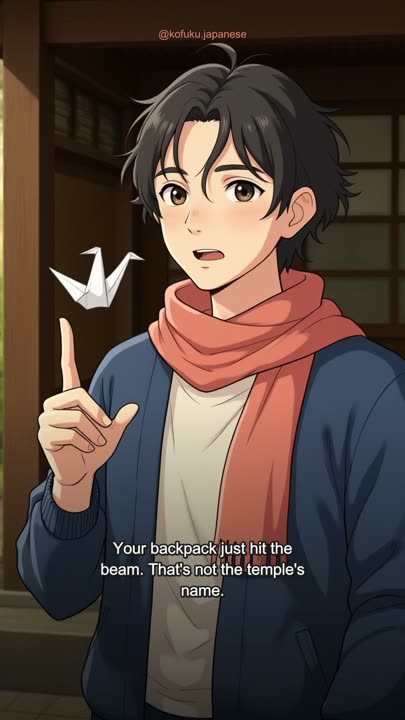

Two minutes into the ride the driver glances in the mirror and asks a short question. Nod along and you have just agreed to pay a toll. The sentence in the reel above is 高速、使いますか? (kōsoku, tsukaimasu ka?), "shall I take the expressway?" The driver is not tricking you. Japanese taxis must ask because the passenger pays the extra 高速料金 (kōsoku ryōkin, expressway toll) on top of the meter. Here is what the question means, what it costs in Tokyo, and the two answers that settle it.
What does 高速、使いますか mean?
It means "shall I take the expressway?" 高速 (kōsoku) is the everyday short form of 高速道路 (kōsoku dōro), the toll expressway, and 使いますか (tsukaimasu ka) is the polite "shall I use it?" Drivers say this on airport runs and cross-city trips, usually before they reach the first on-ramp. They are not asking whether the road exists — they are asking whether you will pay the extra toll. A nod from the back seat counts as yes, so answer with words. You will not hear the stiffer 使用しますか (shiyō shimasu ka) in a taxi; the spoken line is always 使いますか.
Should you let a Japanese taxi take the expressway?
Say yes when time matters more than a couple of thousand yen, and no when it does not. The classic yes is the airport-to-hotel run — Haneda into central Tokyo, and especially Narita — or any ride where you are catching a train, moving luggage in the rain, or crossing the city in rush hour. The classic no is a short hop between neighbourhoods, a night ride on empty streets, or a trip you would rather stretch to save the toll. The driver is required to ask because you pay, not because they earn a bonus for the on-ramp. If you are unsure, ask どちらが早いですか? (dochira ga hayai desu ka), "which is faster?", and decide from the answer they give you.
How much does a Japanese taxi expressway toll cost?
In Tokyo the 高速料金 is usually about ¥1,000 to ¥2,000 on top of the meter, and it typically saves twenty to thirty minutes. That is the 首都高速 (Shuto kōsoku, Tokyo Metropolitan Expressway) range most visitors hit. Airport runs can run higher — Narita in particular — because the expressway stretch is longer. The toll is not a tip and not a surcharge the driver keeps; it is the same 通行料 (tsūkōryō) any car pays at the booth or the ETC gate. You settle meter plus toll together at the end of the ride. Most city taxis take cards now; if you are not sure, ask whether a card is okay before you ride.
How do you say yes or no to the expressway in Japanese?
For yes, say はい、お願いします (hai, onegai shimasu), "yes, please," or the more explicit 高速でお願いします (kōsoku de onegai shimasu), "the expressway, please." For no, say 下道でお願いします (shitamichi de onegai shimasu), "surface roads, please." Those two answers are the ones in the reel above, and they are the whole exchange — you do not need to explain why. Speak them; a nod is easy to misread from the driver's seat, especially at night. Lead with すみません (sumimasen) if you need a second to think, then give the line. Once you have answered, the driver will take the ramp or stay on the street without asking again.
What is 下道 and when should you take surface roads?
下道 (shitamichi) is taxi jargon for ordinary streets — the roads that are not the expressway. Take them when the trip is short, when the city is empty at night, or when you are not in a hurry and would rather skip the toll. Surface roads also let you see more of the neighbourhood, which is the point of some rides. If 下道 is a new word, 普通の道でお願いします (futsū no michi de onegai shimasu), "the ordinary road, please," is understood everywhere and lands just as clearly. Either line keeps you off the ramp. For a short city hop, the meter-only fare on surface roads is often the cheaper total even when the expressway would shave a few minutes.
Does the taxi meter keep running on the expressway?
Yes. The meter keeps ticking while you are on the expressway, and the toll is added on top of whatever the meter shows at the end. That is why a short expressway hop can cost more than it saves if traffic on the 下道 is already light. The driver is not padding the fare: Japanese taxis run the meter by time and distance on every road, then add the printed 高速料金. Pay both together when you stop. If you want off before the original drop-off, tell the driver to stop here with the same short request pattern — and never touch the door yourself; Japanese taxi doors open automatically.
The whole exchange fits in two lines: the driver asks 高速、使いますか? and you answer はい、お願いします or 下道でお願いします. Ask as soon as you hear the question, before the on-ramp. If a taxi is the backup because you missed the last train, the expressway is usually worth it. If you would rather skip the cab entirely, paying on a Japanese bus is the cheaper next page, and asking for directions in Japanese gets you to the right stop without a meter running at all.