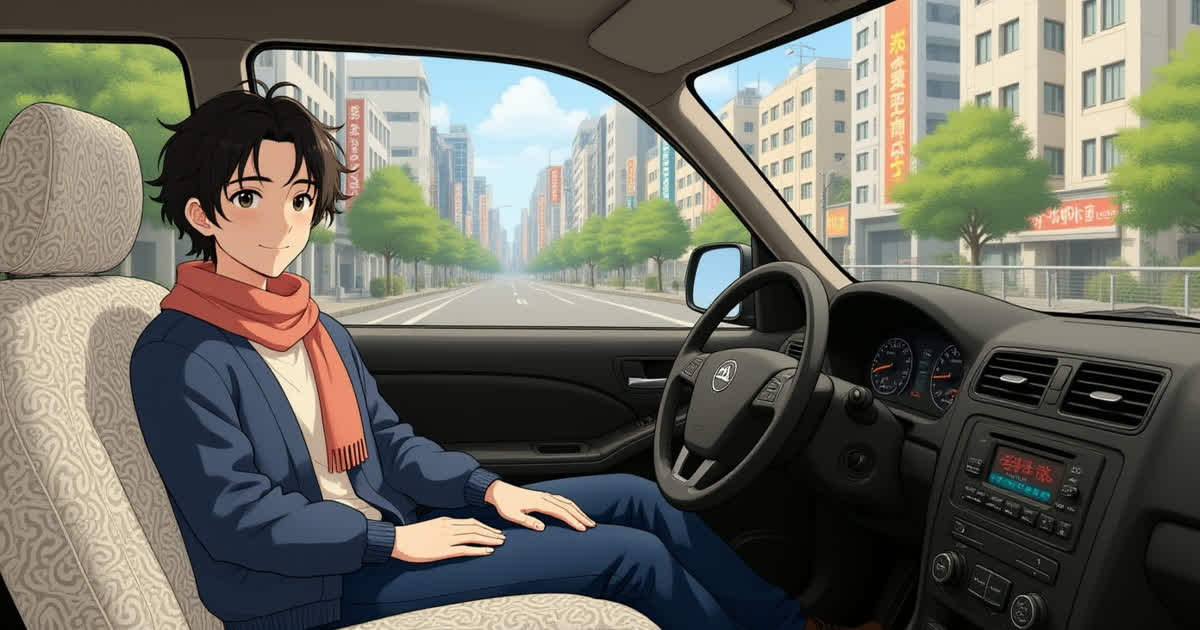
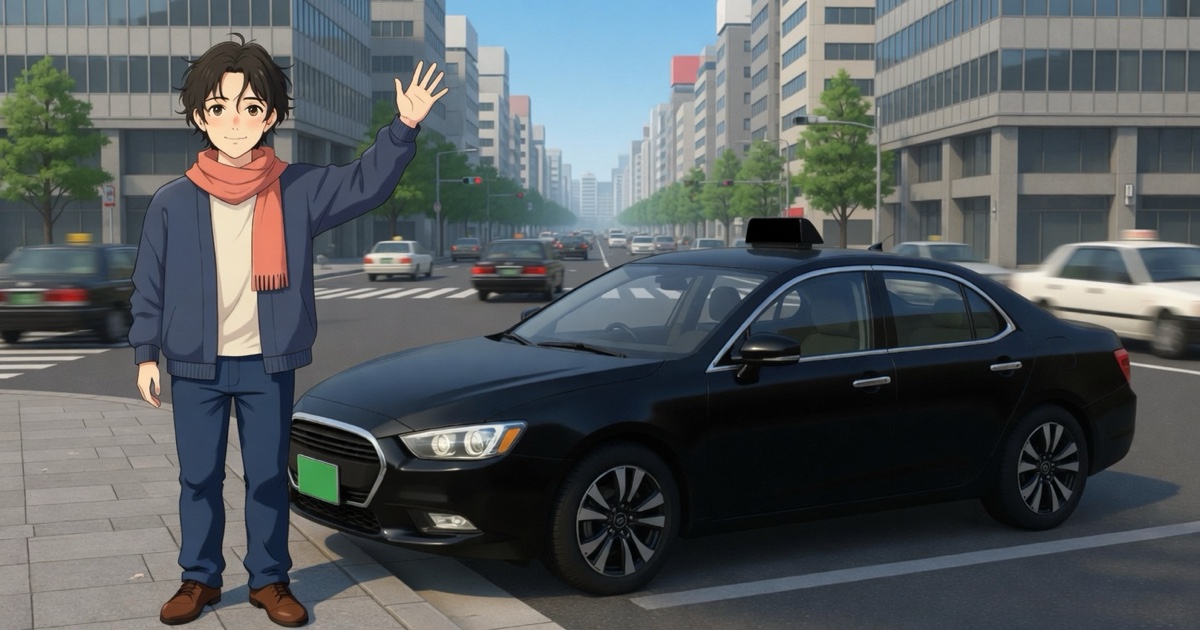
The taxi in the reel above, published 23 October 2026, carries a small plate in the corner of the windshield. The red word on it is 空車. That cab is empty, and it will stop. This page is that word: the meaning, the reading, the place to look, and the other words on the same lamp that mean you let the cab go.
What does 空車 (kūsha) mean on a Japanese taxi?
空車 (kūsha) on a Japanese taxi means the cab is empty and will take a street hail. Digital Daijisen, on Kotobank, checked 27 October 2026, defines the first sense as a commercial vehicle carrying no passengers or freight, and also as the display on a taxi running with no passenger. The entry gives あきぐるま and からぐるま as other names, and it points to 実車 and 迎車. The reel's English for the red word is vacant. Raise your hand. That cab is the one that stops. Shogakukan's Progressive Japanese-English Dictionary, fourth edition, checked the same day, glosses 折りよく空車が通りかかった as "luckily an empty taxi came along just then." A dark plate, or a different word, is not that taxi. Daijisen's second sense, a free parking space, is the last section. The windshield uses sense 1.
How do you pronounce 空車?
Say ku-u-sha, three beats: く, う, しゃ. The う is the second half of a long ū. A short "kusha" drops that beat. 空 here is the on reading kū, not sora, kara, or aki. 車 is the on reading sha, not kuruma. The plate and the reel both use kūsha. There is no small っ. Daijisen also lists からぐるま, five beats, ka-ra-gu-ru-ma, for the same kanji. That reading is real. It is not the reading on the plate. The classical むなぐるま stays in the dictionary. At the curb, say kūsha.
Where is the red plate on the taxi?
Look through the windshield, at the passenger side of the dashboard. The Tokyo Transport Branch handling, 東京都内に配置するハイヤー・タクシー車両の表示等に関する取扱について, amended by 東運輸第97号 and effective 2 May 2024, checked 27 October 2026, requires a display tied to the fare meter and readable from outside by day and by night. It mounts on the top of the front passenger's dashboard, or just above it. In a Japanese cab that seat is on the left, so the plate sits toward the left of the windshield. That is the corner the reel points at.
The same appendix paints 空車 red: white ground with red characters, or red ground with white characters. On an LED the characters are red, or cut out of the lamp, at least 4 centimeters each way. A dark plate is not a red 空車. The roof lamp is separate. At night it stays off except during 空車 and except during a radio-wait fee, so a lit roof is only a hint. The green rectangle on the bumper is the commercial registration plate. It stays green with a full back seat. It is not the plate in the reel.
What does green on that plate mean?
Green on that lamp is not the word for a passenger. In the same Tokyo appendix, 割増 (warimashi) is a white ground with green characters, or a green ground with white characters. On an LED the characters are green. 割増 means the surcharge fare is in force, inside the cab and outside. It does not mean the cab is full. Say wa-ri-ma-shi, four short beats, with no long vowel. The late-night page has the hours and the size: in Tokyo, 22:00 to 05:00, about 20 percent. A green 割増 can still be empty. Hailing it means you accept that night rate. Skipping every green lamp after 10 p.m. skips empty cabs.
The reel says green in that same spot usually means someone is already inside. On this Tokyo color table, the green word is 割増. 観光車 (kankōsha) also uses a green ground, white characters, and only during a set sightseeing fare. Say ka-n-ko-u-sha, five beats, with a long ō. That cab is not a street hail. Read the characters. Daijisen defines 実車 (jissha) as a taxi with a passenger, displayed as 賃走 (chinsō) and similar. Tokyo's outside list gives those words no color. S.RIDE's column, updated 27 March 2026, says an occupied LED may show them or show nothing. A blank plate is not 空車. Let it pass.
Which other words mean the taxi will not stop?
Four Tokyo words are white characters on a navy ground. An LED often turns them orange. None of them is a street hail. 迎車 (geisha) shows only while the cab drives to someone who already booked it. Say ge-i-sha, three beats. 芸者, the entertainer, is the same sound and a different word. The plate uses 迎, to go and meet. 回送 (kaisō) is a meal, a break, a toilet stop, the end of a shift, or a broken cab heading for the garage. The handling forbids it in any other case. Say ka-i-so-u, four beats, with a long ō. An empty seat under 回送 is still not a ride. 貸切車 is a time hire. 救援 is a rescue job.
予約車 (yoyakusha) is navy characters on white: the cab is waiting because the passenger asked it to wait. S.RIDE's column, updated 27 March 2026, adds SOS. The driver is asking for help. Call the police on 110. The emergency-number page also lists 119 for an ambulance or a fire. A red 空車 can still pass you. That column names two reasons that are not a snub: the cab may be outside its pickup zone, or you may be standing where it cannot stop, such as a bus stop or a fire hydrant. Move, and hail the next 空車. Once you are in, the meter number is 初乗り, and the expressway question is on the toll page. The rear door opens on its own. Do not pull it. The door reel is that habit.
How is taxi 空車 different from a parking-lot 空車?
Daijisen's second sense of 空車 is a parking lot with room for a car. The antonym is 満車 (mansha), full of cars. Say ma-n-sha, three beats. The coin-locker page already separates that pair from a full locker and a packed train. A garage gate that says 空車 means a space is free. It does not mean a taxi will stop. The Progressive dictionary glosses that sign as "Vacancies." Same kanji, different object.
空車 means the taxi is empty. On a Tokyo cab the red plate is that word, on the passenger side of the dashboard, and that cab is the one to hail. Green is 割増, or 観光車 when the characters are white on a green ground. Navy is a cab that will not take a street hail. The parking-lot 空車 is a free space, not a ride. The 30-second version is the red plate, before the cab drives past.