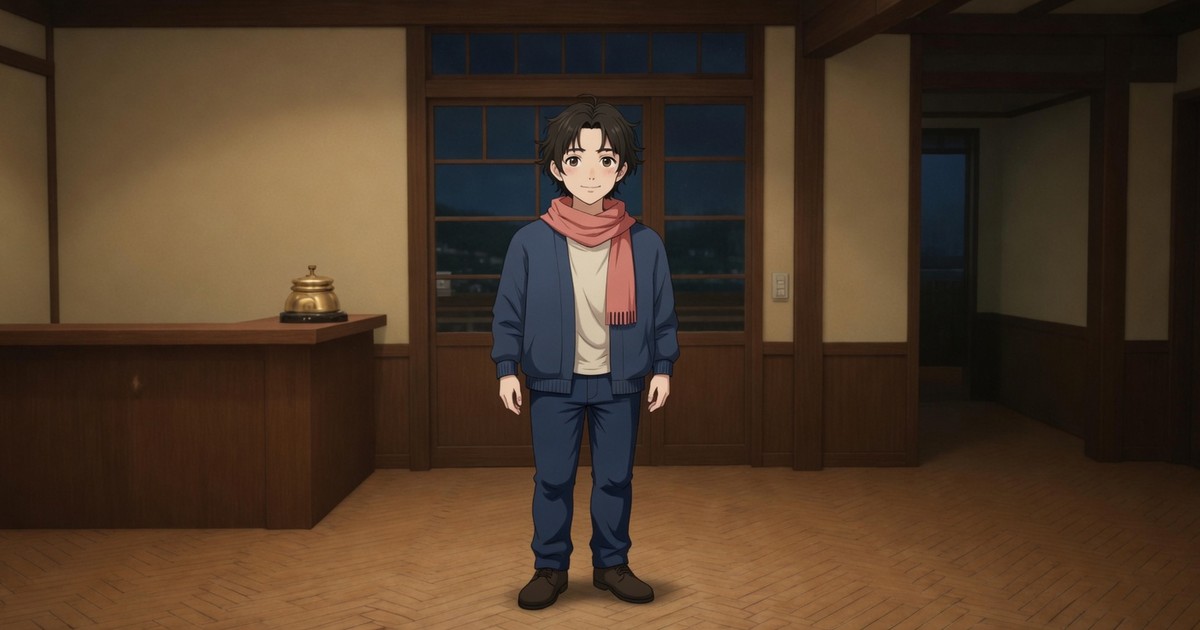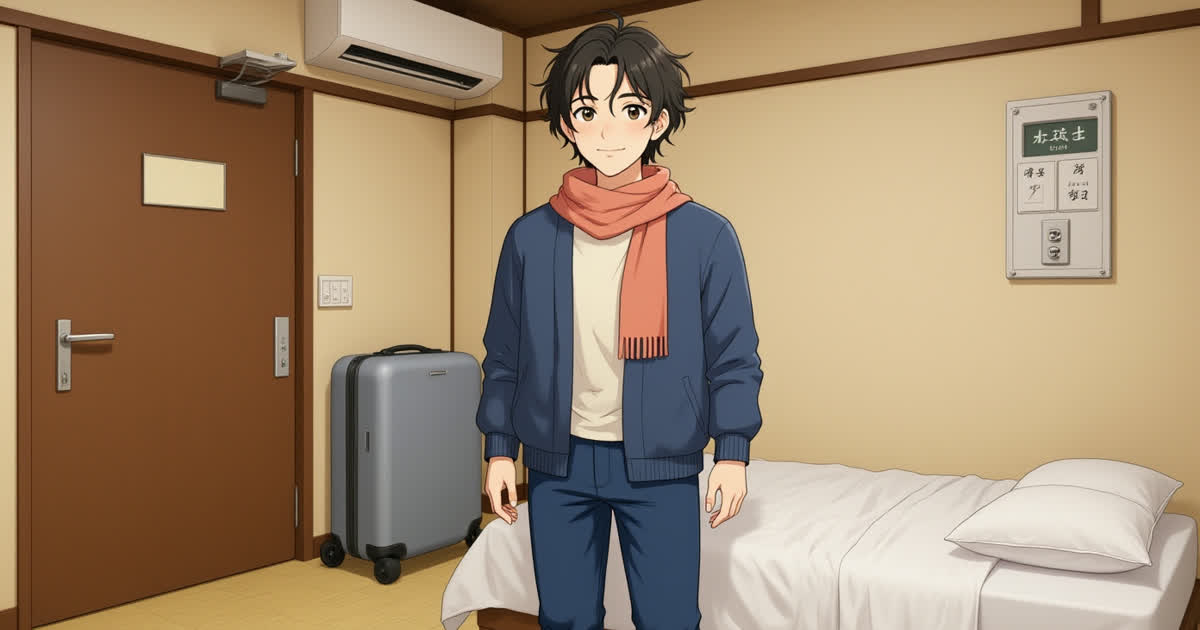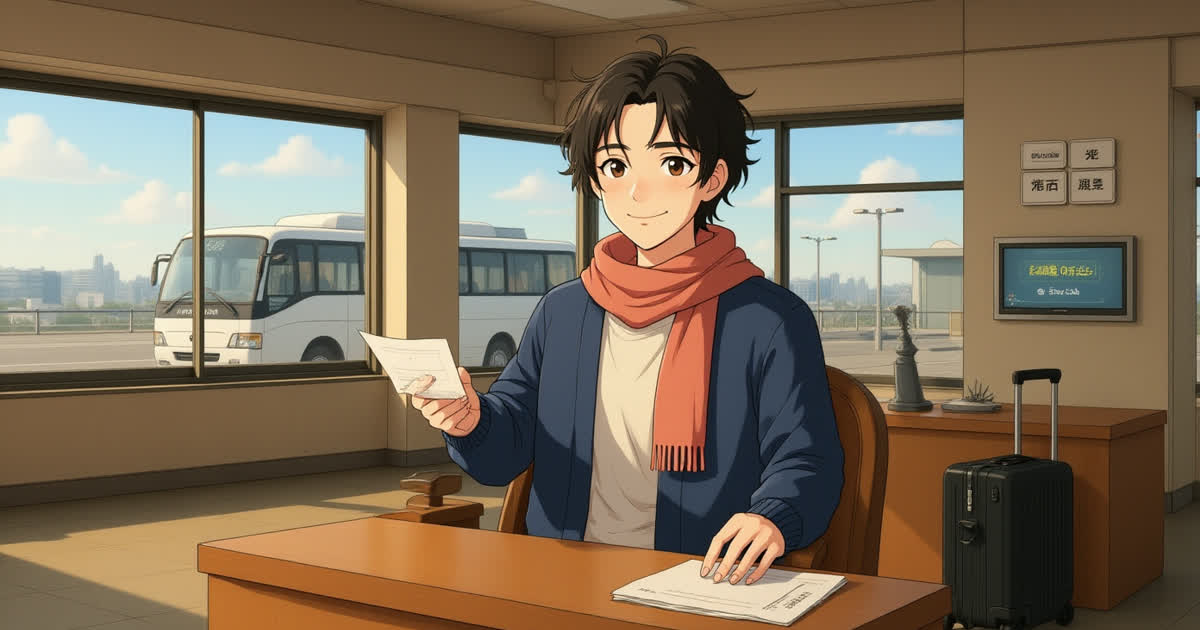
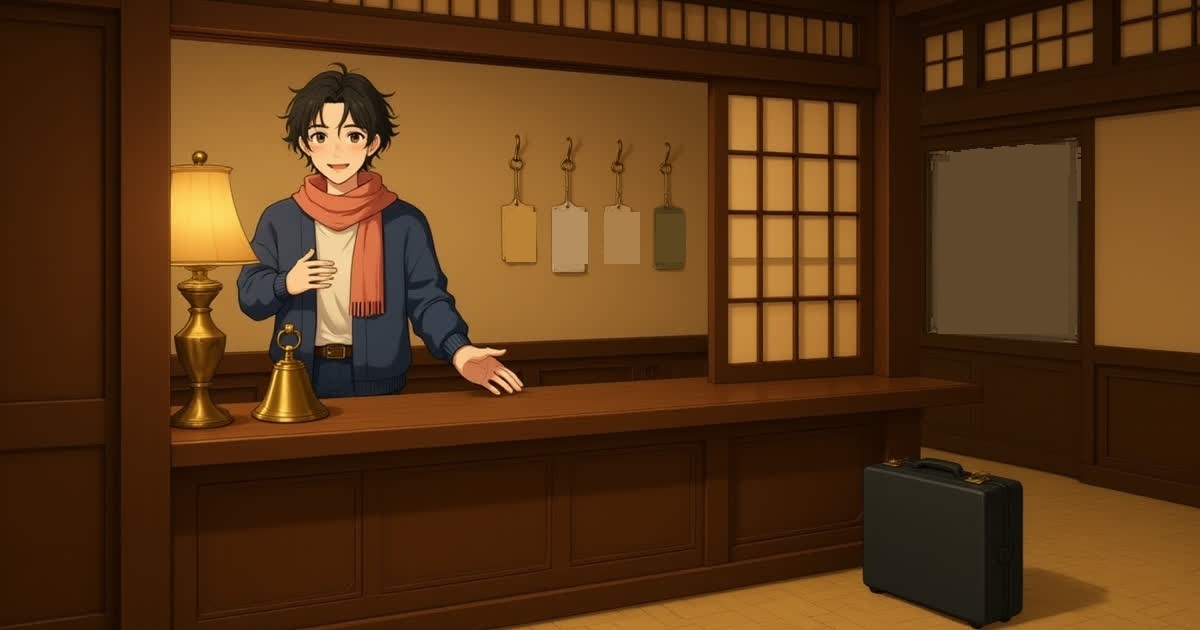
The clerk found the booking and held out the key. The thanks that came back was the one a boss uses. The reel above, published 11 October 2026, is that desk. Kōfuku says ご苦労様です. The clerk in the reel does not correct it. The line still goes downhill. This page is what the words mean, why a guest sounds like the clerk's boss, and the thanks to use instead.
What does ご苦労様です mean at a Japanese hotel desk?
ご苦労様です (Gokurōsama desu) is a superior's thanks for work done for them. 苦労 (kurō) is hardship. Shogakukan's Digital Daijisen, on Kotobank, checked 12 October 2026, defines 御苦労様 as the polite way of saying 御苦労 sense 2. That sense is the word you use, toward a peer or someone below you, to acknowledge the trouble when you have asked them to do a job. The entry's limit is 同輩以下 (dōhai ika): a peer, or anyone below you. Its example is 遅くまでご苦労だったね (osoku made gokurō datta ne), you were at it until late. 様 (sama) makes the acknowledgement polite, and です (desu) closes the sentence. At the desk the clerk did the check-in. A guest who answers with ご苦労様です is using the line for someone whose work they can praise. The reel puts the direction in one sentence. 「ご苦労様です」は、上の人が使います。 (Gokurōsama desu wa, ue no hito ga tsukaimasu.) A person above uses ご苦労様です. 上 (ue) is above. You write は and you say wa.
How do you pronounce ご苦労様です?
Say go-ku-ro-o-sa-ma, then de-su. That is eight beats: ご, く, ろ, う, さ, ま, で, す. The ō in gokurō is long. It is the う after ろ, and it is its own beat. A short gokurosama drops that beat and is not the reading. Daijisen prints the historical kana as ゴクラウ. You do not say rau. Today that ウ is the long o. 様 is sama, not san. The looser form is ご苦労さん (gokurōsan). The Seisen Nihon Kokugo Daijiten, on the same Kotobank page, says the casual ごくろうさん is often used as well. San is still the short form from above. Shortening the word does not turn it into a guest's thanks. です is for work still in front of you. でした (deshita) is the past, after the job is done. The reel uses です. The line is a statement. There is no か on the end.
Why does ご苦労様です sound like the guest outranks the clerk?
Because the acknowledgement travels downward. The Agency for Cultural Affairs' 敬語の指針, dated 2 February 2007, says in question 27 that 御苦労様 is, in the main, for a person who did a job for your side. The example is a shop clerk who made a delivery. It names the feeling ねぎらい (negirai), and says that feeling goes from a higher person to a lower one, so you should not use 御苦労様 toward someone above you. The same lines say お疲れ様 is unnatural in that delivery case. A hotel clerk who found the booking fits the shape. They did the work, and the guest is the one who can praise it. The guest did not hire the clerk. ご苦労様です still speaks as if they had. The guideline treats that downward line as an ordinary thing to say to a clerk who served you. The clerk hears the rank.
What should a guest say to the clerk instead?
Say ありがとうございます (arigatō gozaimasu). That is thanks, and it does not place you over the clerk. Use it while the clerk is still helping. Once the key is in your hand, or once checkout is done, close with ありがとうございました (arigatō gozaimashita). The 2007 guideline uses that past form when 御苦労様 was aimed upward, at a boss who had helped you. At the desk the direction runs the other way, and the problem is the ranking. The reel's repair is the same thanks. If the desk is busy, lead with すみません (sumimasen). The すみません page is that opener. The o in arigatō is long. It is the う after と. Do not repair ご苦労様です by switching to お疲れ様です. The guideline says that word is unnatural when the other person simply did a job for you. The お疲れさまです reel is the greeting for someone you worked beside. A clerk who just checked you in is not that person.
How is ご苦労様です different from お疲れ様です?
ご苦労様です looks at the job. お疲れ様です (otsukaresama desu) looks at the tiredness. Daijisen's 御疲れ様 entry, checked 12 October 2026, says ご苦労様 goes from a higher person to a lower one, and お疲れ様 goes to coworkers and to people above you. You can also say お疲れ様 to someone leaving the workplace ahead of you. The published reel writes お疲れさまです, with れ in kana. Same word. Umebayashi Hirohito, writing on the National Institute for Japanese Language and Linguistics site on 24 July 2024, calls the rank-only rule a workplace shorthand. A section chief can say 長い間、ご苦労様でした (nagai aida, gokurōsama deshita) to a retiring department head, because the line is about the years of work. That is not a guest's thanks for a key. He is firm about a favor done for you. A teacher who just taught, a person who picked up your wallet, a doctor who just operated: you do not say お疲れ様. You say ありがとうございます first. The desk is that case.
When does a boss actually say ご苦労様です?
A boss says it downward, about work the other person did. Daijisen's 遅くまでご苦労だったね is that shape. The guideline's delivery clerk is the same shape outside an office. ご苦労様です is the present, while the person is still there. ご苦労様でした is after they finish. ご苦労さん is the short casual form, and it is still downward. A third Daijisen sense is a sneer. この暑いのにご苦労なことだ (kono atsui no ni gokurō na koto da) means the trouble looks wasted. You will not need that one at check-in. If a textbook lists ご苦労様です as a polite thank-you and stops, it left out the direction. The reel is the correction. The Agency's fiscal 2005 survey, taken from 14 February to 14 March 2006 and published on 26 July 2006, asked what you say to people you had just worked with, once the job was over. To someone above them, 69.2 percent said お疲れ様 and 15.1 percent said ご苦労様. To someone below them, 53.4 percent said お疲れ様 and 36.1 percent said ご苦労様. A guest was not on that shift. The share that rises toward someone below is ご苦労様.
What do you say when check-in is finished?
Say ありがとうございました once the clerk is done. ありがとうございます is for while they are still helping: finding the booking, copying the passport, setting out the key. When the passport comes back, the check-in guide is the paperwork they just did, and the thanks is still ありがとうございます, not a ranking of that walk to the copier. If you need their attention first, say すみません. Other signs in the building are different sentences. The hanger that keeps housekeeping out is 起こさないでください, on the door page. The wall slot for the room key is a different ください, on the card page. This page stays on the words across the counter. Thanks during the help. Thanks again when it is over. Leave ご苦労様です for a boss.
ご苦労様です is a superior's thanks for the work. At the desk it sounds like you outrank the clerk. Say ありがとうございます.