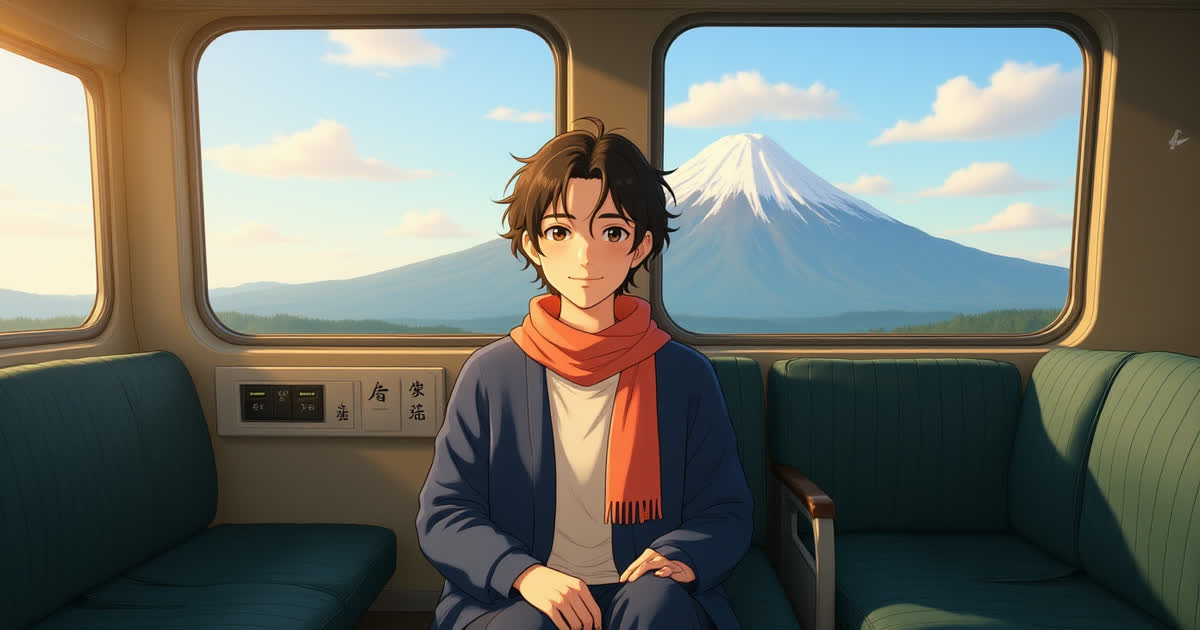
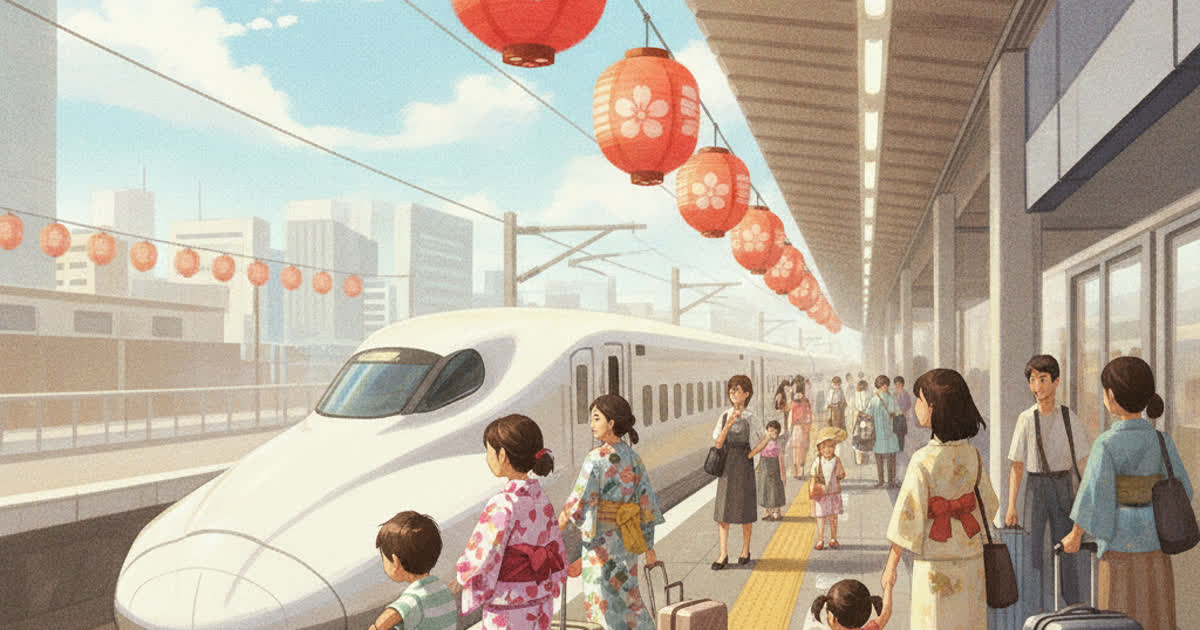
For a few days in mid-August, Japan runs in reverse. The trains that normally carry people into the cities are full of people leaving them, luggage racks are stacked to the ceiling, and the shop on the corner that was open every day for a year has a handwritten note taped to the shutter. This is お盆 (obon), the season when ancestors' spirits are said to come home and the living travel back to meet them. It is not a shutdown and it is not a reason to change your trip — but it is the one week of summer where booking a seat a month early is the difference between a pleasant afternoon and three hours standing in a vestibule.
Should you travel in Japan during Obon?
Yes — with two adjustments. Book long-distance transport as early as the system allows, and don't schedule a move between cities on the peak days. Obon is a rush, not a closure: the country is in motion, so the capacity tourists share with returning families gets eaten. Everything you came for stays open, and the season hands you things you cannot buy at any other time of year: neighbourhood dances, river lanterns, and a mountainside on fire above Kyoto. Visitors who reserve in advance barely register the crowds. Visitors who improvise spend the week reading the word 満席 (manseki, full).
When exactly is Obon in 2026?
The core of Obon is 13–16 August 2026, Thursday through Sunday, with the travel rush smeared across roughly 8–16 August. 山の日 (Yama no Hi, Mountain Day) is a public holiday on Tuesday 11 August, so a lot of companies take the Monday off, bridge into the weekend before, and end up with a nine-day お盆休み (obon-yasumi). Obon itself is not a national holiday, which surprises people: offices are legally open, they just aren't staffed. One regional wrinkle worth knowing — parts of Tokyo and Kanto keep the older July calendar and observe Obon on 13–15 July, which is why some Tokyo temples hold their lantern rites a month before everyone else.
Does everything close during Obon?
No, and the split is predictable. Chains and infrastructure keep running: コンビニ (konbini), supermarkets, department stores, chain restaurants, trains, buses, temples, shrines, museums, aquariums, and theme parks are all open, and the famous ones are busier than a normal August day. What closes is the small and the personal — family-run restaurants, independent shops, neighbourhood clinics, and workshops shut for three or four days so the family can travel. The tell is a sign on the door: 本日休業 (honjitsu kyūgyō, "closed today") or お盆休み with the dates. Banks, post offices, and city halls close only for Mountain Day on 11 August.
How far ahead do you need to book a Shinkansen for Obon?
Book the instant the window opens: exactly one month before your departure date, from 10:00 a.m. Japan time, at a みどりの窓口 (Midori no Madoguchi, the JR ticket office) or online. Obon changes the rules on the fastest trains — JR runs every のぞみ (Nozomi) and みずほ (Mizuho) service as 全車指定席 (zensha shiteiseki, all cars reserved) through the peak, so the usual fallback of piling into the unreserved cars simply doesn't exist. Departures out of Tokyo on 13 August and returns on 16 August can clear out within minutes. A rail pass doesn't exempt you either; it only makes the seat cheaper. If the difference between seat types is new to you, the reserved versus unreserved seat guide covers what you're actually buying.
What are the worst days to travel during Obon?
Outbound on 13 and 14 August, and back on 15 and 16 August. The first wave is the 帰省ラッシュ (kisei rasshu), the whole country heading to its hometown at once; the second is the U-turn rush pouring back into the cities before work restarts. On the expressways this shows up as 渋滞 (jūtai, traffic jams) of 30 to 40 kilometres on those mornings, which makes a rental car the single worst way to cover distance that week — a 3-hour drive becomes 6. Trains stay exactly on time; they're just full. The calm days are 11–12 August and anything from 17 August on. Learning to hear whether the trains are running at all is more useful during typhoon season than Obon, but the phrase earns its keep either way.
Is Tokyo empty during Obon?
Largely yes, and it is one of the quiet pleasures of the Japanese year. Residents leave for their 実家 (jikka, the family home), so rush-hour trains loosen, restaurant queues shrink, and business-hotel rates in central Tokyo and Osaka often dip in the middle of peak season. The pressure just relocates: hometown regions, the coast, and hot-spring towns fill up and charge accordingly. The move, if your dates are fixed, is to invert the usual plan — sit in a big city across 13–16 August and do the rural legs on either side of the peak. And if you are moving hotels that week, sending the suitcase ahead by takkyubin keeps a full carriage bearable for everyone in it.
What should you do in Japan during Obon?
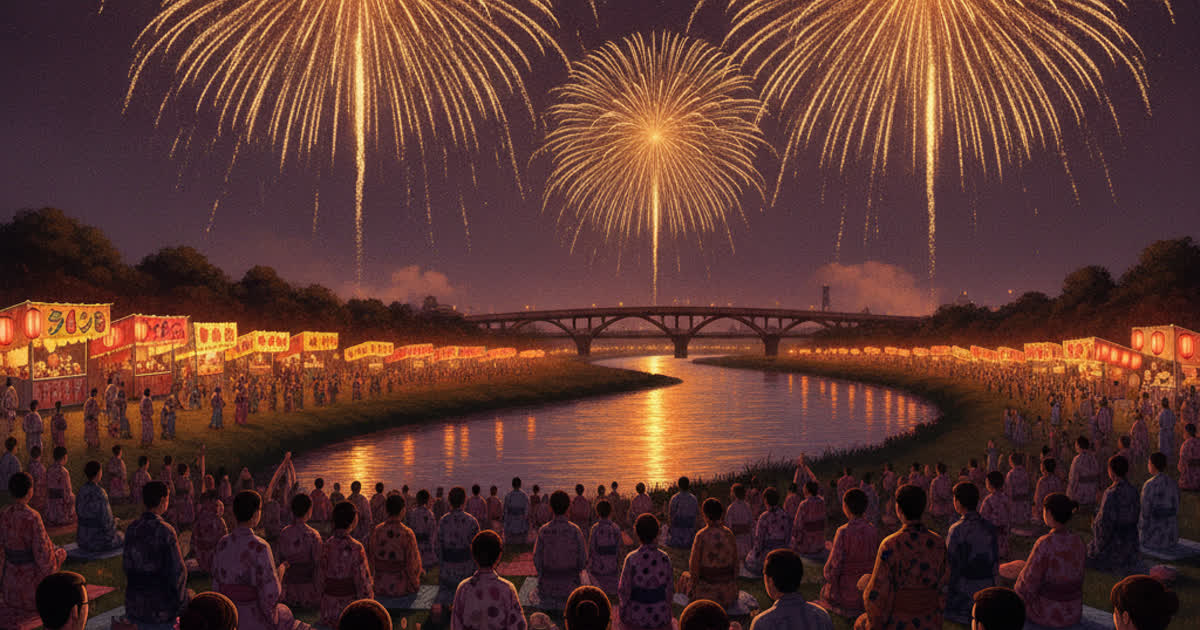
Find a 盆踊り (bon odori). Almost every neighbourhood builds a やぐら (yagura, a drum tower) in a park or shrine yard for one or two evenings, and the circle of dancers around it is open to anyone who walks up — the one sentence that gets you into the circle is all the preparation needed. The larger versions are worth planning around: 阿波踊り (Awa Odori) in Tokushima on 12–15 August, and Kyoto's 五山送り火 (Gozan no Okuribi), five giant fire characters lit on the mountainsides on the night of 16 August to send the spirits back. Many towns also hold 灯籠流し (tōrō nagashi), floating paper lanterns down a river at dusk. It costs nothing and nobody is checking whether you belong there. Pair it with a summer fireworks night and a yukata and you have the entire Japanese summer in one week.
What Japanese words do you need during Obon?
Six words carry the season. お盆 (obon) is the period; お盆休み (obon-yasumi) is the closure you'll read on shop doors; 帰省 (kisei) is going back to one's hometown; 満席 (manseki) is "full, no seats"; 指定席 (shiteiseki) is a reserved seat; 渋滞 (jūtai) is a traffic jam. 満席 is the one that will actually stop you, flashing on a station board or said flatly at a ticket window, and 指定席をお願いします (shiteiseki o onegai shimasu, "a reserved seat, please") is how you fix it. Two more make the culture legible rather than the logistics: お墓参り (ohaka-mairi), the grave visit at the heart of the whole thing, and 送り火 (okuribi), the farewell fire on the last night.
One piece of etiquette to carry into the week: if you find yourself at a cemetery in mid-August, among families washing headstones and setting out flowers and cold cans of coffee for the dead, keep the camera down and give them room. It is the most private thing happening in public in Japan all year, and the same instinct that makes you a welcome guest there is the one behind the unwritten train rules. Add the August heat — 35 °C with humidity, so know the signs of heatstroke before you commit to a long outdoor evening. Then watch the 60-second explanation of why the trains are packed, open the reservation site one month before your travel date, and enjoy the emptiest Tokyo you will ever see.