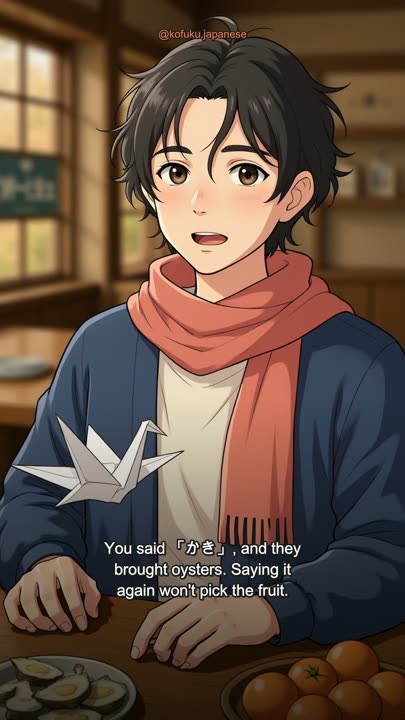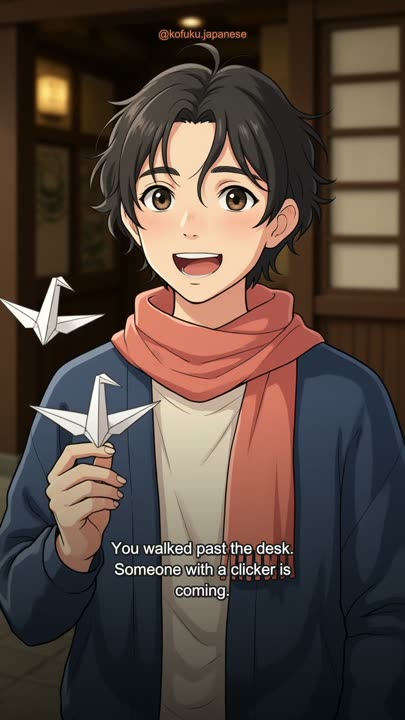
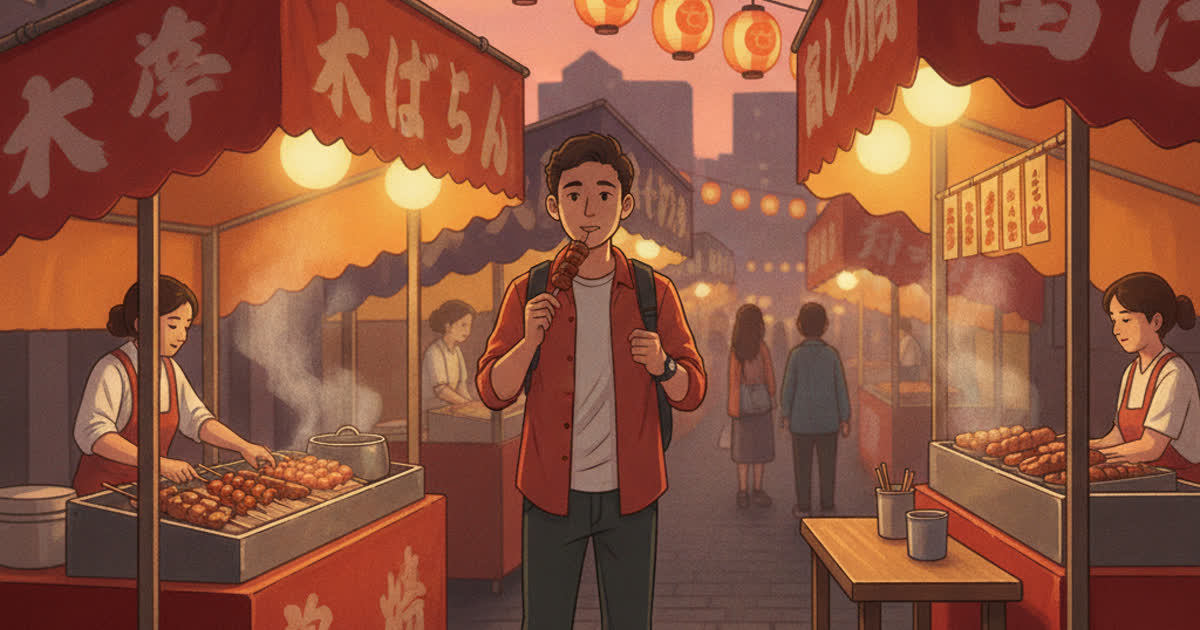
The stall hands over the skewer, hot, in a paper sleeve, and you turn to keep drifting down the row of lanterns with everyone else. That is the moment. Nobody will stop you, nobody will say a word, and half the street just quietly decided you are a tourist. The rule you walked past is on a small sign by the counter, and it is one of the easiest ones in Japan to get right once you know it exists.
Is it rude to eat while walking in Japan?
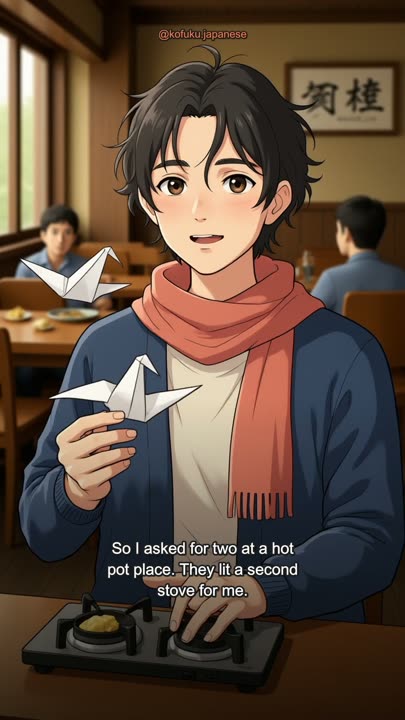
Yes, mildly — it reads as sloppy rather than offensive, and the fix takes four seconds. 食べ歩き (tabearuki, "eating while walking") is frowned on across most of Japan because food dripping in a packed crowd lands on someone else's sleeve, and because eating is treated as a thing you stop and do, not something you multitask. Nobody will scold you. What actually happens is subtler: people give you room, staff watch the ground behind you, and you have marked yourself as someone who did not read the street. The socially correct move is to buy the food, step aside to the standing spot beside the stall, eat it there, then walk on — which is exactly what the reel above demonstrates in twenty seconds.
Is eating while walking illegal in Japan?
No. There is no national law against eating in the street anywhere in Japan, and no police officer is going to fine you for finishing a croquette on the move. What exists instead are two softer layers. The first is plain etiquette — unwritten, universal, enforced only by the faces around you. The second is local: a handful of towns and merchant associations have posted actual bans on specific streets, some of them backed by a municipal ordinance (条例, jōrei) that asks visitors to refrain but attaches no penalty. So the honest answer is that you are never breaking a law, and you are often breaking a rule. Treat a posted sign as binding and the unposted rest as manners, and you will never get it wrong.
Where in Japan is eating while walking banned?
Narrow, crowded food streets are where the bans live, and three are worth knowing before you go. Kyoto's 錦市場 (Nishiki Ichiba, Nishiki Market) is the strictest: the merchants' association asked shoppers to stop eating while walking after years of dropped food and clogged aisles, and most stalls now keep a counter or a marked standing area where you eat what you just bought. Osaka's 黒門市場 (Kuromon Ichiba) runs the same way — you buy the scallop, you eat it right there at the stall. Kamakura passed a manners ordinance covering 小町通り (Komachi-dōri) and the streets around the temples, asking people not to eat on the move; there is no fine, but the signs are everywhere and locals notice. Beyond those, assume a ban on any 商店街 (shōtengai, covered shopping street) that has posted one, inside every station building, and in any shrine or temple precinct. At an open-air summer matsuri with room to stand, the rule relaxes — but even there, the crowd eats standing still, off to the side.
What does a tabearuki kinshi sign say?
You are looking for four characters, and they will be on a laminated A4 sheet at roughly eye level. 食べ歩き禁止 (tabearuki kinshi) is the blunt version — 禁止 (kinshi) means prohibited, full stop. The polite version is far more common and easy to miss because it looks like a paragraph: 食べ歩きはご遠慮ください (tabearuki wa go-enryo kudasai), "please refrain from eating while walking." That phrase, go-enryo kudasai, is Japan's standard soft no, and it means exactly the same thing as the hard one. You may also see 歩きながらの飲食はご遠慮ください (arukinagara no inshoku wa go-enryo kudasai), which covers drinks as well as food. If you cannot read any of it, the pictogram gives it away: a walking figure holding food, inside a red circle with a line through it.
Where are you supposed to eat street food in Japan?
Right where you bought it — that is the whole system, and the stall is built for it. Almost every 屋台 (yatai, food stall) keeps a small standing area, a low counter, or a stretch of wall beside it for exactly this, because 立ち食い (tachigui, eating standing up) is completely normal in Japan and carries none of the stigma that walking does. Markets and konbini often have an イートインスペース (īto-in supēsu, eat-in space) with a counter and stools. If it is not obvious where to stand, ask — ここで食べてもいいですか (koko de tabete mo ii desu ka, "is it okay to eat here?") is the one sentence that solves this permanently, and it uses the same 〜てもいいですか pattern as asking whether you can take a photo. Then finish it, and only then start walking. If you would rather take it back to your hotel, 持ち帰りできますか (mochikaeri dekimasu ka, "can I take this to go?") gets it wrapped.
What do you do with the trash after eating street food in Japan?
Hand it back to the stall that sold it to you. This is the second half of the rule and the actual reason the first half exists: Japan has almost no public bins, so a skewer, cup or tray you carry away with you has nowhere to go for the next two hours. Stalls keep a bin or a stick-collection tin right at the counter and expect you to use it, which only works if you are still standing there when you finish. If you have already walked off, your options are a konbini bin (buy something, or at least ask), the recycling bins beside a vending machine for cans and bottles only, or a plastic bag in your daypack until you get back — locals genuinely carry their rubbish home. ゴミ箱はどこですか (gomi-bako wa doko desu ka, "where is the trash can?") will get you pointed somewhere, though the honest answer is often that there isn't one. Sorting matters too: burnable, plastic and cans go in different slots, and the pictures on the lids tell you which.
Can you eat and drink on trains in Japan?
On long-distance trains yes, on commuter trains no — and the dividing line is whether your seat has a tray table. Shinkansen and limited-express trains are made for eating: the 駅弁 (ekiben, station bento) exists purely so you can buy a boxed meal on the platform and eat it in your reserved seat, and nobody blinks. A packed local or subway line is the opposite — no food, strong smells least of all, and drinks kept to a capped bottle you sip discreetly. It is the same logic as the street: sitting still is fine, moving through a crowd with food is not. The rest of the unwritten carriage rules are in our guide to Japanese train etiquette.
One habit covers all of it: buy, step aside, stand still, finish, bin it, walk on. Do that at a market or a festival row and you will look like you have done this before. For the phrases that go with the food itself, read Japanese for foodies visiting Osaka or how to say food allergy in Japanese, and browse all our travel reels.