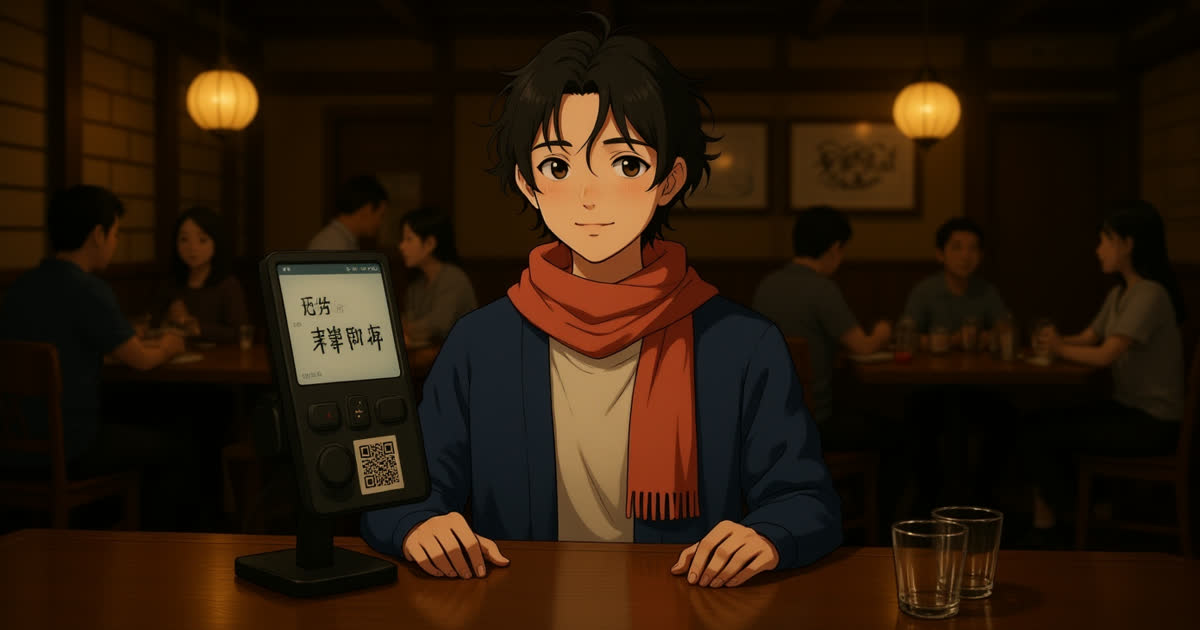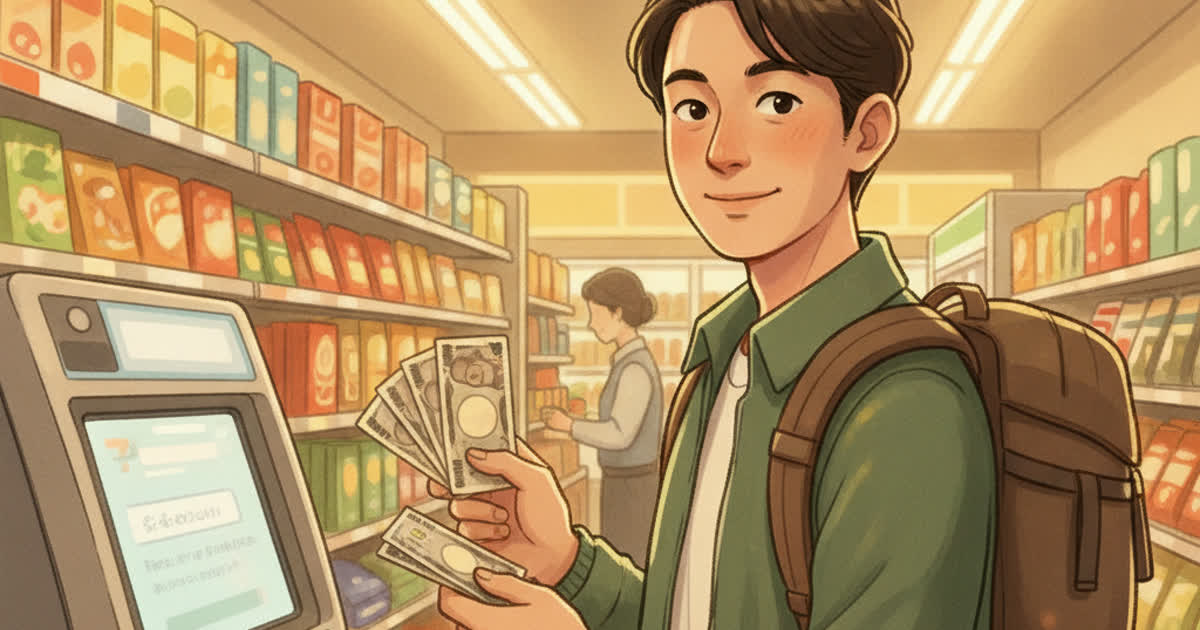
You paid by card at the hotel, the department store, and the 7-Eleven. Then a cafe with a card reader sitting on the counter refuses your Visa for a 400 yen coffee. This is not cash-only. It is a minimum. Japan looks cashless until a small shop's floor amount kicks in. The reel above is the sentence; below is when it applies, how to ask before you order, and what to do when the bill is short.
From how much can you use a card in Japan?
Many shops that take cards still set a floor, often ¥1,000, ¥2,000, or ¥3,000, so a small coffee, a single onigiri, or a bowl of ramen can be refused even when a terminal is in plain sight. The shop is not cash-only. It is cash-below-the-line. Chains, convenience stores, hotels, and department stores usually have no floor at all. Independent cafes, neighbourhood restaurants, and tiny souvenir shops often do. Ask カードはいくらから使えますか (kaado wa ikura kara tsukaemasu ka), "from how much can I use a card?", before you order, not at the register after the food is made. If you only needed to know whether cards work at all, that is a different sentence, covered in whether you can pay by card in Japan.
What does カードはいくらから使えますか mean?
It means "from how much can I use a card?" Break it in four. カード (kaado) is the card. いくら (ikura) is "how much." から (kara) is "from," the same "from" you use for a starting amount, not "because." 使えますか (tsukaemasu ka) is "can it be used?" Together they ask for the floor, not for permission. That is why this sentence is sharper than カードは使えますか (kaado wa tsukaemasu ka), "can I use a card?", which only gets a yes or no. Pair it with すみません (sumimasen) at the front: すみません、カードはいくらから使えますか. The usual reply is a number plus 円から (en kara) or 円以上 (en ijō), "yen or more," or a finger pointed at a small sign on the register. For asking the price of the thing itself, いくらですか is the other half.
Why do Japanese shops set a card minimum?
Card fees eat a small sale. A typical merchant rate sits around three percent, and the terminal itself is rented, so a 400 yen coffee costs the shop about 12 yen in fees, which on a thin cafe margin is the whole profit. Cash has no percentage. A ¥3,000 floor is the shop drawing a line under which the fee is not worth the swipe. This is most common at independent cafes and family restaurants, not at chains that negotiated a better rate. It is also why a Suica or Pasmo tap often still works on the same counter: IC and QR payments run on a different, cheaper rail, so the credit-card floor does not always apply to them. The sign by the register is the shop telling you its own line, not a national rule.
How much is a typical card minimum in Japan?
¥1,000, ¥2,000, and ¥3,000 are the three numbers you will see most. ¥1,000 is the polite cafe floor: enough to cover a coffee plus a small plate. ¥2,000 and ¥3,000 show up at independent restaurants and some souvenir shops. ¥5,000 exists but is rarer, usually a tiny shop that barely wants cards at all. The sign is usually printed as カードは1,000円以上 (kaado wa sen-en ijō), "cards from 1,000 yen up," or クレジットは3,000円から (kurejitto wa sanzen-en kara), "credit from 3,000 yen." Some signs say 少額は現金でお願いします (shōgaku wa genkin de onegaishimasu), "small amounts in cash, please," with no number, which means you should ask. There is no single nationwide floor. The number is the shop's, and it can change between two cafes on the same street.
How do you ask the minimum before you order?
Ask at the door or as you sit down, before anyone writes anything down. Raise a hand, say すみません、カードはいくらから使えますか, and wait for the number. If you already see a sign, read it: a number plus 円以上 or 円から is the floor. If the answer is a number higher than you planned to spend, you still have three clean exits: pay cash, add an item, or walk out before the order is in. Asking after the food arrives puts the staff in the awkward position of holding a finished plate over a bill they cannot swipe. The sibling sentence, カードは使えますか, is the yes-or-no check for a place that might be cash-only. Use that first if there is no reader in sight; use the "from how much" sentence once you can see a terminal.
What if your bill is under the card minimum?
Pay cash, add something, or switch rails. Cash is the cleanest: have a ¥1,000 or ¥5,000 note ready and say 現金でお願いします (genkin de onegaishimasu), "cash, please." Adding a drink, a dessert, or a takeaway item to clear the floor is what regulars do, and the staff will not think it is strange. The third option is to ask whether an IC card or a QR app works instead: Suicaは使えますか (Suica wa tsukaemasu ka) or PayPayは使えますか (PayPay wa tsukaemasu ka). Those often have no floor even when Visa does. Do not argue the fee. The shop set the line because the swipe costs them money, and pushing it only slows the queue. If you have no cash at all, the nearest 7-Eleven ATM that takes a foreign card is the actual fix, not a longer conversation at the register.
Do convenience stores and chain restaurants have a card minimum?
Almost never. 7-Eleven, Lawson, and FamilyMart take Visa, Mastercard, IC tap, and usually contactless with no floor, including on a single onigiri. Family restaurants, big ramen chains, department-store food halls, hotels, and ticket machines work the same way. The minimum is a small-shop habit, not a convenience-store habit. That is why a day that is all chains can feel fully cashless, and a day of back-street cafes cannot. Keep ¥3,000 to ¥5,000 in cash for the gaps, refill at a konbini ATM when you dip, and treat the card as the default only where the shop is clearly a chain. How much cash to carry, and why Japan still needs it is the short version of that split.
The short version is the one in the reel: the reader on the counter does not mean your 400 yen coffee will go through. Ask カードはいくらから使えますか before you order, keep enough cash to cover a small bill, and try Suica or PayPay when the credit-card floor is the only problem. For the rest of paying in Japan, read whether you can pay by card at all and which ATMs take a foreign card, or browse all our travel reels.