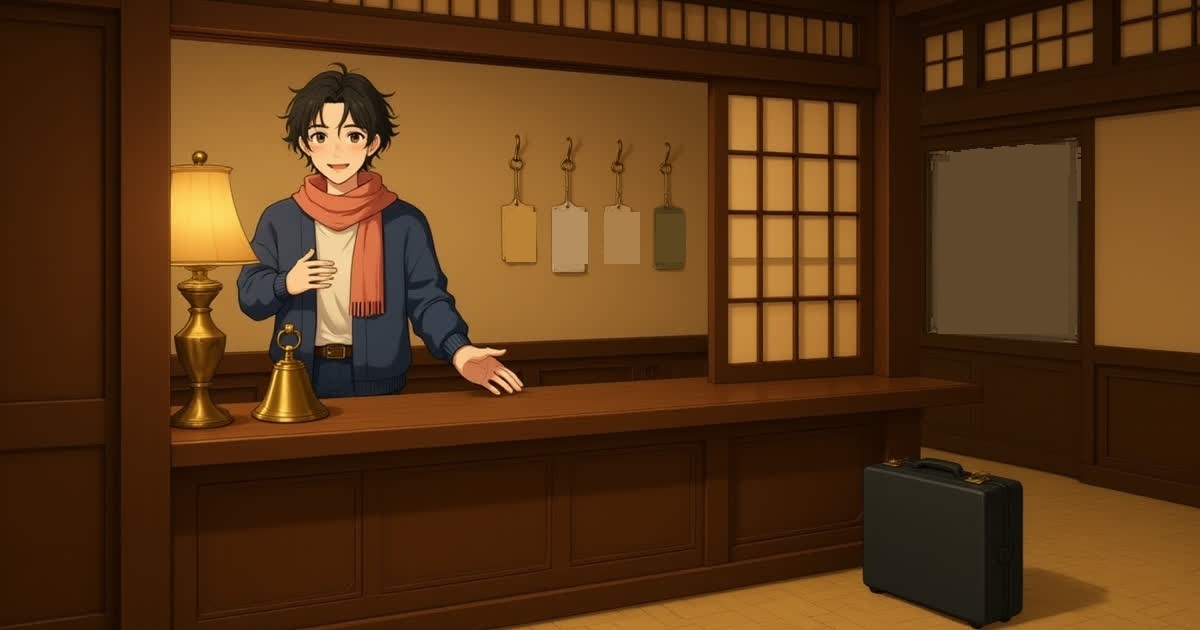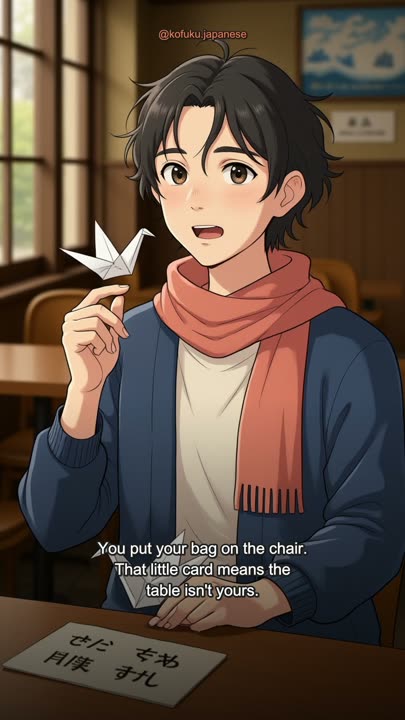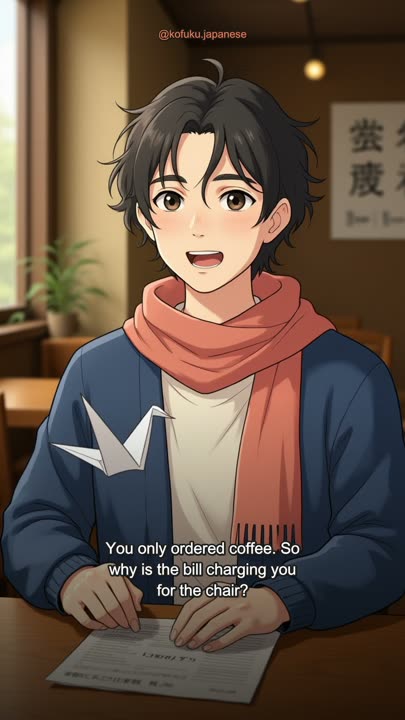
The reel above, published 17 October 2026, is a luggage counter. The box that looks like pay on arrival bills the hotel that receives the suitcase. The line you want is 元払いでお願いします. This page is that checkbox: who pays the shipping, what the other box does, and what to say before the bag leaves.
What does 元払いでお願いします mean at a Japanese luggage counter?
元払いでお願いします (motobarai de onegai shimasu) means I'll pay the shipping now. Shogakukan's Digital Daijisen, on Kotobank, checked 24 October 2026, reads 元払い as もと‐ばらい and defines it as the sender paying the shipping fee or the price. The sender is the 差出人 (sashidashinin). でお願いします names that method as a polite request. At a luggage counter the method is the freight on this suitcase. You pay before the bag leaves. The hotel that receives it pays nothing for the shipping. The reel's English for the line is the same claim: I'll pay the shipping now. Daijisen sets 元払い opposite 着払い. The two boxes on the slip are that pair. Say the line while the slip is still blank. If the collect box is already marked, use the reel's correction, below, and ask the clerk to switch it.
How do you pronounce 元払いでお願いします?
Say mo-to-ba-ra-i de o-ne-ga-i shi-ma-su, thirteen beats: も, と, ば, ら, い, で, お, ね, が, い, し, ま, す. Daijisen's headword is もと‐ばらい〔‐ばらひ〕. 元 is moto. The on reading gen, as in 元気 (genki), is a different reading of the same kanji. 払い on its own starts with h. After 元 that h becomes b, which is why the headword writes ばらい. None of the vowels is long. There is no small っ and no ん. で is the particle de. お願いします is seven beats and keeps the final す. The う in す is often a whisper, and it still counts. There is no か on the end. The line is a request, not a question. 着払い (chakubarai) is five beats: ちゃ, く, ば, ら, い. 着 here is chaku. It is the on reading. 着る (kiru, to wear) uses ki. 着く (tsuku, to arrive) uses tsu. The arrival question on the luggage how-to, いつ着きますか, uses 着く. This box uses chaku.
What does the other box, 着払い, bill?
着払い (chakubarai) means the receiver pays. Daijisen, checked 24 October 2026, reads it ちゃく‐ばらい and defines it as the receiver paying the shipping fee or the price. The receiver is the 受取人 (uketorinin). The same entry lists 先払い (sakibarai) and 向こう払い (mukōbarai) as other names for that receiver-pays method, and it points back to 元払い as the opposite. In that dictionary sense, 先 in 先払い is the receiver-pays name, not a promise that you pay first. The reel's correction is one sentence: 着払いではなく、元払いでお願いします。 (Chakubarai de wa naku, motobarai de onegai shimasu.) The は in ではなく is pronounced wa. Japan Post's Yu-Pack FAQ, checked 24 October 2026, says the recipient can pay by 着払, and that 着払 needs the recipient's consent. The same company's 着払 fee page says the commission on a Yu-Pack is free. Free commission means no extra collect fee on that service. The shipping fare is still due, and the person who receives the bag is the one asked to pay it.
Why can a hotel refuse a bag sent 着払い?
A hotel can refuse the bag because 着払い asks that desk to pay freight the hotel never agreed to. The next hotel is the receiver. Japan Post's own line is that 着払 needs the recipient's consent first. APA Hotel Roppongi Ekimae states the rule in public. Its Jalan FAQ, updated 26 January 2026 and still that page on 24 October 2026, answers a question about sending luggage ahead with 元払いのみ可能でございます。着払いは受け取り不可となりますので、ご注意下さい。 Only a sender-paid bag is accepted. A collect bag is refused. The same answer asks you to write the check-in date and the guest's full name, in フリガナ (furigana), on the slip. Staff look the name up against the reservation. A name that does not match is refused as well. The hold is room temperature, 常温 (jōon). Cool shipments, refrigerated food, frozen food, raw food, and flowers are refused on hygiene grounds. That is one hotel's written rule. Another desk may take a collect bag. The safe request at the counter where you are standing is still 元払いでお願いします, because you are the person who agreed to the charge. Say it before the suitcase leaves.
What does Yamato print when the sender pays?
Yamato Transport prints 発払 for the same sender-pays choice. Its send-preparation page, checked 24 October 2026, labels the payment columns 発払 and 着払. The spoken form adds い: 発払い (hatsuharai) and 着払い. 発払い is five beats: は, つ, ば, ら, い. 発 is hatsu, a full つ, not a small っ. 元払い is the word you say, and the word the APA desk prints. 発払い is the word on Yamato's paper for that same sender-pays column. Tell the clerk 元払いでお願いします. The clerk reaches for the sender-pays slip, whether the heading says 元払い or 発払い. Yamato's FAQ on where to pick up those slips, number 1898, calls them 着払いや発払い伝票. The heading on the paper can say either word. The spoken line picks the sender.
How is this different from the takkyubin guide and from 代金引換?
This page is only the payment box. The takkyubin guide is the rest of the errand: where you drop the suitcase, how long it takes, and the lines for asking for a form. 代金引換 (daikin hikikae) is a different service. Daijisen, checked 24 October 2026, reads it だいきん‐ひきかえ. Sense 1 is handing over the item at the same moment its price is paid. Sense 2 is the postal special handling: the post office gives the item to the receiver in exchange for the price, then sends that money to the sender. The short name in that entry is 代引き (daibiki). That service collects the price of goods. 着払い on a luggage slip collects the freight. Your suitcase is not a purchase. 一括払い (ikkatsu-barai), on the card-terminal page, is a third 払い: charge the whole card amount at once. Each one collects a different thing. Keep the passport, medicine, and chargers in the bag you carry. The payment box does not change that. The reel was published 17 October 2026.
元払いでお願いします。 means I'll pay the shipping now. The other box bills whoever gets the bag. The short reel is the checkbox.