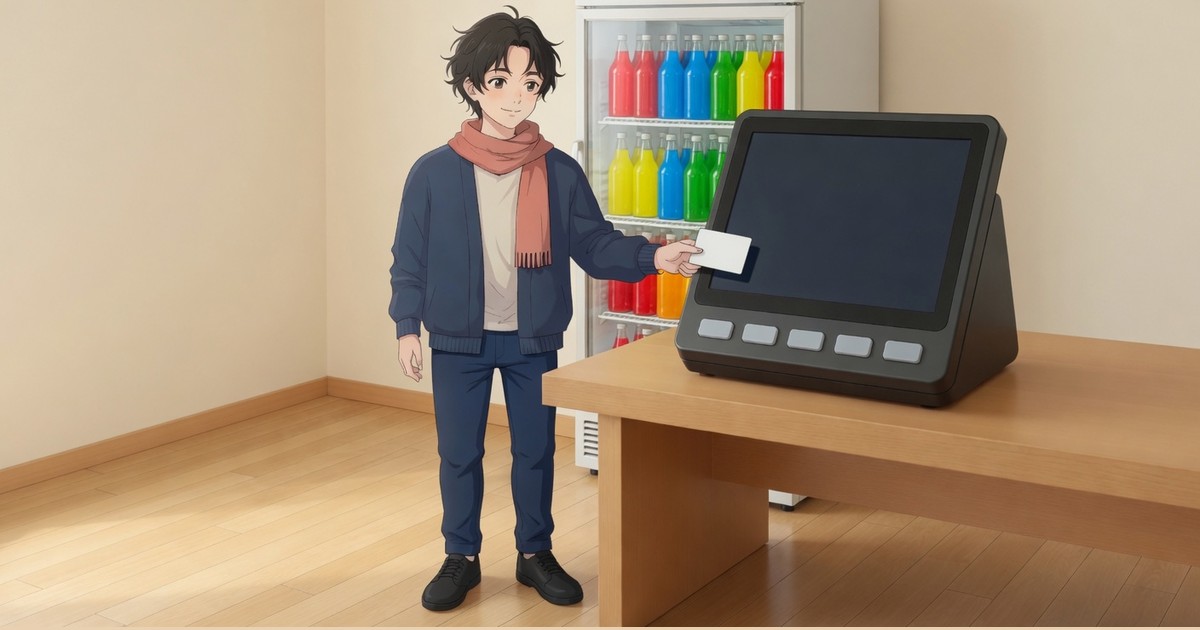
The screen in the reel above, published 13 October 2026, is a card terminal at a Japanese convenience-store counter. The key that clears a foreign card is 一括払い. This page is that one label: what the lump sum is, what ボーナス means on the same screen, and the line you say when the machine beeps.
What does 一括払い mean on a Japanese card terminal?
一括払い (ikkatsu-barai) means charge the whole amount at once. 一括 (ikkatsu) is one bundle. Shogakukan's Digital Daijisen, on Kotobank, checked 15 October 2026, defines it as gathering things into one, and the progressive Japanese-English dictionary's example is paying for a car in one lump sum. 払い (harai) is the payment. In this compound the h voices to b, so the spoken word is barai. The Japan Consumer Credit Association, on its payment-types page, calls the matching plan 1回払い (ikkai-barai), also マンスリークリア (mansurī kuria). You buy now and pay the full price the next month. The association says a fee does not apply in general: a ¥10,000 purchase is ¥10,000 on the next bill. On the terminal, 一括 and 一括払い are that key. 1回 is the same plan under a shorter label. The reel's line for it is 一括払いでお願いします。
How do you pronounce 一括払い?
Say ik-katsu ba-ra-i, seven beats: い, っ, か, つ, ば, ら, い. Daijisen's reading of 一括 is いっかつ. The small っ is its own beat, a short hold that doubles the k. Keep that hold. Drop it and the word gets shorter than the dictionary reading. Voice a full つ there and you have added a beat Daijisen does not print. Every vowel is short. 払い on its own is harai, three beats: は, ら, い. In this compound the h voices to b, so the payment half is barai: ば, ら, い. The short label 1回払い is ikkai-barai, seven beats as well: い, っ, か, い, ば, ら, い. 一回 doubles the k the same way 一括 does. The reel's sentence is 一括払いでお願いします。 (Ikkatsu-barai de onegai shimasu.) That is fifteen beats: い, っ, か, つ, ば, ら, い, で, お, ね, が, い, し, ま, す. で (de) marks the method. お願いします (onegai shimasu) is the please. 願 in お願い is read ねが, so the please starts o-ne-ga-i.
What does the ボーナス button mean?
ボーナス (bōnasu) on this screen is a pay-later plan. The Japan Consumer Credit Association calls it ボーナス一括払い (bōnasu ikkatsu-barai): you still pay the full amount in one transfer, and you pay it in the next bonus season. The association says the usual months are July or August in summer and December or January in winter, and a fee does not apply in general. JCB's bonus page, checked 15 October 2026, sets summer use from 16 December through 15 June, paid on 10 August, and winter use from 16 July through 15 November, paid on 10 January. JCB's own example is a purchase on 30 May, paid in full on 10 August, with a fee of ¥0. The same page says the shop's window can differ, and that the plan is closed from 16 June through 15 July and from 16 November through 15 December. JCB's line for that key is ボーナス1回払いで (bōnasu ikkai-barai de). The English word on the key is the name of the season. A gift, a discount, and a points perk are other meanings of the English word.
Why does a foreign card fail on ボーナス and 分割?
A card issued outside Japan usually has no Japanese installment plan on it. Adyen Japan's guide of 24 December 2024 says bonus, installment, and revolving payments are in principle for credit cards issued in Japan. A prepaid card is one-time only, and a debit card is in principle one-time only. Amazon.co.jp's help page, checked 15 October 2026, says installment and revolving checkout are unavailable when the card was issued outside Japan. 分割払い (bunkatsu-barai) is the installment key. The association says you pick the number of payments, and a fee follows the amount and the count. JCB lists 2回払い (nikai-barai) as its own key, and marks that two-payment plan fee-free. 二回 is nikai, with no small っ. Three or more payments are where Adyen says interest starts. リボ払い (ribo-barai) is revolving: a set amount each month, with a fee on the balance that remains. The association says the balance keeps the plan open. The same Adyen page notes a limited Visa program that can offer installments on some cards issued outside Japan, with a separate Visa fee. That program is the exception. The key that matches an ordinary foreign card, a debit card, or a prepaid card is 一括払い. The reel says the split key and the bonus key both fail out loud.
What do you say when the terminal asks how to pay?
Say 一括払いでお願いします。 (Ikkatsu-barai de onegai shimasu.) That is "one lump sum, please." Point at the 一括 key while you say it if the clerk's hand is on the pad. If the screen faces you, press that key and leave ボーナス, 分割, and リボ alone. A shorter label, 1回, is the same plan. If nobody asks and the machine is already waiting, the line still names the plan before a finger lands on the season key. JCB tells its own cardholders to say ボーナス1回払いで when they want the season. Your line is the lump-sum sentence.
How is this different from tap, the card minimum, and cash or card?
This page is the plan on the terminal. The tap page is the pad. タッチしてください (tatchi shite kudasai) means please tap the card or the phone on the contactless reader. That line chooses where the card goes. The plan is a different key. The card-minimum page is the floor. カードはいくらから使えますか (kādo wa ikura kara tsukaemasu ka) asks from how much the shop will take a card. A ¥400 coffee can fail that floor even when the reader is on the counter. The cash-or-card page is whether the shop takes a card at all. Ask カードは使えますか (kādo wa tsukaemasu ka) before you order. This page starts after the answer is yes and the bill clears the floor. The beep in the reel is the wrong plan.
What do you do after the machine beeps?
Name the lump sum and let the clerk run the card again. Say 一括払いでお願いします。 If a bonus or a split charge already went out, the clerk cancels it and sends the same card on 一括. Pressing ボーナス a second time repeats the beep. A debit card uses the same lump-sum key. If 一括 also fails, pay in cash. The ATM page names the machines that take a foreign card. A beep from the season key is fixed by the lump-sum button.
一括払い on a Japanese card terminal is one lump sum. ボーナス is the twice-a-year pay-later plan. A foreign card usually clears on the lump-sum key.