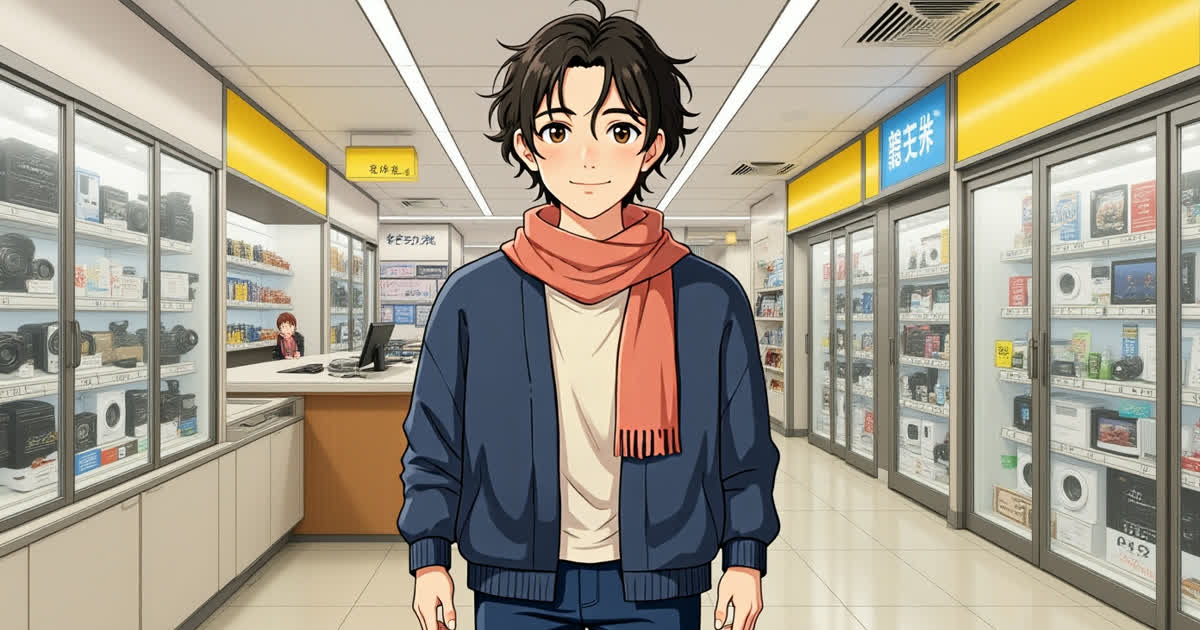
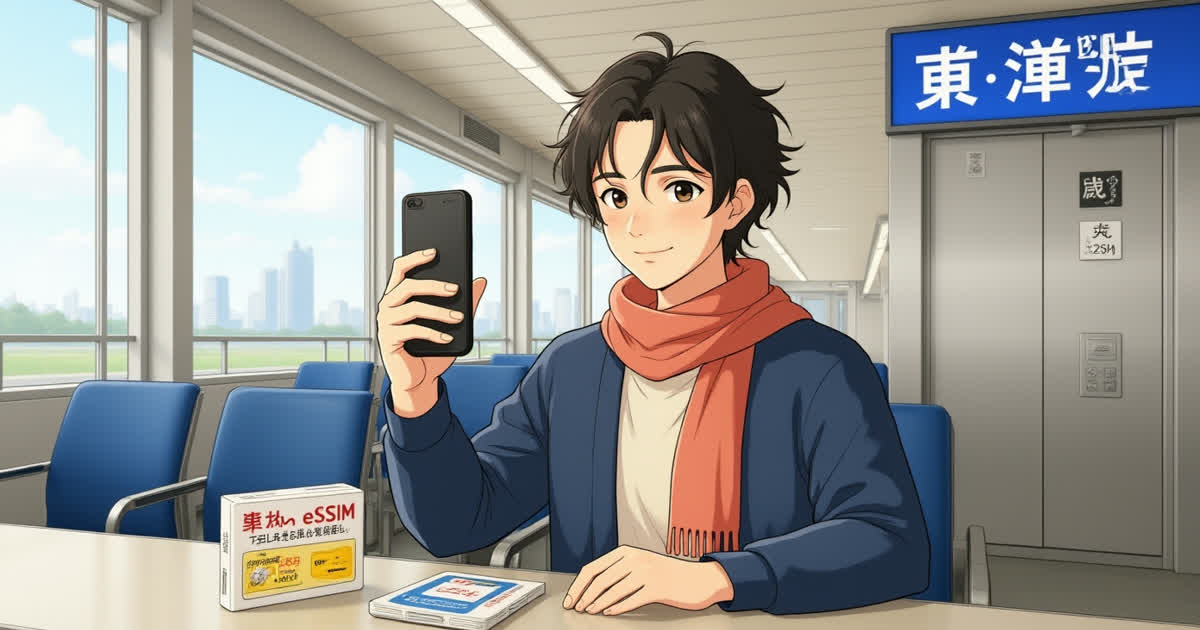
Staying online in Japan is easy once you know where the SIM card actually lives. The one sentence that unlocks everything — SIMカードはどこですか? (shimu kaado wa doko desu ka?), "where is the SIM card?" — works at every airport kiosk, electronics counter and convenience-store aisle in the country. But before you say it, decide which kind of SIM you want, because the answer changes between an eSIM you set up before you fly and a physical card you buy after you land. Here is where to buy, what to say, and what the clerk will say back.
Where do you buy a SIM card in Japan?
You buy one at four places. First, the airport kiosks just after customs — the most convenient option because they are open the moment you land, though they charge the most. Second, the electronics counters on the main floors of big stations and malls, where tourist SIM cards are a normal counter item. Third, dedicated tourist-SIM shops in downtown tourist districts, which cater to visitors and speak some English. Fourth, and cheapest of all, the convenience-store (konbini) aisle — walk in, ask the phrase, and the staff will point you straight to the card shelf or the counter that handles it. If you choose an eSIM, you skip every one of these counters and set it up on your phone before you fly.
What do you say to ask where the SIM card is in Japanese?
Walk up to any counter and ask SIMカードはどこですか? (shimu kaado wa doko desu ka?), "where is the SIM card?" — the exact sentence in the reel above. It breaks down simply: the first word names the thing you want, and the standard polite question ending makes it a request rather than a demand. At an airport or electronics counter you can ask it to anyone in uniform or behind a till, and they will point you to where cards are sold. When there is no English on the shelves, the phrase carries the whole exchange by itself — you do not need anything else.
What should a tourist buy: a physical SIM or an eSIM?
For most visitors the answer is an eSIM. You buy and install it on your phone app before you fly — no queue, no passport scan, no counter — and it switches on the moment you turn off airplane mode after landing. That makes it the least stressful option for anyone whose phone supports it. A physical SIM is the right choice in two cases: your phone has no eSIM support (check under your phone's mobile-network settings, where most recent devices list an option to add a data plan), or you run out of data mid-trip and want to grab a top-up card at a counter. Both work fine for a tourist; the eSIM just saves the counter time.
Do you need a passport to buy a SIM card in Japan?
Yes — bring your passport for a physical SIM. Japanese rules require prepaid cards to be registered against an ID, so a shop will not sell one without seeing it, and many kiosks log it into the system on the spot. eSIMs bought before you fly usually skip this step, because the purchase and activation happen entirely through the app and the network registers the number to your phone. Even so, keep your passport close either way, because some counters ask to see it even for a top-up, and you will want it in hand for other purchases at the same counter.
How much does a tourist SIM card cost in Japan?
A prepaid tourist SIM typically runs roughly ¥2,500–5,000 (about $15–35) depending on the data allowance, sometimes with a small extra charge for the physical card itself at a counter. eSIM data packs sit on the same price scale and are often cheaper, because there is no card to produce and ship. Expect airport kiosks to cost a little more than the same data from a konbini or an app — you are paying for the convenience of buying it at 2 a.m. in baggage claim. Aim for a plan with at least 10 GB, which is plenty for a week of maps, messaging, translation and the occasional video.
What does the clerk say back when you ask for a SIM card?
The clerk will usually say yes and guide you with short answers. You will hear questions like パスポートありますか? (pasupoto arimasu ka), "do you have your passport?", or a question about how much data you want. The replies are equally short: hand over your passport first, then either name a number of gigabytes or just nod and let them set you up with the standard tourist plan. Pay at the till, and they hand you a physical card to slot in, or scan your phone to load the eSIM profile. Either way the whole transaction takes a few minutes and almost no conversation.
Getting online is one small sentence and one small decision. Pick the eSIM for zero-counter arrival, or a physical card if your phone needs one — then let SIMカードはどこですか? get you pointed at whichever you chose. Once you are connected, the rest of the trip opens up: how to pay by card in Japan when you are out of cash, which ATMs take foreign cards if you need to top up, and the essential Japanese words for tourists to carry the rest of your stay.