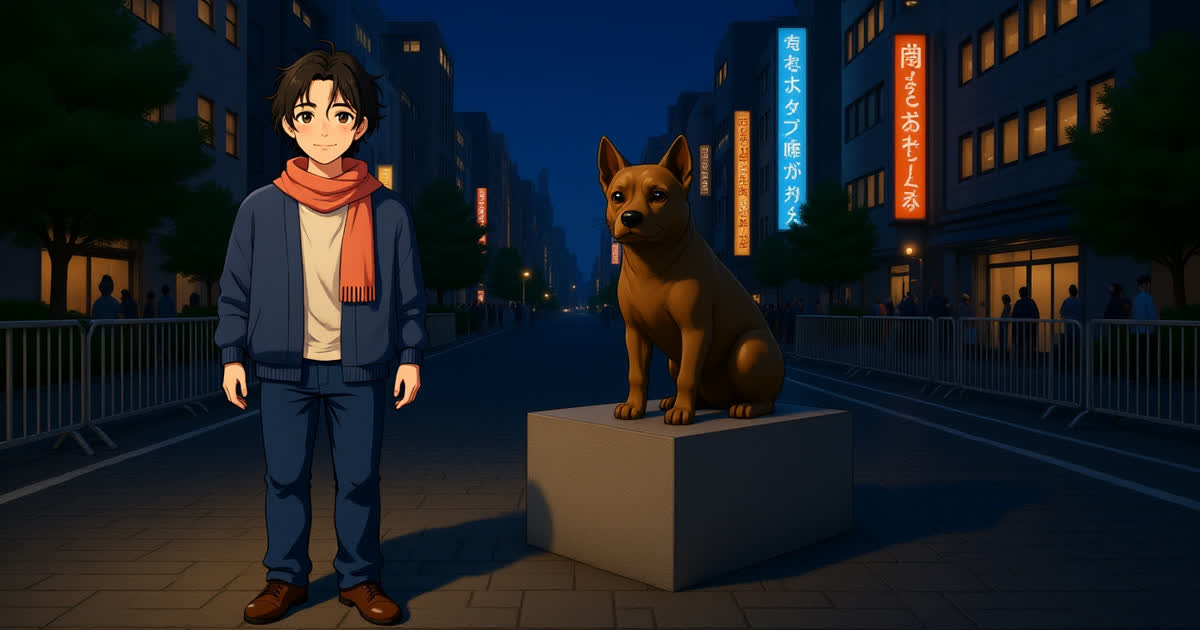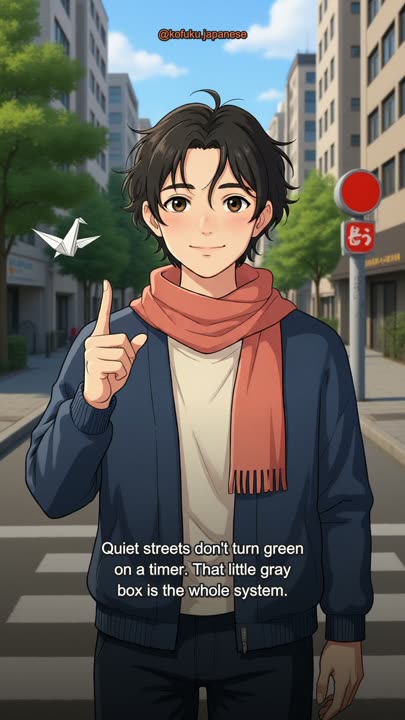
The reel above, published 17 October 2026, is one closed can and one sign. The line is 路上飲酒は禁止です。 The next line is ここでは、路上飲酒は禁止です。 The register has already taken the money. This page is what that sign stops, where the stop applies, and what you do with the can.
What does 路上飲酒は禁止です mean on a Japanese street?
路上飲酒は禁止です (rojō inshu wa kinshi desu) means drinking on the street is prohibited. 路上 (rojō) is the road under your feet. Shogakukan's Digital Daijisen, on Kotobank, checked 19 October 2026, gives sense 1 as 道の上。道ばた。 (Michi no ue. Michibata.) On the road, and at the roadside. Sense 2 is on the way somewhere. The sign uses sense 1. 飲酒 (inshu) is drinking alcohol. Daijisen's entry, checked the same day, is 酒を飲むこと。 (Sake o nomu koto.) In that entry 酒 means alcohol, not only rice wine. A canned coffee is a drink. It is not 飲酒. 禁止 (kinshi) is an order not to do the act. Daijisen, checked the same day, defines it as ある行為を行わないように命令すること。 (Aru kōi o okonawanai yō ni meirei suru koto.) です makes the line a polite statement. The reel's second sentence puts the place in front: ここでは、路上飲酒は禁止です。 (Koko de wa, rojō inshu wa kinshi desu.) In this place, drinking on the street is prohibited. The video's English for that line is "Around here, no drinking on the street."
How do you pronounce 路上飲酒は禁止です?
Say ro-jo-o i-n-shu wa ki-n-shi de-su, twelve beats: ろ, じょ, う, い, ん, しゅ, わ, き, ん, し, で, す. Daijisen reads 路上 as ろじょう. The long o is two beats, じょ and う. The macron in Rojō is that extra う. Folding the word into "rojo" drops a beat. 飲酒 is いんしゅ, three beats. The ん is its own beat, and しゅ is one beat. The particle は is wa, not ha. 禁止 is きんし, three beats: き, ん, し. Daijisen notes that the old reading was also きんじ. The sign in the reel is きんし. です is two short beats. There is no か on the end. The line is a statement. The next sentence, ここでは、路上飲酒は禁止です。, adds four beats in front: こ, こ, で, わ. The comma is not a beat. Sixteen beats in all.
Where does Shibuya ban street drinking, and for which hours?
Around Shibuya Station, the ban is every night, not only Halloween. The ordinance is 渋谷駅周辺地域の安全で安心な環境の確保に関する条例. 日本交通公社 records the June 2024 amendment in Tourism Culture issue 262, August 2024, from materials supplied by the ward's 安全対策課 (safety-measures section). The drinking limit became year-round on 1 October 2024. Rule article 3, paragraph 2, sets the hours as 6pm to 5am the next morning. The same table adds 円山町 (Maruyamachō) to the station area in article 2, and the streets where the night ban applies are the zone on the rule's map, not every block in Shibuya Ward. Nippon.com, reporting on 17 October 2024 after the rule was in force, puts that zone on the roads and parks around JR Shibuya Station. Its patrol photograph is on 渋谷センター街 (Shibuya Sentā-gai). The same report says the ordinance carries no fine, and staff cannot forcibly confiscate an opened drink. They can only take it if you hand it over. The mayor can name a different window for one date, and can lift the limit for a ward-backed event or for a neighborhood or shop-association event. Japan has no national law that bans a drink outdoors. The 1961 law on the House of Representatives site, checked 19 October 2026, punishes markedly rough or violent behavior while drunk in a public place. The drink itself is not that crime. A quiet can on a street outside this map is not this sign. Another town can post its own rule.
How is 路上飲酒は禁止です different from 食べ歩き禁止?
食べ歩き禁止 (tabearuki kinshi) means do not eat while walking. The eating-while-walking page is that rule: manners on most streets, and a posted ban on a few market streets. 路上飲酒は禁止です。 names alcohol, and names the street as the place. A taiyaki in your hand is the other sign. A beer on the sidewalk after 6pm in the Shibuya zone is this one. 食べ歩き does not turn off at 5am, and it is not a ward map. The Shibuya line does not follow you to a stall in Kyoto. One sign is about food on the move. One sign is about alcohol in a public place during the posted hours.
How is 路上飲酒は禁止です different from 飲食禁止?
飲食禁止 (inshoku kinshi) bans eating and drinking in that spot. The outside-food page separates it from a bag check: 飲食禁止 includes a snack sold inside. 飲食 (inshoku) is food and drink. 飲酒 is alcohol only. A rice ball on a museum bench that says 飲食禁止 is that sign. The same rice ball on a Shibuya sidewalk is not 路上飲酒. A canned coffee is a drink and still not 飲酒. The konbini can sell the beer. The ordinance does not close the register. It stops the drinking in the public place, the road, the park, or the plaza, during the hours. Open the can on the sidewalk in that zone after 6pm and the sign applies. The sale and the sip are different moments.
What do you do when the konbini has already sold you the can?
Leave it closed on the sidewalk. That is the rescue in the reel. Before you open it, ask ここで飲んでもいいですか。 (Koko de nonde mo ii desu ka.) Is it okay to drink here? で marks the place. If the answer is 路上飲酒は禁止です。, say すみません。ここでは飲みません。 (Sumimasen. Koko de wa nomimasen.) Sorry. I will not drink here. 飲みません (nomimasen) is the polite negative of 飲む (nomu), to drink. Then ask どこで飲めますか。 (Doko de nomemasu ka.) Where can I drink it? A seat inside the shop is a question for that shop, because the ordinance names public places, not the shop floor. There is no fine in the ordinance. The patrol still tells you to stop, and the can stays closed. Shibuya Ward's official account, posted 16 October 2026, says drinking, smoking, and littering on the streets around Shibuya Station are prohibited, and that the Hachiko statue is boarded off from the early morning of 30 October until 5pm on 1 November. Halloween does not create the ban. The ban is already every night. The boarded statue is the extra for those dates.
路上飲酒は禁止です。 means drinking on the street is prohibited. Around Shibuya Station that prohibition runs from 6pm to 5am. Keep the can closed until you are off that map, or inside a place that tells you yes.